Florida Green Building: 2026 Coastal Resilience Guide
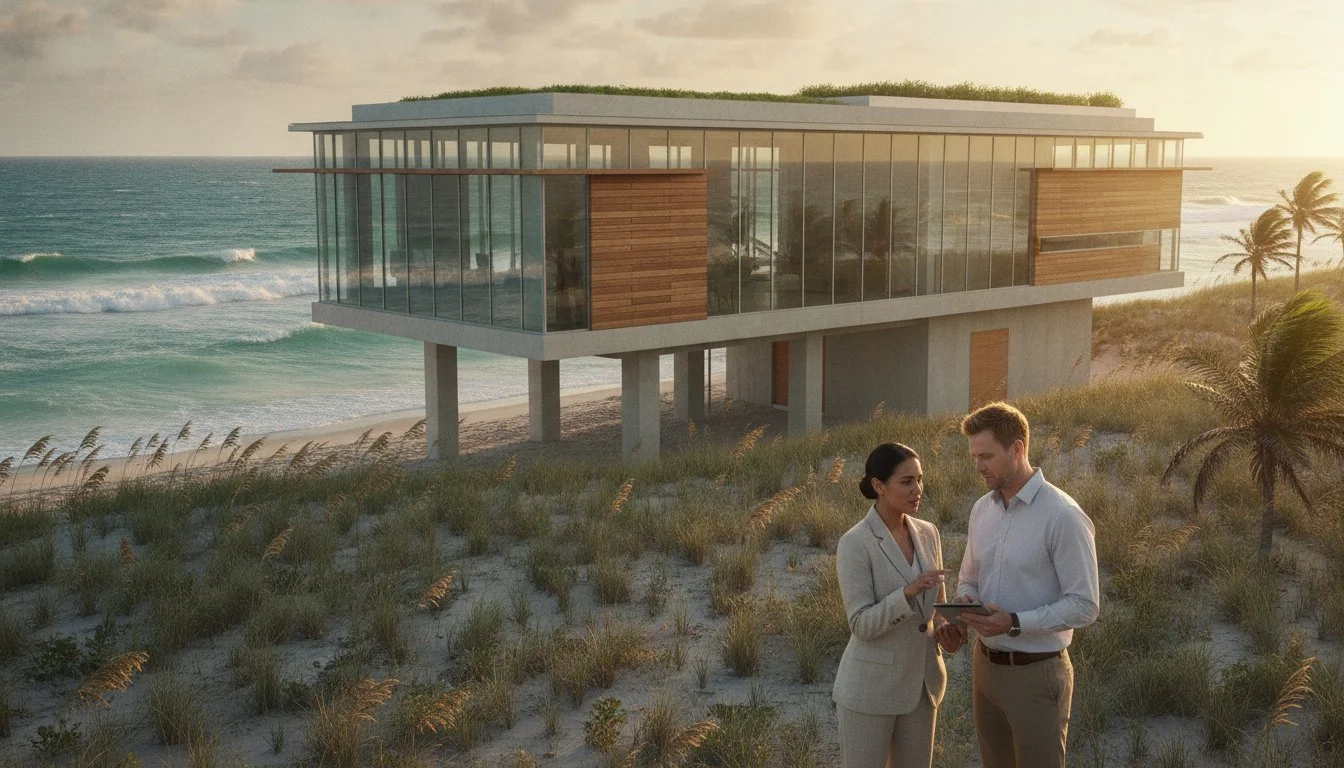
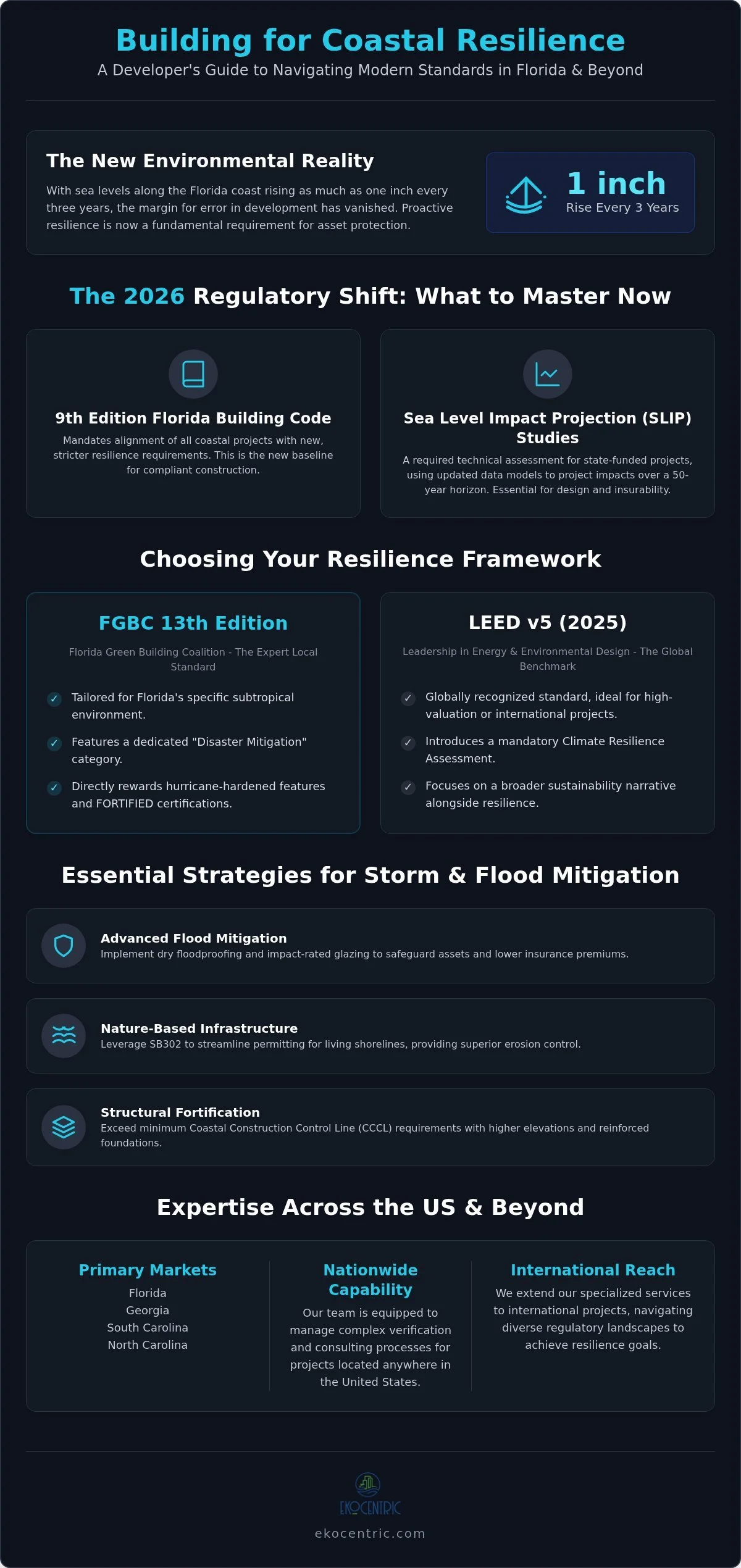
With sea levels around the Florida coast now rising as much as one inch every three years, the margin for error in coastal development has effectively disappeared. For developers and architects, the challenge isn't just about meeting a baseline; it's about surviving a shifting regulatory and environmental landscape. Implementing robust Florida green building standards for coastal resilience is no longer a luxury for the eco-conscious, it's a fundamental requirement for asset protection. You're likely already grappling with the 9th Edition Florida Building Code and the rigorous demands of Sea Level Impact Projection (SLIP) studies. These complexities can feel overwhelming, especially when the difference between a secure investment and a high-risk liability depends on technical nuances.
We understand that balancing voluntary certifications like LEED v5 or FGBC with mandatory state laws is a significant operational burden. This guide provides a clear roadmap to navigate these requirements, helping you maximize property valuation while ensuring long-term durability against storm surges. Whether you're building in Florida, Georgia, or the Carolinas, or managing international projects, our focus remains on turning these regulatory hurdles into competitive advantages. You'll discover how to align your design goals with the latest resilience prerequisites to create high-quality, climate-ready spaces that stand the test of time.
Key Takeaways
Master the 2026 regulatory shift by aligning your coastal projects with the 9th Edition Florida Building Code and mandatory Sea Level Impact Projection (SLIP) studies.
Navigate the nuances of Florida green building standards for coastal resilience by comparing the state-specific FGBC 13th Edition with the resilience-focused LEED v5 framework.
Implement advanced flood mitigation strategies, such as dry floodproofing and impact-rated glazing, to lower insurance premiums and safeguard your coastal assets.
Leverage new SB302 legislation to streamline permitting for living shorelines, utilizing nature-based infrastructure for superior erosion control and storm protection.
Connect technical certification goals with real estate valuation by engaging specialized consultants who manage complex LEED and NGBS verification processes across the US and internationally.
Table of Contents
Understanding the Resilience Mandate for Florida’s Coastline
Coastal resilience is the capacity of a building to withstand, adapt to, and rapidly recover from extreme weather events. In our experience, it's no longer enough to design for the climate of the past. Builders throughout Florida, Georgia, South Carolina, and North Carolina are pivoting toward "resilience-first" design. This approach prioritizes structural integrity and site-level protection as the foundation of any project. By adopting Florida green building standards for coastal resilience, developers protect their investments from the increasing frequency of storm surges and tidal flooding. These standards move beyond basic efficiency, focusing on the longevity of the physical asset in a changing environment.
Voluntary certifications play a crucial role in this new landscape. While building codes establish a floor, frameworks like LEED and FGBC provide a ceiling for excellence. They offer a structured way to verify that a project is truly prepared for coastal challenges. This third-party validation builds trust with investors and future tenants, positioning a development as a premium, low-risk option. Our team works across the United States and on international projects to ensure these goals are met with precision and technical expertise.
The Role of Sea Level Impact Projection (SLIP) Studies
A SLIP study is a technical assessment required for state-funded construction projects within the coastal hazard area. It evaluates the potential impact of sea-level rise and storm surges over the expected life of the structure, typically looking at a 50-year horizon. This data is vital for architects because it dictates the finished floor elevation and necessary floodproofing measures. In 2026, the data models used for these studies have been updated to reflect more aggressive sea-level rise projections. Failing to account for this data doesn't just risk non-compliance; it compromises the long-term insurability of the asset. A well-executed SLIP study ensures that your design is grounded in the most accurate environmental projections available.
Coastal Construction Control Line (CCCL) Basics
The CCCL is a regulatory boundary that protects Florida's beach and dune system. If your project falls seaward of this line, you're subject to stricter requirements for building placement, elevation, and foundation design. The goal is to preserve the natural shoreline while protecting the structure from major storms. We believe that exceeding the minimum CCCL requirements is a hallmark of responsible Green building. Higher elevations and reinforced foundations provide a buffer against the unpredictable nature of coastal weather. Ekocentric provides the specialized services needed to navigate these hurdles, ensuring your project meets all legal mandates while achieving peak performance.
Comparing FGBC and LEED for Coastal Resilience
Selecting the correct framework is a pivotal strategic decision for any coastal development. While Florida green building standards for coastal resilience are often synonymous with the Florida Green Building Coalition (FGBC), the Leadership in Energy and Environmental Design (LEED) standard offers a globally recognized alternative with its own unique strengths. Both systems provide robust pathways to align with the Resilient Florida Program, yet they serve different market needs. FGBC is an expert local standard tailored for our specific subtropical environment. LEED v5, released in 2025, now requires a mandatory Climate Resilience Assessment, making it a powerful tool for developers who operate not just in Florida, but across Georgia and the Carolinas.
The choice often comes down to point allocation and market positioning. FGBC’s 13th Edition includes a "Disaster Mitigation" category that awards points for achieving FORTIFIED certifications, directly rewarding hurricane-hardened features. LEED BD+C (Building Design and Construction) focuses on a broader sustainability narrative but has significantly increased its resilience requirements to address sea-level rise. For projects with an international profile or those seeking the highest possible valuation, LEED is often the preferred choice. Our team assists developers in weighing these options to find the most pragmatic path forward for their specific asset.
Florida Green Building Coalition (FGBC) Advantages
FGBC excels by focusing on the technical realities of our state’s unique climate. It addresses Florida-specific challenges like extreme humidity, salt spray, and intense UV exposure that can degrade building materials over time. The certification process is designed to align seamlessly with Florida-specific building codes, reducing the administrative friction for local developers. It’s a practical, mission-driven standard that ensures a structure is truly "Florida-hardened." Key resilience features incentivized by FGBC include:
Enhanced wind resistance that exceeds the minimum 9th Edition Florida Building Code.
The use of salt-spray resistant materials and finishes to prolong asset life.
Advanced moisture control and building envelope sealing for high-humidity zones.
LEED for Homes and LEED Green Rater Verification
For residential developments, a LEED Green Rater provides the essential on-site verification needed to guarantee performance. They ensure that resilience features are not just on the blueprints but are correctly implemented in the field. On the commercial side, LEED BD+C remains the premier framework for high-performance coastal assets. It provides a level of international prestige that attracts sophisticated investors and tenants. Since we operate US-wide and internationally, we see how LEED certification acts as a universal language for quality and durability. Many developers find that FGBC and LEED consulting helps them manage these complex requirements while maximizing their property’s long-term market value. LEED highlights for coastal resilience include:
A mandatory Climate Resilience Assessment to identify site-specific risks like storm surges.
Heat island reduction strategies to combat rising coastal temperatures.
Integrated water cycle management to handle extreme precipitation events.
Essential Strategies for Storm and Flood Mitigation
Physical hardening is the practical application of Florida green building standards for coastal resilience. While policy and planning set the stage, the technical execution of flood and storm mitigation determines whether an asset survives a hurricane. We focus on two primary floodproofing strategies. Dry floodproofing utilizes watertight seals and specialized membranes to keep water out entirely. Conversely, wet floodproofing incorporates flood vents that allow water to flow through non-living spaces. This equalizes hydrostatic pressure on foundation walls, preventing structural failure during extreme surges. Design Flood Elevation (DFE) is the specific height to which a building must be protected, calculated by adding a safety factor or "freeboard" to the Base Flood Elevation (BFE).
Beyond water management, elevating mechanical, electrical, and plumbing (MEP) systems is a critical recovery strategy. Submerged HVAC units or electrical panels can delay building re-entry for months. By placing this equipment on rooftops or elevated platforms, developers ensure a faster return to operations. This pragmatic approach to design is why we are an indispensable partner for projects throughout Florida, Georgia, and the Carolinas.
Hardening the Building Envelope
Coastal environments are notoriously harsh. High-performance materials like fiber-cement siding and stainless steel fasteners are essential to resist the corrosive effects of salt spray. Impact-rated glazing is another non-negotiable feature. It protects the building’s interior from wind-driven debris and prevents the internal pressurization that leads to roof failure. We emphasize the use of continuous load paths, which use metal connectors to tie the roof, walls, and foundation together into one solid unit. Voluntary certifications like NGBS and LEED reward the selection of these durable materials, as they directly contribute to the building's longevity and resource efficiency.
Redundant Power and Energy Resilience
Resilience means keeping the lights on when the grid fails. Integrating solar arrays with battery storage systems allows a building to maintain critical functions during extended power outages. This isn't just about comfort; it's about maintaining life-safety systems and preventing mold growth in humid coastal zones. Both LEED and ENERGY STAR standards provide significant credits for onsite renewable energy and storage. As an ENERGY STAR and RESNET HERS Rater, we help developers optimize these systems for maximum performance. Our expertise ensures that your energy strategy meets the rigorous demands of coastal resilience while qualifying for high-level green certifications in the US and international markets.
Site-Level Resilience: Living Shorelines and Beyond
Coastal resilience doesn't end at the building envelope; it begins at the shoreline. For developers in Florida, Georgia, and the Carolinas, site-level strategies are the first line of defense against a changing environment. Utilizing Florida green building standards for coastal resilience means looking beyond concrete walls toward nature-based solutions. SB302, which became effective on July 1, 2026, has already streamlined the permitting process for living shorelines. This legislation makes it easier for developers to choose hybrid approaches that combine green and gray infrastructure to absorb wave energy rather than simply reflecting it against a seawall.
In high-water-table areas common across the Southeast, traditional drainage often fails during extreme precipitation. We advocate for innovative stormwater management that uses bioswales and permeable surfaces to slow and filter runoff. Native coastal vegetation provides essential erosion control and stabilizes the soil without the need for constant maintenance. These site-level choices are fundamental to Florida green building standards for coastal resilience, as they directly impact your overall building certification score. By integrating these practices, you aren't just complying with local mandates. You're creating a self-sustaining ecosystem that protects your physical asset from the ground up.
Integrating Nature-Based Solutions
Mangroves, oyster reefs, and marsh grasses are powerful tools for coastal protection. Unlike traditional seawalls that require expensive repairs after every major storm, these biological systems grow stronger and more resilient over time. LEED v5 rewards this approach through specific Rainwater Management and Site Development credits. These nature-based solutions reduce long-term maintenance costs and provide a more attractive, high-value environment for residents. It's a pragmatic shift from fighting nature to working with it to ensure the longevity of your development.
Reducing the Urban Heat Island in Coastal Cities
Florida’s climate demands a dual focus on water and heat. Reflective surfaces and strategic shade are critical for reducing the urban heat island effect, which directly correlates with energy efficiency and lower cooling loads. When you prioritize heat resilience, you're boosting your building's performance and its certification potential. Our team at Ekocentric provides the Ekocentric’s services needed to optimize these site-level strategies across the US and internationally. If you're ready to future-proof your next coastal project, partner with our experts to ensure your development meets the highest standards of durability and market value.
Strategic Consulting for Resilient Development
Coastal development is an increasingly complex endeavor. As regulatory environments tighten and environmental risks escalate, the gap between basic code compliance and true durability continues to widen. Adhering to Florida green building standards for coastal resilience requires a level of technical oversight that most internal teams simply don't have the capacity to manage. This is where specialized consulting becomes an indispensable asset. We guide project leads through the labyrinth of LEED, FGBC, and NGBS requirements; ensuring that every design choice contributes to the asset's long-term survival and market value.
A LEED Green Rater is particularly vital for residential developments. They provide the third-party verification that investors and future homeowners demand, proving that the home's resilience features are functional and verified in the field. Our mission is to help you exceed Florida green building standards for coastal resilience while creating high-quality, durable living spaces. While our roots are deep in Florida, we serve primary markets across Georgia, South Carolina, and North Carolina. Our expertise isn't bound by state lines. We operate across the entire United States and manage international projects with the same level of technical rigor and dedication.
The Ekocentric Advantage: From Contractor to Consultant
We bring a unique perspective to the table as a Licensed Florida Building Contractor. This background means we understand the physical realities of the job site, not just the theory in the certification manuals. We pair this construction knowledge with real estate expertise to help developers understand how sustainability impacts property valuation. Most project leads face a significant "internal capacity" gap when managing complex certifications. We fill that void, acting as a pragmatic partner that handles the technical documentation and verification so your team can focus on the broader vision.
Next Steps for Your Coastal Project
The most successful resilient builds begin long before the first shovel hits the ground. We encourage builders to integrate resilience benchmarks during the pre-design phase. This early alignment prevents costly retrofits and ensures that your project is eligible for the highest levels of certification from the start. Our initial consultation process evaluates your specific site risks and identifies the most effective pathways for LEED or FGBC success. If you're ready to secure your investment and lead the way in environmental stewardship, partner with Ekocentric for your next resilient build. We'll help you navigate the complexities of modern coastal construction with confidence and precision.
Future-Proofing Your Coastal Development Strategy
The landscape of coastal construction is shifting rapidly. By integrating Florida green building standards for coastal resilience, you aren't just meeting regulatory mandates like SLIP studies; you're actively safeguarding the long-term valuation of your assets. We've explored how a dual focus on hardened building envelopes and nature-based site solutions creates a formidable defense against storm surges and sea-level rise. Whether you choose FGBC's local expertise or LEED's international prestige, the path to a durable build requires technical precision and a commitment to environmental stewardship.
As a Licensed Florida Certified Building Contractor with expert LEED Green Raters and NGBS Verifiers, we understand the practical realities of these complex projects. We take pride in serving developers across Florida, Georgia, South Carolina, and North Carolina, while maintaining the capacity for US-wide and international projects. Don't let evolving codes or the lack of internal resources stall your mission. Maximize Your Project’s Resilience with Ekocentric Consulting and build with the confidence that your development is prepared for the challenges of 2026 and beyond. We're ready to help you turn these environmental challenges into lasting success stories.
Frequently Asked Questions
What are the specific Florida green building standards for coastal resilience?
Specific Florida green building standards for coastal resilience include the Florida Green Building Coalition (FGBC) 13th Edition and the LEED v5 framework. The FGBC standard specifically awards points for storm hardening through its Disaster Mitigation category. LEED v5 now requires a mandatory Climate Resilience Assessment as a prerequisite for all levels. These standards ensure that buildings are designed to withstand local hazards like sea level rise while maintaining peak resource efficiency.
How does a SLIP study affect my coastal construction project?
A Sea Level Impact Projection (SLIP) study is a mandatory requirement for state-funded construction within the coastal hazard area. It provides a 50-year projection of potential sea level rise and storm surge impacts for your specific site. Architects use this data to determine the necessary Design Flood Elevation (DFE), ensuring the structure remains functional. Compliance with SLIP study results is also becoming a critical factor for securing long-term property insurance and financing.
Can I achieve LEED certification for a project in a high-risk flood zone?
You can achieve LEED certification in high-risk zones, provided you meet the mandatory Climate Resilience Assessment under the new LEED v5 standards. This process requires identifying specific hazards like tidal flooding and implementing mitigation strategies such as elevated MEP systems or dry floodproofing. LEED BD+C provides a structured path for commercial assets to demonstrate durability. These measures protect the building's physical integrity and significantly increase its market valuation by reducing risk profiles.
What is the difference between FGBC and NGBS for Florida builders?
The primary difference lies in geographic focus and technical emphasis. The Florida Green Building Coalition (FGBC) is tailored specifically for the state's subtropical climate, addressing high humidity and salt spray challenges. The National Green Building Standard (NGBS) is a nationally recognized framework that offers a high level of flexibility for B2B developers. While both promote sustainability, FGBC aligns more closely with Florida-specific building codes and the unique environmental stressors found in coastal counties.
Does Ekocentric provide green building consulting outside of Florida?
Yes, we provide comprehensive green building consulting services across the entire United States and for international projects. While we have a primary focus on the coastal regions of Florida, Georgia, South Carolina, and North Carolina, our expertise is available globally. We help developers navigate complex certification requirements for LEED, FGBC, and NGBS regardless of location. Our team ensures that your project meets rigorous performance standards while optimizing real estate valuation in any market.
How does coastal resilience impact property insurance rates in 2026?
Coastal resilience features are essential for managing high insurance costs, which averaged over $6,000 in Florida in 2024. In 2026, insurers are increasingly rewarding properties that exceed the 9th Edition Florida Building Code with lower premiums. Features like impact-rated glazing and reinforced foundations reduce the risk of catastrophic loss. Buildings that achieve green certifications often qualify for more affordable private market coverage, helping owners avoid the stress of state-backed insurers of last resort.
What is the role of a LEED Green Rater in coastal residential projects?
A LEED Green Rater provides the mandatory on-site verification required for residential certification. They inspect the building at critical phases, such as the framing and final stages, to ensure that resilience and efficiency features are correctly installed. This includes verifying the building envelope's integrity and the performance of mechanical systems. Their technical oversight ensures that the project meets the high-performance benchmarks necessary for LEED for Homes, providing peace of mind for developers and homeowners.
Are there specific materials recommended for Florida coastal resilience?
Recommended materials for Florida coastal resilience focus on durability and corrosion resistance. Fiber-cement siding and stainless steel fasteners are ideal for resisting the abrasive effects of salt spray. Impact-rated glazing is critical for maintaining the building's structural integrity during high-wind events. These materials are often prioritized within Florida green building standards for coastal resilience because they extend the life of the asset. Selecting high-performance materials also contributes to points in LEED and FGBC frameworks.