
FGBC Standards for Hurricane Resilience: A Builder’s Guide to Durable Florida Construction
Homes built to modern Florida Building Code standards experience 87% less damage from hurricane winds compared to older structures, yet these rigorous mandates are often just the baseline for true climate survival. You're likely facing the constant pressure of High-Velocity Hurricane Zones (HVHZ) while trying to meet the rising demand for sustainable, green-certified properties. It's a difficult balance when structural hardening and environmental goals feel like they're at odds. This is where mastering the FGBC standards for hurricane resilience transforms a project from standard to superior.
We understand that you need practical solutions that work within Florida's unique regulatory environment. By aligning your construction practices with the Florida Green Building Coalition's specific disaster mitigation criteria, you'll build properties that don't just exist in a storm's path but endure it with minimal impact. This guide provides a technical roadmap to help you achieve elite certification efficiently, reduce long-term insurance premiums, and secure a "storm-proof" marketing advantage that resonates with today's savvy buyers.
Key Takeaways
Learn how FGBC certification moves beyond the minimum Florida Building Code to prioritize structural survivability in high-velocity hurricane zones.
Identify the specific building envelope hardening techniques and fenestration requirements that earn critical credits for storm protection.
Understand why FGBC standards for hurricane resilience offer a more cost-effective and regionally relevant alternative to national certifications for Florida developers.
Master the early-stage planning and site selection strategies necessary to integrate disaster mitigation before the first permit is pulled.
Discover how professional consulting bridges the complexity gap to balance sustainability goals with structural durability and increased asset value.
Table of Contents
Technical Breakdown: Hardening the Building Envelope under FGBC
Strategic Implementation: A Checklist for Hurricane-Resilient Projects
Maximising Asset Value with Ekocentric’s Certification Consulting
What are FGBC Standards for Hurricane Resilience?
FGBC resilience standards aren't just a checklist of eco-friendly features; they represent a specialized subset of the Florida Green Building Coalition's certification criteria specifically engineered for disaster mitigation. While many national certifications look at general environmental impact, FGBC focuses heavily on the unique meteorological threats facing the Sunshine State. The core philosophy is simple: we must build beyond the minimum requirements of the Florida Building Code to ensure true structural survivability during extreme weather events. It's a proactive choice that signals a deep commitment to environmental stewardship while protecting the financial interests of project leads and future owners.
In 2026, forward-thinking builders are prioritizing these standards because they address Florida-specific risks that national programs often overlook. This approach creates a triple-bottom-line benefit that enhances environmental health, slashes energy costs, and provides unmatched durability against Category 4 and 5 storms. By integrating FGBC standards for hurricane resilience, you're not just building a structure; you're creating a resilient asset that's designed to last for generations.
To better understand how these resilience standards are evolving to meet modern challenges, watch this helpful video:
The Florida Green Building Coalition (FGBC) Framework
The FGBC framework offers specialized designations for "Green Home" and "Green Commercial" projects that are tailored to our local climate. Unlike national standards that might prioritize indoor air quality or water conservation equally across all regions, FGBC certification places significant weight on a dedicated "Disaster Mitigation" category. This ensures that every credit earned contributes directly to a building's ability to withstand high-velocity winds and flooding. FGBC resilience is a voluntary standard that exceeds the FBC for enhanced property longevity. It provides a flexible, affordable alternative for developers who need to meet corporate sustainability mandates without sacrificing structural integrity.
Why Standard Florida Building Code Isn't Enough
There's a fundamental gap between "life safety" and "property preservation." The current 8th Edition of the state code, which took effect on December 31, 2023, is designed to ensure occupants can safely evacuate. However, it doesn't guarantee the structure will remain habitable or even repairable after a major hurricane. Historical data shows that homes built to modern code standards experience 87% less damage from hurricane winds, yet they can still suffer devastating internal losses if the building envelope fails. By adopting FGBC standards for hurricane resilience, developers address the risk factors that lead to the 65% of insurance claims typically seen after major storms. We offer specialized FGBC certification consulting to help you bridge this gap and secure your investment against increasing storm intensity.
Technical Breakdown: Hardening the Building Envelope under FGBC
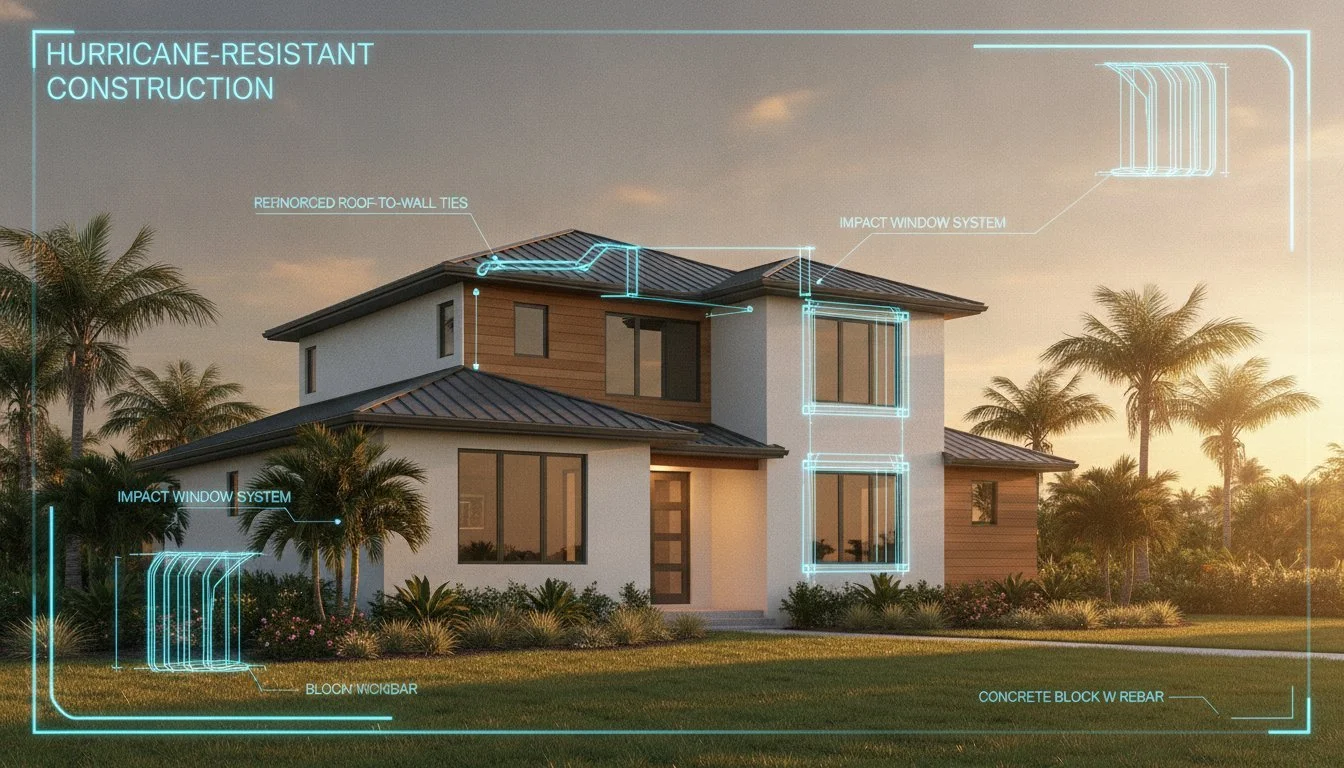
The building envelope serves as your primary line of defense against Category 4 and 5 storms. If this exterior shell is breached, internal air pressure can spike rapidly, often leading to total structural failure. Hardening this envelope is a core requirement of FGBC standards for hurricane resilience, moving beyond simple compliance to focus on long-term property preservation. By focusing on the envelope, we don't just protect the building's occupants; we protect the physical asset itself from the devastating forces of wind and water. This pragmatic approach ensures that a property remains an asset rather than a liability after the clouds clear.
Impact-Rated Openings and Fenestration
Windows and doors are the most vulnerable points in any structure. To earn FGBC credits, developers must often meet or exceed Miami-Dade High-Velocity Hurricane Zone (HVHZ) standards. There is a clear industry shift toward laminated impact glass rather than traditional shutter systems. This transition provides permanent protection without the need for manual deployment. High-performance impact windows also offer superior thermal resistance, reducing energy loads while hardening the structure. Our team can help you identify these high-impact credit opportunities through specialized FGBC certification consulting.
Advanced Roof Assembly and Wind Uplift
Roofing systems face the most intense pressure during high-wind events. FGBC prioritizes the installation of secondary water barriers under the roof cladding to prevent water intrusion if the primary material is damaged. Enhanced fastening patterns for metal, tile, and shingle roofs are essential to prevent uplift. The specific selection of roof-to-wall connections, such as using double-wrapped straps instead of standard clips, significantly increases a building's resilience score and its ability to stay anchored during a storm. These technical choices ensure that the roof remains a cohesive part of the structure rather than a liability.
Structural Integrity and Wind Loads
Achieving true durability requires a continuous load path that transfers wind forces from the roof down to the foundation. This can be achieved through reinforced concrete or advanced framing techniques designed for high-wind zones. Impact-resistant siding and exterior finishes are also critical to mitigate the "missile effect" caused by flying debris. Perhaps most importantly, these standards address wind-driven rain. This silent killer often bypasses standard seals, causing massive interior damage even when the structure remains standing. Proper flashing and moisture barriers are not just green practices; they are essential for Florida's climate survival.
FGBC vs. LEED: Resilience for the Florida Market
While LEED remains the global gold standard for general sustainability, it often lacks the surgical focus required for Florida's volatile climate. LEED's "Resilient Design" pilot credits provide a broad framework for various hazards, yet they don't always capture the granular requirements of our High-Velocity Hurricane Zones. In contrast, FGBC standards for hurricane resilience are built from the ground up to address the specific wind-load, humidity, and soil conditions unique to the peninsula. This regional specificity makes FGBC a more pragmatic choice for developers who prioritize structural survivability alongside environmental stewardship.
Choosing between these two frameworks doesn't have to be an "either-or" decision. Many project leads find significant synergy by pursuing both certifications simultaneously. Because FGBC and LEED share several core requirements regarding energy efficiency and material sourcing, you can often streamline your documentation workload. This dual-track approach allows you to capture the global prestige of LEED while ensuring your asset meets the rigorous, localized hardening criteria that Florida insurers and lenders increasingly demand. By aligning with FGBC standards for hurricane resilience, you create a property that is both environmentally conscious and structurally indomitable.
Regional vs. National Resilience Criteria
LEED's resilience credits are often optional and designed to apply to everything from California wildfires to Midwestern tornados. This broadness can leave gaps in a Florida-based strategy. FGBC's "Disaster Mitigation" category is a core pillar that accounts for Florida's unique humidity and corrosive salt-air environments. These factors can degrade structural fasteners and building envelopes over time, compromising hurricane readiness. Local third-party verification ensures that the specific materials and techniques used are appropriate for our limestone-heavy soil and high-water tables. This specialized oversight provides a level of confidence that national standards simply cannot match in a tropical environment.
The Developer's Choice: ROI and Marketability
The Florida market is shifting. Today's buyers and tenants are often more interested in "Storm-Proven" branding than general green labels. They want to know their investment will survive the next major season with minimal disruption. FGBC certification provides a clear, credible signal to the market that a building is hardened against the state's most frequent threats. This marketability often translates into faster sales and higher lease rates. Additionally, many local municipalities offer expedited permitting or density bonuses for FGBC-certified projects. To determine which framework offers the best return for your specific project, you can explore expert guidance on the Ekocentric services page. We help you bridge the complexity gap to ensure your sustainability goals align perfectly with your business realities.
Strategic Implementation: A Checklist for Hurricane-Resilient Projects
Successful implementation begins during the pre-design phase. Integrating FGBC standards for hurricane resilience at the design stage ensures that every structural choice contributes to a cohesive defense strategy. Waiting until construction begins often leads to costly retrofits or missed credit opportunities. By adhering to FGBC standards for hurricane resilience, you move beyond mandatory safety to achieve true asset durability. This proactive approach allows project leads to identify operational pain points early and present the certification framework as the definitive solution.
Site Planning and Flood Resilience
Resilience starts with the ground your building stands on. While many developers stop at the minimum Base Flood Elevation (BFE) required by local code, FGBC standards encourage a more robust approach to flood mitigation. Consider these strategic site choices:
Install pervious pavers and advanced drainage systems to manage storm surge and heavy precipitation effectively.
Elevate critical mechanical systems, including HVAC units and electrical panels, well above the BFE to ensure rapid recovery post-storm.
Select native, wind-firm landscaping species that provide natural windbreaks without becoming debris hazards during high-wind events.
Passive Survivability Post-Storm
A resilient building must remain habitable even when the municipal grid fails. Passive survivability focuses on maintaining life safety and comfort without active power. Designing for natural ventilation allows interiors to remain tolerable in Florida's intense heat after a storm passes. Strategic daylighting techniques ensure that living spaces remain functional even when impact shutters are deployed. Integrating solar arrays and battery storage into your resilience plan provides a reliable backup for essential loads, ensuring your property remains an operational sanctuary when neighbors are left in the dark.
Documentation and Verification
The path to certification requires meticulous documentation and expert oversight. Organizing your FGBC submittal package for maximum point capture is essential to avoid project delays and administrative friction. Working with a designated FGBC Certifier ensures that your project stays on track from the first permit to the final seal. Field inspections during the framing and envelope stages are necessary to verify that structural connections and moisture barriers meet the intended resilience specifications. This rigorous verification process builds confidence with lenders and insurers who value verified durability. To ensure your project meets every technical requirement without exhausting your internal capacity, partner with an FGBC certification consultant today.
Maximising Asset Value with Ekocentric’s Certification Consulting
Adopting FGBC standards for hurricane resilience is a strategic move that positions a property at the peak of the Florida market. However, the path to certification often presents a significant complexity gap for busy developers. Managing overlapping state codes, technical documentation, and specialized construction requirements can strain internal resources. We bridge this gap by acting as a pragmatic partner, ensuring that your sustainability and resilience goals are achieved without disrupting your operational timeline. Our mission is to turn specialized industry practices into achievable solutions that protect both the environment and your financial bottom line.
By moving beyond mere compliance, you create high-quality, high-demand living spaces that stand out to sophisticated tenants and buyers. In the 2026 Florida market, durability is a premium feature. A certified resilient portfolio doesn't just survive storms; it maintains its value while others face rising insurance costs and structural degradation. We focus on longevity and resource efficiency, linking these specialized practices directly to positive business outcomes and the creation of superior urban environments.
Why Expert Guidance is Essential for FGBC
Navigating the technical nuances of the Florida Green Building Coalition's manual requires deep industry expertise. Many developers struggle to identify the "low-hanging fruit" credits that provide the highest resilience ROI. We help you prioritize the specific hardening measures that earn the most points while offering the greatest structural benefit. As a dedicated partner, we manage the intricate submittal process and coordinate with rater services to ensure a smooth certification journey. This allows your team to focus on construction while we handle the specialized project requirements that secure your elite rating.
Future-Proofing Your Florida Portfolio
The trend among institutional investors is clear: resilience certifications are becoming a prerequisite for Florida assets. Investors want to see verified proof that a property can withstand the increasing frequency and intensity of tropical storms. Building a brand known for both durability and environmental stewardship creates a powerful competitive advantage. It signals a long-term commitment to quality that resonates with lenders and capital partners alike. If you're ready to master FGBC standards for hurricane resilience and secure your investment, contact Ekocentric for a professional consultation on your next Florida build. Together, we can build a future where every structure is a testament to resilience and responsible development.
Building a Storm-Proof Legacy in the Sunshine State
Florida's construction landscape is evolving rapidly. Simply meeting the minimum state code is no longer enough to protect long-term investments or ensure property preservation. By mastering FGBC standards for hurricane resilience, you move beyond basic life safety to create structures that survive and thrive. This regional framework ensures your project is hardened against Florida's unique wind and water threats while achieving elite sustainability goals.
Navigating these complex technical requirements shouldn't be a burden on your internal team. As certified LEED Green Raters and FGBC professionals, we provide the specialized expertise and pragmatic, results-oriented consulting needed to streamline your path to certification. We understand the business realities of high-velocity hurricane zones and offer the mission-driven passion required to see your vision through to completion.
Ready to secure your portfolio against the next major storm? Partner with Ekocentric for your FGBC Resilience Certification and transform your next project into a model of Florida-specific durability. We're excited to help you build a more resilient and environmentally conscious future for our state.
Frequently Asked Questions
What is the difference between FGBC and Florida Building Code for hurricane protection?
The Florida Building Code sets the mandatory minimum requirements for life safety, ensuring occupants can evacuate safely during a storm. In contrast, FGBC standards for hurricane resilience focus on property preservation and structural survivability. While the code aims to prevent collapse, FGBC criteria encourage builders to exceed these baselines to minimize post-storm repair costs and maintain building functionality even after Category 4 or 5 events.
Do FGBC standards reduce my home insurance premiums in Florida?
Yes, achieving FGBC certification often leads to lower insurance premiums because it documents superior wind mitigation features. Many Florida insurers provide significant credits for secondary water barriers, impact-rated openings, and enhanced roof-to-wall connections. By building to these higher standards, you demonstrate a reduced risk profile to underwriters, which can result in a 65% reduction in insurance claims according to historical storm data.
How much does it cost to achieve FGBC certification for resilience?
The total investment for certification includes FGBC registration fees and the cost of upgraded materials or technical consulting. For example, the Florida Green Building Coalition requires a minimum deposit of $1,500 for High-Rise Residential registration. While material costs vary based on project scale, the investment is typically offset by increased asset value and long-term operational savings. We recommend consulting with an expert early to identify the most cost-effective path to compliance.
Can I get FGBC certified if my project is already under construction?
You can pursue certification for a project already under construction, but it's significantly more challenging. Many critical resilience credits require field inspections during the framing and envelope stages to verify structural integrity. If these milestones have already passed, you may lose the ability to capture essential points. It's always best to integrate the certification framework during the pre-design phase to ensure seamless verification and maximum credit capture.
What are the most important FGBC credits for hurricane wind resistance?
The most impactful credits focus on the "Disaster Mitigation" category, specifically regarding envelope hardening and continuous load paths. Installing secondary water barriers under roof cladding is a high-value credit that prevents internal damage if primary materials fail. Additionally, using impact-rated glass that meets Miami-Dade HVHZ standards provides permanent protection. These technical choices are foundational to FGBC standards for hurricane resilience and offer the highest return on structural durability.
Is FGBC certification recognized by Florida lenders and appraisers?
Yes, Florida lenders and appraisers increasingly recognize FGBC certification as a marker of high-quality, low-risk construction. Resilient properties are viewed as more stable collateral, especially in coastal or high-wind zones. As institutional investors move toward ESG mandates, having a verified resilience rating can facilitate financing and improve appraisal values by highlighting the building's superior longevity and reduced vulnerability to climate-related disruptions.
How does FGBC's disaster mitigation category impact property resale value?
Homes and commercial buildings with a "Disaster Mitigation" designation often command higher resale values due to their "storm-proof" branding. Buyers in the Florida market are willing to pay a premium for the peace of mind that comes with a hardened structure. This certification serves as a credible, third-party validation of the property's durability, protecting the owner from the steep depreciation that often follows major regional weather events.
What is the role of a third-party FGBC certifier in the resilience process?
A third-party certifier acts as an independent expert who verifies that every resilience requirement is met through field inspections and documentation review. They ensure that the project adheres to the specific technical criteria of the Florida Green Building Coalition manual. This oversight reduces the "complexity gap" for developers and provides the necessary verification that lenders and insurers require to validate the building's superior structural performance.