FGBC Affordable Housing Certification: 2026 Guide
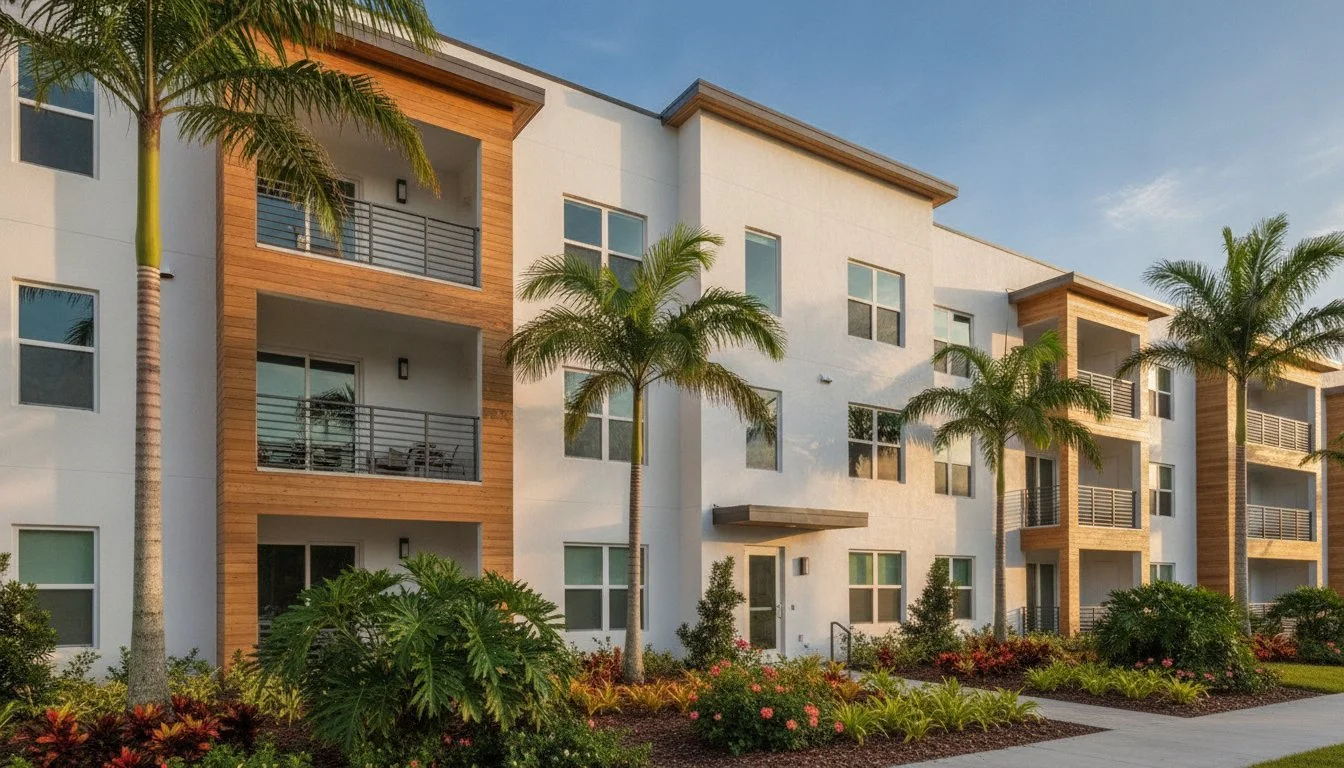
Building affordable housing shouldn't mean building for the short term, yet developers are often forced to choose between immediate construction costs and the long-term survival of the structure. Achieving FGBC certification for affordable housing is the most pragmatic way to bridge this gap, ensuring that high-quality living spaces remain viable for decades. While many national standards feel like a poor fit for the unique humidity and heat of the Southeast, the Florida Green Building Coalition provides a framework specifically designed for this climate. Whether your project is in Florida, Georgia, or the Carolinas, these standards offer a localized solution that national alternatives often miss.
We understand that you're balancing tight construction budgets against complex state funding requirements and the need to keep resident utility bills low. It's a difficult equation to solve without the right expertise. This 2026 guide shows you how FGBC certification optimizes building performance, enhances envelope durability, and secures long-term viability for projects across the USA. We'll explore the latest Version 13 standards, the impact of the Live Local Act, and why focusing on the cost of living is just as vital as the cost of building. By the end, you'll see how specialized industry practices can turn environmental challenges into achievable, cost-effective solutions.
Key Takeaways
Understand why FGBC certification for affordable housing is uniquely engineered for the high heat and humidity of the Southeast, offering a more resilient envelope than broader national standards.
Discover how the Florida Green Building Coalition provides a pragmatic "sweet spot" for developers, reducing administrative overhead and construction costs compared to LEED or NGBS.
Learn how to mitigate the "affordability paradox" by lowering long-term utility and maintenance expenses for residents, ensuring true viability throughout the building's lifecycle.
Identify the critical milestones in the certification roadmap, from the initial design charrette to energy modeling and preliminary ratings that guide your project's success.
See how leveraging a partner with dual expertise in construction and green consulting can help your team manage complex requirements for projects across the USA and beyond.
Table of Contents
The Intersection of Affordability and Sustainability in 2026
The "Affordability Paradox" is a significant hurdle for developers in 2026. While keeping initial construction costs low is a priority, ignoring life-cycle expenses creates a heavy burden for residents. Integrating sustainable building practices isn't just about environmental ethics; it's a financial strategy. By pursuing FGBC certification for affordable housing, developers can create high-performance building envelopes that drastically reduce maintenance and utility costs over time. This approach ensures that housing remains truly affordable for the people who live there, not just the people who build it.
In states like Florida, Georgia, and the Carolinas, high humidity and extreme heat make durability a non-negotiable requirement. The 2026 standards emphasize the need for robust thermal boundaries and moisture management to prevent structural decay. We help developers bridge the gap between tight budgets and these technical requirements through our specialized green building services, ensuring compliance without sacrificing the project's bottom line.
To better understand how these standards are evolving to meet modern challenges, watch this update from the Florida Green Building Coalition.
Beyond the Build: Social Stewardship Through Green Certification
For low-income residents, energy bills often represent a disproportionate percentage of their monthly income. High-efficiency HVAC systems and tight envelopes directly lower this energy-cost burden. Beyond finances, air quality matters. Version 13 of the FGBC Green Home Standard, released in August 2026, includes rigorous checks for indoor air quality (IAQ). These standards help reduce respiratory issues and health-related resident turnover. We also focus on disaster mitigation. Building for resilience ensures that communities remain standing after extreme weather events, which are increasingly frequent across the Southeast and the broader USA.
Navigating the 2026 Regulatory Landscape
The regulatory environment has shifted significantly with the implementation of the Live Local Act (HB 1389) in July 2026. This legislation has transformed green building from a voluntary choice into a heavily incentivized path for developers. State Housing Finance Agencies (HFAs) now award critical points for certifications that prove a project's long-term viability.
HFA Points: Achieving FGBC certification for affordable housing often provides the competitive edge needed for tax credit allocations and state-level funding.
Zoning Benefits: Under 2026 regulations, qualifying affordable projects can bypass certain local zoning barriers when they meet specific performance thresholds.
Regional Alignment: While FGBC is Florida-born, its climate-specific focus makes it an ideal framework for regional housing authority mandates throughout Georgia and the Carolinas.
What is FGBC Certification for Affordable Housing?
FGBC certification for affordable housing is a rigorous, climate-specific framework developed by the Florida Green Building Coalition. While many national standards provide a broad overview of sustainability, FGBC was engineered specifically to address the intense heat and humidity of the Southeast. This regional focus makes it an indispensable tool for developers who need to balance strict budgets with the high performance required in states like Florida, Georgia, South Carolina, and North Carolina. Its authority is well-recognized, as seen in various municipal green building mandates that require this certification for city-sponsored affordable units.
The Seven Categories of FGBC Compliance
The standard evaluates projects across seven distinct categories: Energy, Water, Site, Health, Materials, Disaster Mitigation, and a General category. For affordable housing, three of these are particularly critical. Energy efficiency moves beyond the baseline building code to ensure low monthly utility bills for residents. Water conservation is vital for high-density multi-family units where water costs can quickly erode operational budgets. Finally, disaster mitigation protects the physical asset and the safety of residents in hurricane-prone regions. These categories ensure a holistic approach to durability that national checklists often overlook.
Climate-Specific Engineering for the Southeast
National standards often fail to account for the specific moisture management needs of the Southeast. FGBC fills this gap by focusing on the building envelope and long-term durability. In humid climates, improper vapor barriers or poor ventilation lead to mold and structural decay. These issues are expensive to remediate and harmful to resident health. By prioritizing these regional challenges, FGBC reduces maintenance cycles and extends the life of the building, ensuring the structure remains an asset rather than a liability.
While the "Florida" name is prominent, the engineering principles apply directly to projects throughout the USA, especially in Georgia and the Carolinas. The latest Version 13 standards, released in August 2026, further refine these requirements for single-family homes and buildings with four or fewer stories. Whether you are pursuing an FGBC Home designation for single-family residences or seeking FGBC certification for affordable housing via the Multi-Family designation, the goal remains the same: creating a resilient, efficient environment. If you're navigating these requirements for the first time, our green building consulting services can help you identify the most cost-effective path to compliance for your specific site.
FGBC vs. LEED and NGBS: Choosing the Right Path
Choosing between green building standards often feels like a trade-off between prestige and practicality. While LEED BD+C is globally recognized, it often introduces administrative complexities that strain tight affordable housing budgets. National Green Building Standard (NGBS) provides a robust alternative, yet it may not always align with the specific moisture and heat challenges of the Southeast. FGBC certification for affordable housing occupies a unique sweet spot. It offers the technical rigor of national programs but streamlines the verification process to prioritize what matters most: durable, cost-effective performance.
Technical consistency is a core strength across these platforms. All three standards rely on RESNET HERS ratings to verify energy performance. This means that whether you pursue LEED, NGBS, or FGBC, your project undergoes the same high-level diagnostic testing, including blower door and duct leakage assessments. The difference lies in the framework surrounding those tests. FGBC provides a more flexible, climate-specific path that allows developers to achieve high-performance results without the excessive "soft costs" often associated with national branding.
Cost-Benefit Analysis for Developers
For affordable housing developers, every dollar must be justified. National standards can carry a cost premium of 1.2 percent to 2.3 percent of the total construction budget, according to 2026 industry research. While LEED-certified buildings often command higher resale values in commercial sectors, the primary goal for affordable housing is operational longevity and resident stability. FGBC certification focuses on "points per dollar." It rewards high-impact, low-cost strategies that improve the building envelope and HVAC efficiency. This pragmatic approach makes it easier for field crews to implement requirements without specialized, high-cost training. By choosing a framework that balances certification fees with long-term asset value, you ensure that your project remains financially viable for both the developer and the housing authority.
When to Choose FGBC Over National Standards
Prestige is valuable, but local climate resilience is vital. If your project is located in Florida, Georgia, or the Carolinas, FGBC offers a distinct advantage in regional expertise. National standards sometimes overlook the nuanced moisture management needs of humid climates, which can lead to maintenance cycles that exhaust reserve funds. FGBC was built from the ground up to address these specific regional risks.
Streamlined Verification: Regional experts understand the local building codes and supply chains, reducing delays during the inspection phase.
Funding Alignment: Many regional housing finance agencies recognize FGBC as a preferred standard for scoring high-performance points.
Resident Impact: The focus on energy and water conservation directly translates to lower utility bills for residents, which is the ultimate goal of any affordable housing initiative.
If you're weighing the pros and cons of these different frameworks for a project anywhere in the USA, our team can provide a detailed comparison. Explore our green building consulting services to see which certification path aligns best with your funding requirements and operational goals.
The Roadmap to Successful FGBC Certification
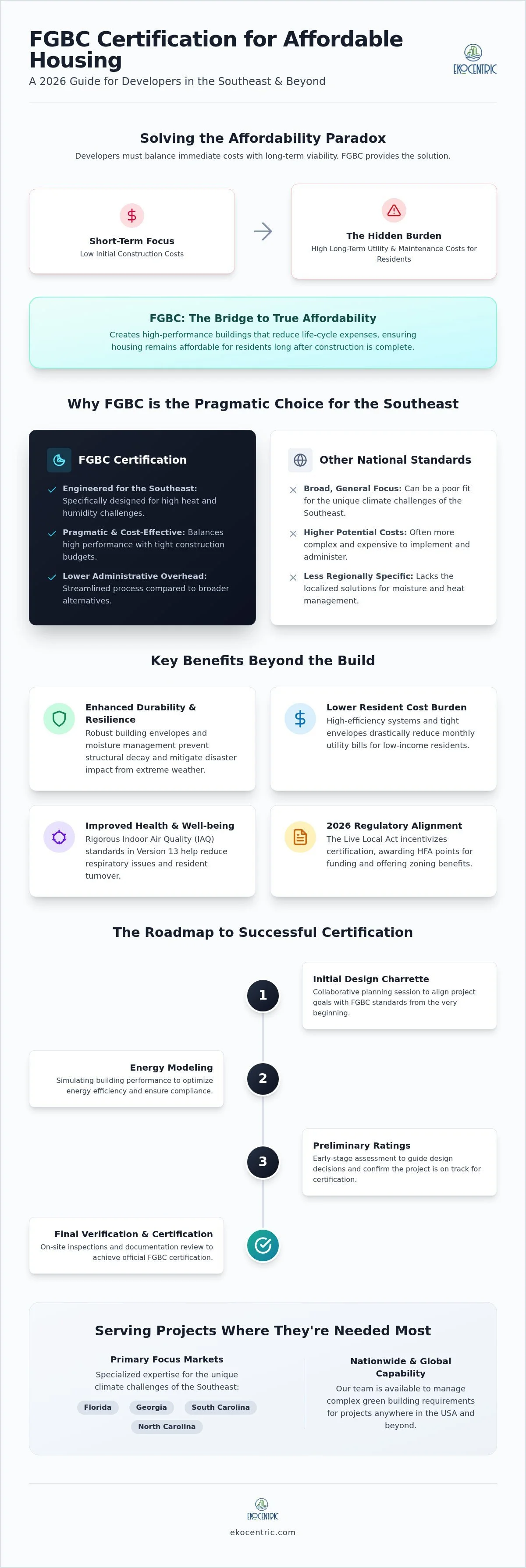
Achieving FGBC certification for affordable housing requires a structured, disciplined approach that begins long before the first shovel hits the ground. It's a technical journey that transforms a sustainable vision into a high-performance reality. By following a clear sequence of milestones, developers can avoid the common pitfalls of budget overruns and failed inspections. This process ensures that every decision, from initial site selection to the final mechanical install, contributes to the project's long-term durability and resident comfort.
The Critical Role of the Design Charrette
Early intervention is the most effective way to manage construction costs while hitting performance targets. The Design Charrette brings architects, engineers, and project leads together to align on the sustainability mission. During this phase, we identify high-impact, low-cost credits, often called "low-hanging fruit," that provide the most points per dollar spent. Integrating these goals into the blueprints prevents expensive mid-build corrections. It's about building a shared commitment to environmental stewardship from day one, ensuring that the project satisfies both state funding requirements and the developer's operational budget.
Field Verification: Ensuring Performance Matches Design
Mid-construction testing is where engineering theory meets job-site reality. We conduct Blower Door Testing and Duct Testing to verify that the building envelope is performing as expected. These diagnostic tests are vital for identifying insulation gaps or thermal bridging issues while they're still accessible for easy repair. Real-time corrections during this phase ensure that the final product meets the rigorous technical thresholds required for the HERS rating. This hands-on verification process protects the developer from long-term maintenance liabilities and guarantees that residents will enjoy lower utility bills.
Step 1: Design Charrette: Aligning the project team and setting specific point targets for certification.
Step 2: Energy Modeling: Creating a preliminary rating to forecast energy performance and equipment needs.
Step 3: Field Verification: Diagnostic testing of the envelope and mechanical systems during construction.
Step 4: Final Inspection: Documenting all compliance measures for the final FGBC review and submission.
The final step is the comprehensive submission of the certification package to the Florida Green Building Coalition. This documentation proves that the project has met the necessary thresholds for energy, water, health, and disaster resilience. While the process is detailed, it doesn't have to be overwhelming for your internal team. If you're ready to start your project in North Carolina, Georgia, or anywhere in the USA, our experts are here to help. Partner with us for professional FGBC certification consulting to ensure your project stays on track, on budget, and fully compliant.
Ekocentric: Your Partner in Sustainable Performance
Success in the green building sector requires more than a checklist; it demands a partner who understands the practical realities of the job site. We bring a unique blend of professional authority and mission-driven passion to every project. As a Licensed Florida Certified Building Contractor and a Licensed Realtor in FL, NC, and SC, we bridge the gap between technical certification requirements and actual market value. Our team doesn't just chase certificates. We optimize the physical performance and longevity of the building envelope to ensure high-quality living spaces for residents throughout the USA.
While our roots are deep in Florida, Georgia, and the Carolinas, we serve developers and project leads across the country and internationally. We understand that achieving FGBC certification for affordable housing is a complex task that often exceeds the internal capacity of many development teams. Our role is to act as a pragmatic extension of your staff, providing the specialized industry practices necessary to turn environmental challenges into achievable solutions. We focus on resource efficiency and environmental stewardship because we're genuinely invested in a more conscious future.
A Pragmatic Approach to Complex Certifications
Technical acronyms like HERS, LEED, and FGBC can feel like barriers to progress. We translate this technical lexicon into actionable business results that align with your construction budget. Our expertise ensures full compliance with the 2026 Florida Building Code and regional housing mandates without unnecessary preamble. By identifying operational pain points early, we present our green verification and consulting services as the direct answer to your project's hurdles. This cause-and-effect approach reinforces our image as a results-oriented partner dedicated to your success.
Start Your Certification Journey Today
Many developers lack the internal resources to manage the intricate requirements of sustainable development. We fill that void with customized consulting for residential, multi-family, and commercial sectors. Whether you need a LEED Green Rater, an NGBS Green Verifier, or an expert in FGBC certification for affordable housing, we provide the credentials and the passion to see your project through to completion. Our dual vocabulary allows us to speak fluently to industry insiders while communicating an accessible vision of sustainability to your stakeholders.
Don't let complex paperwork or technical hurdles stall your commitment to better building. We're ready to help you create durable, efficient housing that stands the test of time. Optimize your next project with Ekocentric services and experience the difference that mission-driven expertise makes.
Building a Resilient Future for Affordable Housing
Achieving FGBC certification for affordable housing is more than a regulatory requirement; it's a commitment to creating durable, high-performance communities. By prioritizing climate-specific engineering and early-stage design alignment, developers can solve the "affordability paradox." This ensures that low construction costs don't lead to high life-cycle expenses for residents. Whether your project is in Florida, Georgia, or the Carolinas, these standards provide a pragmatic roadmap to success that national frameworks often overlook.
As a Licensed Florida Certified Building Contractor and Licensed Realtor in FL, NC, and SC, we bring a unique dual perspective to your project. We're also an official ENERGY STAR Partner and NGBS Verifier, providing the technical authority needed to navigate the 2026 regulatory landscape. We serve developers across the USA and beyond, acting as a mission-driven extension of your team to manage complex green building goals. Don't let technical hurdles stand in the way of your environmental stewardship. Partner with Ekocentric for Expert FGBC Consulting to optimize your building's performance and ensure long-term viability. We're ready to help you build better, more resilient spaces for everyone.
Frequently Asked Questions
What is the primary benefit of FGBC certification for affordable housing?
The primary benefit is the reduction of the "energy cost burden" for residents while increasing the building's longevity. By achieving FGBC certification for affordable housing, developers create structures that are more durable and efficient than those built to standard code. This focus on long-term viability ensures that housing remains truly affordable by lowering utility and maintenance expenses. It also provides a competitive edge when seeking state-level funding.
How does FGBC certification impact the HERS Index of a building?
FGBC certification uses the RESNET HERS Index as a foundational metric to verify energy performance. A lower HERS score indicates a more energy-efficient building, which is a core requirement for certification. During the process, we perform energy modeling and field testing, such as blower door and duct leakage assessments, to ensure the building meets the specific HERS thresholds defined by the Florida Green Building Coalition's technical standards.
Can FGBC certification be applied to projects outside of Florida?
Yes, while the name focuses on Florida, the engineering principles are highly effective for projects across the USA. The standards are specifically optimized for hot, humid climates, making them ideal for developments in Georgia, South Carolina, and North Carolina. We provide green building consulting nationally, helping developers leverage FGBC certification for affordable housing to build more resilient and high-performing units in similar environmental conditions across the Southeast.
How long does the FGBC certification process typically take for multifamily projects?
The timeline for certification typically aligns with the standard construction schedule, from the initial design charrette to the final inspection. Because the process requires mid-construction field verification and duct testing, it doesn't add significant delays if managed correctly from the start. Our team acts as an extension of your project management team, ensuring that all documentation and performance testing are completed efficiently to avoid bottlenecks during the final closeout phase.
Is FGBC certification more affordable than LEED for developers?
FGBC is often considered a more cost-effective "sweet spot" for affordable housing compared to national standards like LEED. It reduces administrative overhead while prioritizing high-impact, low-cost sustainability strategies. By focusing on points that offer the best return on investment for building performance, developers can achieve a high level of certification without the premium soft costs or complex documentation requirements often associated with more globally recognized national brands.
Do FGBC standards address disaster resilience and hurricane protection?
Disaster mitigation is one of the seven core pillars of the FGBC standard. These requirements focus on protecting the physical asset and resident safety in regions prone to extreme weather events. Standards include specific measures for wind resistance, flood protection, and durable building envelopes. By integrating these resilience strategies, developers reduce long-term maintenance liabilities and ensure that affordable housing communities remain standing and functional after a major storm or hurricane.
What role does a Green Rater play in the FGBC process?
A Green Rater or Certifying Agent provides essential third-party verification to ensure the project meets all technical requirements. They are responsible for energy modeling, mid-construction inspections, and final field testing. By documenting compliance in real-time, the rater ensures that the building's actual performance matches the original design intent. This independent oversight is critical for securing the final certification and proving the project's sustainability claims to stakeholders and funding agencies.
How does the 2026 Florida Building Code affect FGBC requirements?
The 2026 Florida Building Code sets the minimum baseline, but FGBC standards are designed to exceed these requirements for superior performance. As codes become more stringent, the coalition updates its standards, such as Version 13, to maintain a high bar for energy efficiency and moisture management. We help developers navigate these evolving regulations, ensuring that their projects remain compliant with current laws while achieving the higher performance thresholds necessary for green certification.