Green Building in 2026: The Complete Guide for Developers and Builders
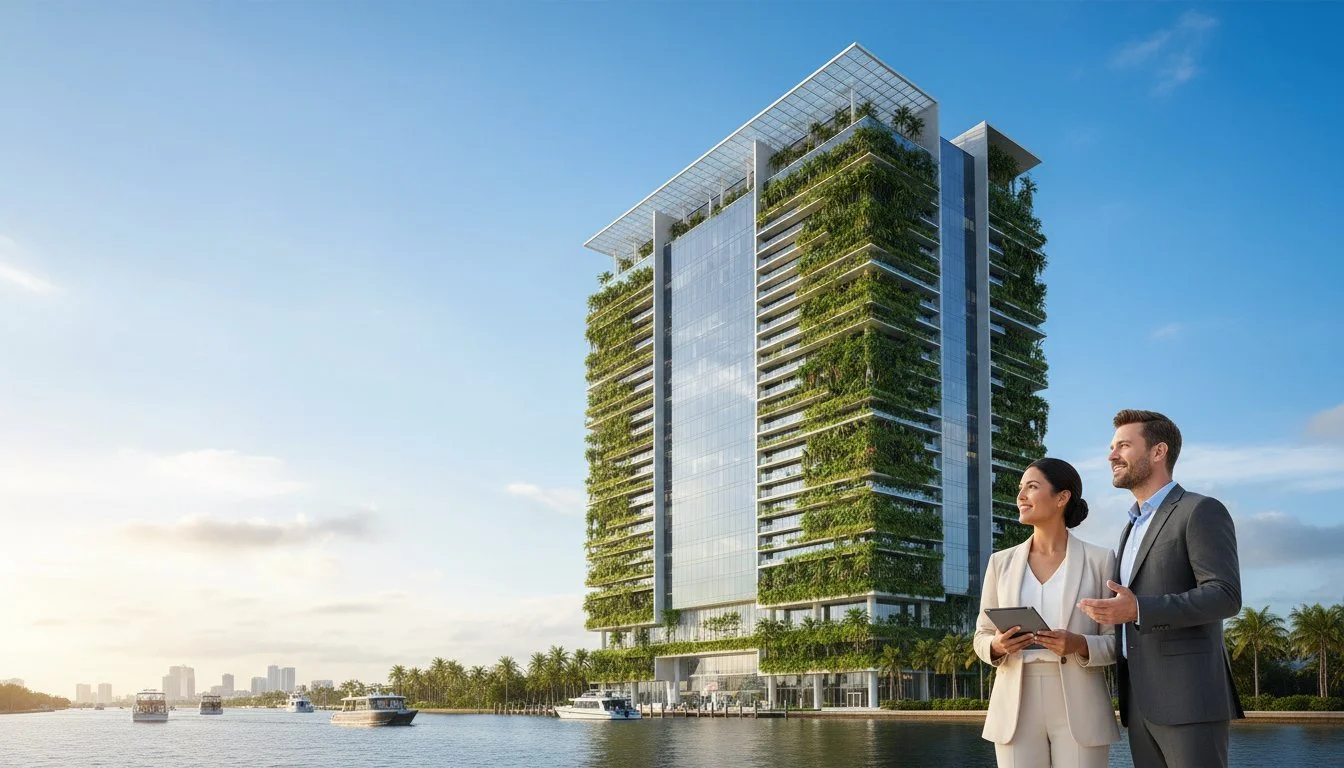
In May 2026, the global green building market is valued at $675.37 billion, proving that sustainable construction is no longer a niche choice but a core financial strategy. You likely recognize that the shift to LEED v5 on July 1, 2026, and the release of the ICC 700-2025 NGBS have created a complex landscape that many developers don't have the internal bandwidth to manage. It's frustrating to face rising insurance premiums in coastal regions like Florida while trying to determine which certification offers the best ROI.
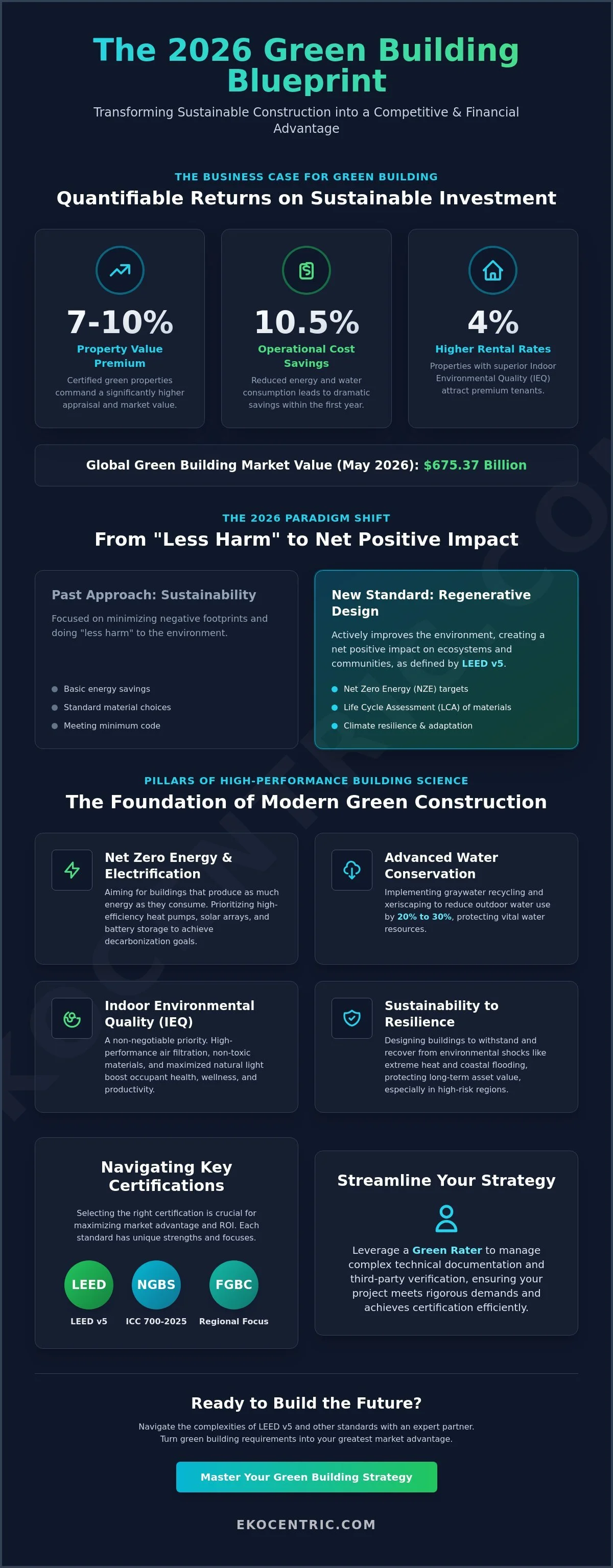
This guide will help you master the latest standards and business strategies needed to build high-performance properties. We'll provide a clear path to LEED and FGBC certification, show you how to lower operational costs by 10.5% in the first year, and outline how to capture the 7 to 10% value premium that certified properties now command. By the end of this article, you'll have the tools to transform Green Building requirements into a competitive advantage that leads the market.
Key Takeaways
Transition from "less harm" to regenerative design by mastering the new LEED v5 framework and upcoming 2026 requirements.
Optimize energy performance through building science strategies like advanced envelopes and real-time IoT monitoring.
Select the best certification for your project by comparing the costs and market advantages of LEED, NGBS, and FGBC.
Realize the business case for Green Building through documented increases in property appraisal values and long-term operational savings.
Streamline the certification process by leveraging a Green Rater to manage technical documentation and third-party verification.
Table of Contents
What is Green Building? Defining Sustainable Construction in 2026
Defining What is Green Building? in 2026 requires looking beyond simple energy savings. It's a holistic approach that integrates design, construction, and operation to create structures that work in harmony with their surroundings. While early iterations of sustainable construction focused on doing "less harm," the launch of LEED v5 in 2026 marks a definitive shift toward regenerative design. This means buildings should actively improve their environment rather than just minimizing their negative footprint. It's about creating a net positive impact on both the ecosystem and the community.
Developers today use the Triple Bottom Line to measure success. This framework balances People (enhancing occupant health), Planet (protecting natural resources), and Profit (ensuring a strong ROI). To achieve this, builders rely on Life Cycle Assessment (LCA). This process evaluates the total environmental impact of materials from extraction to demolition. It's a pragmatic way to address embodied carbon, which is a major focus for projects registering after the July 1, 2026, LEED v4.1 registration deadline. By analyzing the carbon footprint of concrete or steel early in the design phase, you can make informed choices that protect your long-term asset value and ensure your Green Building project leads the market.
The Core Principles of Sustainable Development
Energy efficiency remains a top priority, but the target has moved to Net Zero Energy (NZE). These buildings produce as much energy as they consume over a year. Water conservation is equally vital. We're seeing widespread adoption of graywater recycling and xeriscaping to reduce outdoor water use by 20 to 30%. Finally, Indoor Environmental Quality (IEQ) has become a non-negotiable developer priority. High-performance air filtration and maximized natural light aren't just perks; they're essential for properties that command 4% higher rents. Healthy buildings attract long-term tenants who value wellness as much as functionality.
From Sustainability to Resilience
In 2026, the conversation has expanded from sustainability to resilience. Resilience is a building's ability to withstand and recover from environmental shocks like extreme heat or coastal flooding. This is a primary driver for investment this year, especially as insurance premiums rise in regions like Florida. Builders who lack the internal bandwidth to manage these complex standards often turn to professional consulting services to ensure their projects meet these rigorous demands. Regenerative design is a system that restores rather than depletes local ecosystems.
The Essential Pillars of High-Performance Building Science
The building envelope serves as the primary defense against energy loss. It's the physical barrier between the conditioned interior and the unpredictable exterior environment. High-performance Green Building projects in 2026 prioritize continuous insulation and high-performance glazing to eliminate thermal bridging. This isn't just about comfort; it's about reducing the mechanical load on the building. When the envelope is airtight, HVAC systems can be sized more accurately, which lowers initial capital costs and long-term utility bills. Without a robust envelope, even the most advanced mechanical systems will struggle to maintain efficiency.
Smart building technology has moved from a luxury feature to a core requirement for modern projects. We're seeing a surge in IoT sensors that provide real-time data on energy consumption, water use, and air quality. This data is critical for closing the "Performance Gap." Historically, many buildings performed 20% to 30% worse in reality than they did in the design model. Real-time monitoring allows facility managers to identify inefficiencies immediately and adjust systems for peak performance. Implementing Your Strategy for high-performance starts with site selection and continues through rigorous commissioning to ensure design intent matches operational reality.
Energy Systems and Decarbonization
Building electrification is the dominant standard for 2026. The California Energy Code, which became effective on January 1, 2026, now strongly encourages the use of energy-efficient heat pumps for both space and water heating. Integrating these systems with solar arrays and battery storage, such as the Tesla Powerwall, allows projects to achieve higher certification tiers and greater resilience. Many developers don't have the bandwidth to manage these technical integrations alone. You can leverage Ekocentric's consulting services to ensure your energy models are accurate and compliant with the latest standards.
Material Health and Circularity
Modern builds increasingly rely on low-carbon concrete and materials backed by Environmental Product Declarations (EPDs). These documents offer transparency regarding the carbon footprint of every component. We've seen a 15% increase in the use of reclaimed and salvaged materials in high-end residential projects over the last two years. Effective waste reduction strategies during construction aren't just environmentally friendly; they're a pragmatic way to earn LEED credits. If you're looking for a partner to guide your next project toward these goals, our team can provide the technical verification you need to succeed.
Green Building Certifications: LEED vs. NGBS vs. FGBC
Choosing between Green Building Certifications isn't just a matter of prestige; it's a strategic business decision that impacts your project's appraisal and marketability. As of May 2026, the landscape has shifted with the mandatory adoption of LEED v5 for new registrations starting July 1. While LEED offers global recognition and the highest rental premiums, it also carries the highest rigor and cost. For many residential and multi-family developers, the ICC 700-2025 National Green Building Standard (NGBS) provides a more streamlined, cost-effective path. Regional players, particularly those in the Southeast, often look to the Florida Green Building Coalition (FGBC) to address specific climate challenges that national standards might overlook.
Most high-performance certifications require third-party verification to ensure the building performs as designed. For LEED for Homes and residential NGBS projects, this means hiring a Green Rater. These professionals provide the "on-the-ground" inspection and testing needed to confirm compliance. They bridge the gap between the developer's goals and the final certification, ensuring that every energy-efficient feature is documented correctly. Without this level of oversight, projects often fail to meet the strict performance thresholds required for Green Building status in 2026.
LEED BD+C: The International Gold Standard
The LEED Building Design and Construction (BD+C) rating system remains the most recognized framework for commercial and high-rise residential builds. It rewards excellence in Sustainable Sites, Energy and Atmosphere, and Water Efficiency. The total certification cost for a 50,000 sq ft building can range from $180,000 to $350,000, but the 7% to 10% property value premium often justifies the investment. LEED v5 prioritizes carbon, health, and ecosystem restoration.
NGBS and FGBC: Practical Alternatives
Multi-family developers often prefer NGBS Green Verification because it's designed specifically for residential workflows. The fifth edition, released in April 2026, includes expanded resilience practices and low-carbon design options that align with current market demands. For builders in Florida, the FGBC standard is a vital tool for managing extreme humidity and hurricane risks. It offers a pragmatic, local approach that ensures buildings are resilient against regional environmental shocks. If you're navigating these choices, you can explore our certification consulting services to determine which path offers the best ROI for your specific site and project type.
The Business Case: ROI and Market Value of Green Buildings
The financial narrative surrounding sustainable construction has undergone a radical transformation. By May 2026, the global market for these projects has reached $675.37 billion, signaling that Green Building is now a primary driver of asset valuation. It's no longer just about environmental stewardship; it's about the 19% average return on investment that energy savings provide over a five-year period. For developers, this translates to a 10.5% reduction in operating costs within the first year alone. When you combine these savings with a 7% to 10% premium on property values, the business case for high-performance construction becomes undeniable.
Lease rates also reflect this market shift. Certified office buildings currently command approximately 4% higher rents per square foot compared to conventional structures. This "green premium" is driven by institutional investors who use Environmental, Social, and Governance (ESG) criteria to filter their portfolios. These investors prefer LEED-certified assets because they represent lower risk and higher long-term stability. By meeting these rigorous standards, you position your property to attract the highest quality capital and ensure it remains competitive as standards continue to evolve.
Resilience-Driven Financial Benefits
In volatile markets like Florida, resilience has become a financial necessity. Building to FGBC standards directly impacts your bottom line by addressing the high insurance premiums common in coastal regions. Insurers are increasingly offering better terms for properties that demonstrate a superior ability to withstand environmental shocks. Beyond insurance, there's a clear demographic demand. Gen Z and Millennial buyers, who now dominate the market, actively prioritize "healthier" living spaces with documented air quality and energy performance. This demand ensures that resilient, sustainable properties maintain higher occupancy rates and faster absorption speeds.
Attracting Capital and Financing
Securing favorable financing in 2026 often requires proof of sustainability. Many lenders now offer specialized sustainable development loans with better interest rates for projects that achieve LEED or NGBS certification. These financial products are designed to reward the lower risk profile of energy-efficient buildings. Because these structures use 25% less energy on average, they're less vulnerable to fluctuating utility costs, making them safer bets for institutional lenders. If you're looking to capitalize on these financial advantages but lack the internal bandwidth to manage the documentation, you can partner with our expert team for certification management to ensure your project meets every requirement for premium financing.
Implementing Your Strategy: Partnering with a Green Rater
Developing a high-performance property is a complex undertaking that requires precise coordination. While the financial benefits of Green Building are clear, the technical requirements of LEED v5 or the 2025 NGBS can overwhelm even the most experienced teams. Many developers and builders simply don't have the bandwidth to manage the sustainability side of a project while also overseeing construction schedules and budgets. This is where a LEED Green Rater becomes an indispensable partner. They act as a specialized project manager, providing the third-party verification required to prove your building meets rigorous standards for energy efficiency and resilience.
One of the most expensive mistakes in sustainable construction is treating certification as an afterthought. Involving a consultant during the design phase prevents costly re-work later in the process. For example, adjusting the building envelope on paper is a simple task; attempting to fix insulation or glazing issues after the walls are closed is a financial disaster. By integrating expert oversight early, you ensure that every design choice aligns with your target certification level. This proactive approach protects your budget and ensures the final asset performs exactly as intended from the day it opens.
The Value of Expert Consulting
Ekocentric provides that additional layer of management that builders often lack. We manage the technical documentation and certification hurdles so your team can focus on what they do best: building. Our process includes early-stage solar consultation and detailed energy modeling to identify the most cost-effective paths to compliance. We don't just point out problems; we offer pragmatic solutions that balance environmental goals with your business realities. You can connect with our LEED and NGBS consultants to begin optimizing your next project for maximum market value.
Your Project Roadmap
Starting your certification journey requires a structured approach to avoid delays. We follow a clear, three-phase roadmap to guide your project from concept to completion:
Phase 1: Feasibility and goal setting. We analyze your project to determine whether LEED, NGBS, or FGBC offers the best ROI for your specific market and site conditions.
Phase 2: Design integration and documentation management. Our team works with your architects to ensure the plans meet all necessary credits and we manage the complex submittal process.
Phase 3: Field verification and final certification submission. We conduct on-site inspections, including blower door and duct leakage testing, to provide the final data needed for certification.
Taking these steps today ensures your project remains a leader in the 2026 market. With the right partner, you can turn sustainability requirements into a powerful tool for value creation and long-term asset resilience.
Building the Future of High-Performance Properties
The transition to LEED v5 and the release of the 2025 NGBS have solidified a new era for the construction industry. High-performance properties now command 4% higher rents and offer a 19% average ROI over five years. You've seen that the path to market leadership requires more than just energy efficiency; it demands a commitment to resilience and regenerative design. Mastering these standards is no longer optional for developers who want to protect their assets from rising insurance premiums and climate risks. The business case is settled.
You don't have to manage these technical complexities alone. We provide the expert oversight needed to ensure your projects achieve certification without the typical administrative burden. Our team offers specialized FGBC consulting for Florida projects and expert LEED Green Rater verification to prevent costly re-work. We act as your pragmatic partner during every phase of construction. Partner with Ekocentric to manage your next green certification project and ensure your Green Building strategy delivers maximum value. We're ready to help you build a healthier and more sustainable future.
Frequently Asked Questions
What is the difference between green building and sustainable building?
Green building is a specific subset of sustainable development that focuses primarily on the environmental performance of a structure. While sustainability encompasses broader social and economic factors, Green Building targets the reduction of resource consumption and carbon emissions. It's a pragmatic framework that uses technical standards to minimize a project's footprint. In 2026, this focus has evolved from simply doing "less harm" to actively restoring local ecosystems through regenerative design practices.
How much does it cost to get a LEED certification for a new building?
Registration fees for new LEED construction in 2026 range from $1,200 to $2,750, while certification fees scale from $2,500 to $22,000 based on project size. These figures, verified by UGREEN in April 2026, represent the administrative costs paid to the GBCI. They don't include the soft costs for consulting or the hard costs for high-performance materials. For a 50,000 square foot commercial building targeting Gold status, developers should budget for a total premium between $180,000 and $350,000.
Is green building only for luxury developments?
No, green building practices are increasingly integrated into affordable and mid-market housing to lower long-term tenant utility costs. Standards like the ICC 700-2025 NGBS offer a cost-effective path for multi-family developers to achieve high performance without the luxury price tag. By reducing water and energy use by 20% to 30%, these projects provide essential financial relief to residents. It's a strategic choice that improves the durability of the asset regardless of the property's market tier.
What is a LEED Green Rater and why do I need one?
A LEED Green Rater is a mandatory third-party professional who provides field verification for residential projects. You need one because the USGBC requires an independent expert to confirm that the home actually meets the energy and environmental performance standards specified in the design. They perform critical on-site tests, such as blower door and duct leakage testing. This ensures the building envelope and mechanical systems are functioning at peak efficiency before final certification is granted.
Can an existing building be converted into a green building?
Yes, existing buildings can achieve certification through the LEED O+M (Operations and Maintenance) rating system or deep energy retrofits. Conversion often involves upgrading HVAC systems to heat pump technology and improving the building envelope to reduce air leakage. With the Washington State Clean Buildings Act compliance deadline of June 1, 2026, many owners are already performing these upgrades. These retrofits are essential for maintaining asset value and avoiding the "brown discount" that affects inefficient properties.
How does green building impact indoor air quality and occupant health?
Green building improves health by mandating the use of low-VOC materials and increasing fresh air ventilation rates through high-performance filtration. By reducing exposure to toxins and mold, these structures significantly decrease respiratory issues for occupants. This focus on wellness is a primary reason why certified office buildings command higher rents. In 2026, occupant health is no longer a secondary benefit; it's a core requirement for developers who want to attract high-quality, long-term tenants.
What are the most common green building materials used in 2026?
Low-carbon concrete and materials backed by Environmental Product Declarations (EPDs) are the most prevalent choices in 2026 construction. Developers are also shifting toward mass timber and salvaged materials to reduce embodied carbon. The use of these materials is driven by the new LEED v5 standards, which prioritize carbon neutrality throughout the building's lifecycle. By selecting materials with a lower environmental impact, builders can ensure their projects meet the strict decarbonization targets required by modern institutional investors.
Does green building help with Florida hurricane resilience?
Yes, regional standards like the FGBC specifically mandate design features that improve wind resistance and flood recovery. These certifications include requirements for impact-rated glazing and reinforced roofing systems that exceed standard building codes. These features aren't just for safety; they're pragmatic solutions that help developers qualify for lower property insurance rates. In coastal regions where premiums have spiked, building for resilience is a critical strategy to protect the long-term financial viability of the project.