
A LEED goal can be put at risk when subcontractor responsibilities are unclear. Ensuring subcontractor compliance with LEED requirements starts with setting expectations early, explaining material and documentation requirements, and using contract flow-down provisions to define each trade’s responsibilities.
Subcontractors need practical direction, not just a project-wide sustainability target. They should know which products and records apply to their scope, when submittals are due, and how site practices affect LEED goals. Clear communication helps teams follow consistent procedures from purchasing through installation and close-out.
This guide explains how LEED requirements relate to subcontractor work and why a dedicated LEED flow-down provision matters. It covers communicating project priorities, educating subcontractors about materials and documentation, and coordinating purchasing with submittal schedules. These practices make sustainability part of day-to-day execution and help support energy savings, resilience, and environmental performance.
Key Takeaways
Understand how LEED evaluates building performance and why mandatory prerequisites need attention alongside optional credits.
Prepare subcontractors to select suitable materials and provide the documentation their scopes require.
Use LEED-specific subcontract provisions to make project goals and responsibilities clear from the outset.
Communicate requirements early and reinforce them throughout purchasing, installation, and site work.
Keep construction and demolition recycling streams free of non-construction waste to reduce contamination risks.
Table of Contents
Educating contractors and subcontractors about LEED materials
How do subcontractors comply with LEED construction waste management requirements?
LEED certification and sustainable building design
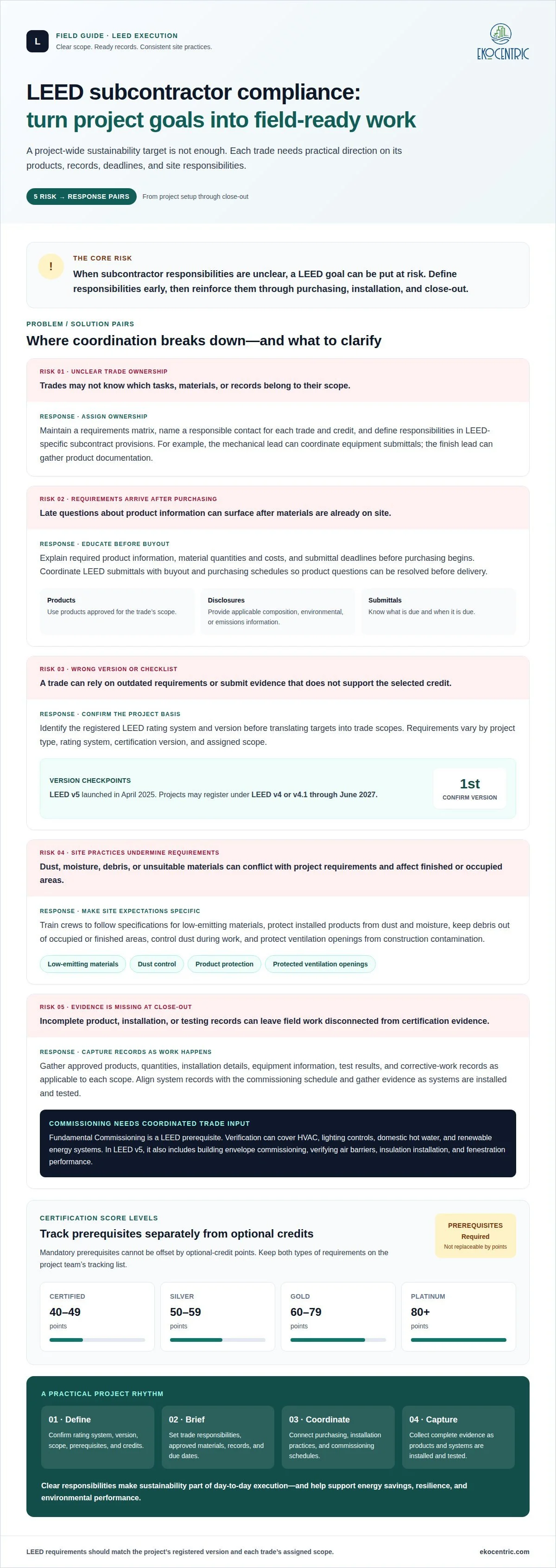
Yes. Subcontractor requirements differ by project type, selected LEED rating system, and certification version. Each trade’s assigned scope determines the tasks, materials, and records it must provide.
The U.S. Green Building Council developed LEED to assess building environmental performance across location, design, construction, and operations. Project teams select a rating system suited to the building and project scope, then identify applicable prerequisites and credits. LEED certification has four levels: Certified at 40-49 points, Silver at 50-59, Gold at 60-79, and Platinum at 80 or more. Mandatory prerequisites cannot be offset by optional-credit points, so teams must track both types separately.
Version also matters. LEED v5 launched in April 2025, while projects may register under LEED v4 or v4.1 through June 2027. Teams should identify the project’s registered version before translating sustainability targets into subcontract scopes. This prevents a trade from relying on an outdated checklist or submitting evidence that does not support the selected credit. For example, a lighting subcontractor’s product data and installation records should match the project’s documented design and applicable requirements.
LEED goals cover sustainable site development, water savings, energy efficiency, material selection, and indoor environmental quality. Assign a project lead to maintain the requirements matrix, then identify a responsible contact for each trade and credit. For example, the mechanical lead can coordinate equipment submittals, while the finish lead gathers product documentation. Clear ownership connects subcontractor records to certification evidence and helps prepare the team for inspections.
Experience with sustainable building products matters most when it matches the subcontractor’s actual scope. During selection, assess relevant project experience, familiarity with product documentation, and the ability to track substitutions before purchase. Then define how the trade will record approved products, quantities, and installation details. A material choice can affect multiple goals: interior finishes may influence material selection and indoor environmental quality, while lighting decisions can affect energy performance.
Commissioning also connects design intent to installed work. Fundamental Commissioning is a LEED prerequisite, and verification can cover HVAC, lighting controls, domestic hot water, and renewable energy systems. In LEED v5, Fundamental Commissioning includes building envelope commissioning. This verifies air barriers, insulation installation, and fenestration performance. Assigning envelope responsibilities to the relevant trades lets the team document installation and address deficiencies before close-out. These coordinated roles make LEED goals practical across design, purchasing, installation, and certification review.
Educating contractors and subcontractors about LEED materials
Material education turns LEED goals into clear purchasing, installation, and documentation practices. Match training to subcontractor scopes so each trade understands its environmental responsibilities.
Subcontractor Contributions
Recognizing subcontractor contributions means linking each trade’s work to the project’s sustainability goals. This helps teams see how careful product selection and complete records support certification.
For LEED material requirements, subcontractors should use products approved for their scope and provide the project team with applicable product disclosures. These may include documentation about material composition, environmental attributes, or emissions, depending on the selected credit. Low-emitting products matter for indoor environmental quality; a high-VOC paint used for touch-ups can affect LEED credit 4.2.
How can subcontractors meet LEED construction indoor air quality and pollution prevention requirements? They can follow project specifications for low-emitting materials, protect installed products from dust and moisture, and keep debris out of occupied or finished areas. Train crews to control dust during work and protect ventilation openings from construction contamination.
Education is most effective before purchasing begins. The general contractor can explain the required product information, how to record material quantities and costs, and when submittals are due. Coordinate LEED submittals with subcontractor buyout and purchasing schedules. This gives teams time to resolve product questions before materials arrive on site, rather than uncovering documentation gaps at close-out.
Commissioning also depends on clear records. Subcontractors working on relevant systems can provide installation details, equipment information, test results, and records of corrective work. Set these expectations alongside the commissioning schedule, then gather evidence as systems are installed and tested. Complete records connect field work to commissioning findings and resolutions.
Recognition can be practical: acknowledge trades that submit complete records on schedule, propose suitable alternatives early, or help resolve installation issues. Sharing these examples in project meetings reinforces effective practices and shows how each scope contributes to certification. It also makes environmental performance a shared project outcome, not just a paperwork task.
Compliance Failures and Prevention
Compliance failures happen when a product, installation, or record does not match the project’s LEED plan. Preventing them protects certification documentation and helps avoid rework.
What are common subcontractor compliance failures and how can they be prevented? Common problems include unapproved substitutions, missing product disclosures, late submittals, and high-VOC products used for small touch-ups. Prevent them with clear specifications, timely product reviews, and a recordkeeping process that tracks each material from approval through installation.
Before installation, field teams should compare delivered products with approved submittals. If a substitution is needed, pause the affected purchase or installation until the project team reviews its documentation and impact on targeted credits. Keep approval records with delivery and installation information so close-out evidence reflects what the building actually contains.
For teams coordinating certification evidence, LEED project support can help connect material documentation with project requirements.
LEED-specific subcontract flow-down provisions
A LEED-specific flow-down provision translates certification objectives into clear subcontractor obligations. It connects sustainable building goals with the work, records, and coordination each trade controls.
If subcontractors fail to meet LEED requirements, missing documentation or noncompliant work can put targeted credits and certification at risk. Responsibility for resulting costs depends on the subcontract’s responsibility and risk-allocation terms. A carefully drafted LEED provision, combined with indemnification, can assign responsibility to the subcontractor responsible for the work.
A separate green flow-down provision should acknowledge the project’s LEED objectives and establish the contractor’s obligations to the owner. It should specify the requirements that apply to each subcontractor’s scope, rather than refer broadly to sustainability. For example, a flooring subcontractor’s obligations might cover approved products, required records, installation practices, and submittal timing. This specificity helps trades understand how their work relates to the project rating before procurement begins.
Turn each applicable requirement into a deliverable. Specify the documents the subcontractor must provide, when they are due, and which project contact receives them. Depending on the scope, a provision can address product submittals, material disclosures, delivery records, inspection access, and corrective-action documentation. It should also explain how proposed substitutions are submitted for review before purchase or installation. This lets the team assess a change’s energy and environmental implications without relying on incomplete close-out records.
Coordination terms matter too. Align subcontractor submittals with purchasing and construction schedules, and specify how each trade participates in required inspections or commissioning activities. For example, an HVAC subcontractor may need to provide system information and installation records to support testing. The contract should clearly state cooperation and documentation duties without assigning a trade responsibilities outside its scope. This makes accountability practical in the field, not merely a topic at the kickoff meeting.
A useful provision also explains what happens when work or records fall short. Set out a process for written notice, correction, resubmission, and documenting resolution. Explain how the subcontractor reports a proposed deviation and who reviews it. Pairing these steps with applicable remedies and indemnification language helps align responsibility with control over the affected work. Contract language should reflect the project’s actual rating goals and subcontract structure.
For example, if a finish subcontractor installs a product that differs from an approved submittal, the flow-down process should specify the notice, review, and documentation steps. Clear terms support timely decisions and help protect sustainability goals, including energy savings, resilience, and reduced carbon impact. The contract then connects LEED objectives with specific actions each subcontractor can manage.
Communicating LEED goals and requirements
Communication should start when subcontractors join a project, before bids and purchasing decisions lock in the work. Include relevant LEED requirements in bid documents, then explain them before selecting each trade. This gives bidders a clear view of project criteria and the records their scopes must support. For example, a lighting subcontractor needs to know what fixture information and installation details the project team expects.
Appoint a sustainability contact to connect subcontractors with the project’s LEED lead. That contact can explain how each trade’s tasks relate to specific credits, energy goals, and required records. Share a concise responsibility matrix listing each scope, assigned contact, submittal, and due date. This helps ensure subcontractor compliance with LEED requirements by making ownership and communication routes clear.
At kickoff, explain the project’s certification target, selected rating system, applicable criteria, and key milestones. Distinguish mandatory prerequisites from optional credits so teams know which requirements apply regardless of the points sought. Use examples tied to actual work: a plumbing trade may need to document water-related products, while an electrical trade may provide information supporting energy measures. Keep the discussion grounded in approved project documents.
Daily safety meetings can reinforce sustainability alongside site coordination. Reserve a brief agenda item for a specific LEED priority, such as protecting installed materials or following the approved product submittal. Keep the message relevant to the crews present that day. When a finish crew is working, for example, remind them to use approved touch-up products and keep required records with the work package.
Communication must continue as schedules and field conditions change. When a proposed substitution or installation change arises, identify the affected LEED criteria, responsible trade, review contact, and required documentation. Record the decision and inform purchasing and field teams before the change proceeds. This ongoing exchange helps ensure subcontractor compliance with LEED requirements as project decisions evolve.
Field checklists turn preconstruction goals into repeatable site checks. The general contractor can track each LEED metric, record observations, assign corrective actions, and follow them through to resolution. For example, a checklist can prompt the superintendent to compare a delivered product with its approved submittal. Share findings promptly with the relevant subcontractor so discrepancies are addressed before close-out.
Close the loop with brief progress reviews tied to project milestones. Review overdue submittals, unresolved field issues, upcoming inspections, and credit documentation with the responsible contacts. A meeting before major purchasing or installation phases can surface conflicts while practical options remain. Consistent, scope-specific communication helps subcontractors understand how their work contributes to certification and the project’s energy and environmental objectives.
How do subcontractors comply with LEED construction waste management requirements?
Subcontractors support LEED waste management by following the project’s sorting plan and keeping non-construction waste out of construction and demolition recycling bins. Contamination can reduce recycling rates or lead a facility to refuse a load. Clear instructions in each work area help crews sort debris correctly and protect the project’s waste documentation.
Start with a project-specific orientation before demolition or material installation begins. Identify waste streams, designated containers, site locations, and the person responsible for questions. Use familiar examples: clean cardboard packaging goes in its designated stream, while lunch waste stays out of construction debris recycling. The project’s waste plan determines which categories and containers apply.
Subcontractors can prevent confusion by explaining the plan to every crew member, including new arrivals and delivery teams. Post simple sorting instructions near collection points and review them during site meetings. Workers who know where to take packaging are less likely to put it in the wrong container. Supervisors can reinforce the same guidance when work areas or container locations change.
Keep waste streams clean at the point of generation. For example, a drywall crew can separate its work debris according to the project plan instead of leaving mixed waste for another trade. Handle packaging and discarded materials through the designated collection process. If a container’s contents are unclear or contamination occurs, notify the site contact promptly. Early correction can prevent the same problem from affecting later loads.
Coordination between trades matters. A demolition subcontractor may create different debris from a finish installer, so each scope needs clear sorting instructions. The general contractor can coordinate collection areas, communicate changes, and align the waste plan with the work sequence. Subcontractors should not move debris between containers unless project instructions allow it. Consistent handling makes waste tracking more useful.
Documentation should follow the project’s waste procedures. Subcontractors can record information requested by the project team, such as material type, collection date, or destination. Submit records promptly and identify the related work area or trade. This helps the team organize construction and demolition waste information for certification review. Accurate records also help explain unusual loads or corrections.
Recycling and reuse can support LEED credits, including construction and demolition debris recycling and the use of recycled or salvaged materials. Subcontractors should flag reusable materials before disposal and follow the project’s direction for handling them. That coordination can keep suitable materials in use while maintaining clean recycling streams. For project-specific certification support, explore LEED Green Rater Services.
Ekocentric
Ekocentric supports teams pursuing building certifications through consulting and verification aligned with project goals. Services include LEED BD+C Consulting, LEED Green Rater Services, National Green Building Standard Green Verification, and FGBC Certification Consulting. For residential energy performance, RESNET Home Energy Rating verification is a separate pathway, not a LEED requirement; Ekocentric also provides RESNET HERS Rater services.
Bring Ekocentric in when your team needs help coordinating certification requirements or choosing a verification pathway suited to the project. Contact Ekocentric to discuss your goals and determine the appropriate next steps.
Build LEED priorities into the next project phase
Certification intent has practical value when it guides decisions from planning through close-out instead of remaining a goal on paper. Keep responsibilities visible, involve subcontractors in decisions affecting their scopes, and make documentation part of the work. This turns ensuring subcontractor compliance with LEED requirements into an ongoing project practice, rather than a final review exercise. It also supports a purposeful approach to energy savings, resilience, and environmental performance.
Each project has its own certification pathway, team structure, and coordination needs. Ekocentric can help project teams connect their certification objectives with the documentation and verification process. If you’re planning a LEED project or working through subcontractor coordination, contact Ekocentric about LEED compliance to discuss your project’s needs. Clear goals and well-coordinated teams can help make sustainable building practices part of the finished project.
Frequently Asked Questions
What LEED requirements apply to subcontractors on a construction project?
Subcontractors follow the LEED prerequisites and credits relevant to their scope and the selected rating system. For example, a finish trade may use products that meet project criteria and supply the relevant product records. A subcontractor’s tasks can also include installation practices, site procedures, inspections, or commissioning evidence. The project team defines which requirements apply, so obligations can differ between trades on the same project.
How should LEED responsibilities be assigned to subcontractors in contracts and bid documents?
Bid documents and subcontracts should identify applicable LEED deliverables, responsible parties, and submission deadlines. Tie each obligation to work the subcontractor controls, such as product information for specified materials or records of completed installation. A responsibility schedule can name the trade, its assigned LEED tasks, and the project contact receiving evidence. The contract should also explain how proposed substitutions and corrections are handled before they affect project documentation.
What LEED training should subcontractors receive before starting work?
Before mobilization, subcontractors need an orientation to the selected LEED version, relevant requirements, documentation process, and site procedures. Training should use examples from each trade’s scope, such as reviewing a sample product submittal or identifying whom to notify about a proposed substitution. Include forepersons and workers who handle materials or site practices so expectations reach the people making daily decisions, not only office staff.
How can a project team track subcontractor compliance with LEED credits and prerequisites?
Use a project tracker that links each applicable prerequisite or credit to the responsible trade, required evidence, due date, and review status. Keep prerequisites visibly distinct from optional credits because credit points cannot compensate for a failed prerequisite. Record open questions, returned submittals, field observations, and completed corrective actions. Reviewing the tracker alongside procurement and construction milestones helps the team spot missing evidence while the responsible trade can still address it.
What documentation must subcontractors provide for LEED certification?
Required records depend on the project’s rating system, targeted credits, and each subcontractor’s scope. Materials-related evidence may include product information and records showing what was delivered and installed. Other scopes may contribute information about energy or water performance, indoor environmental quality, waste handling, inspections, or system testing. Organize submissions by trade and work area, and ensure they describe installed conditions rather than an earlier plan or superseded product selection.