Certification involves more than paperwork. The role of a LEED Green Rater is to verify that a residential project meets LEED requirements, review documentation for features that cannot be confirmed on site, and assemble the project submittal package for certification review. Raters work from design through construction, helping connect sustainability goals with the building as constructed.
The work requires more than familiarity with rating criteria. A Green Rater needs building science knowledge and the ability to assess project details, document evidence, and maintain an independent verification process. Understanding how these responsibilities differ from other project roles, and what experience and credentials the designation requires, helps clarify where the Rater fits on the team.
This guide explains the Rater’s role, the building science and verification skills involved, and how training, designation, and authorization fit together. It also explains why professional conduct matters: credible verification supports resilient, energy-efficient homes and gives project teams a clear path through residential LEED certification.
Key Takeaways
Understand how a Green Rater supports residential LEED certification from project design through construction.
See why building science knowledge helps assess energy performance, moisture, airflow, and the building envelope.
Learn how site observations and documentation work together to support a complete project submittal.
Get a clear overview of the experience, credentials, training, and ongoing responsibilities involved in designation.
Recognize why independence and professional conduct are essential to credible project verification.
Table of Contents
What is a LEED Green Rater?
The role of a LEED Green Rater is to verify residential project compliance with LEED requirements and prepare evidence for certification review. The work starts during design and continues through construction, connecting green building commitments with installed conditions and project records.
Field verification can be complicated by timing and site access. Insulation, air barriers, and ductwork may be concealed before inspection, while submitted documents may not match installed conditions. Coordinate site visits with construction milestones and record discrepancies promptly, so the team can address them before assembling the submittal package.
Bring the rater into the project during design. Residential project teams seeking LEED certification must involve a LEED Green Rater, not wait until construction is nearly complete. Early coordination lets the rater understand the project’s rating approach, identify evidence needed later, and plan verification around construction milestones. For LEED for Homes, the applicable residential pathway includes low-rise buildings of one to three stories and mid-rise buildings of four to eight stories.
Keep verification distinct from design and construction. The Green Rater verifies whether project features meet LEED requirements; the builder and design team remain responsible for their respective project work. This distinction matters when a detail changes in the field. For example, a revised assembly may affect the evidence needed to demonstrate a credit, so the change should be documented and assessed against the applicable LEED criteria.
Coordinate the separate energy-rater role. Every LEED Residential project requires both a LEED Green Rater and a Qualified Energy Rater, also called a Qualified Professional. The energy rater focuses on energy inspections and testing, while the Green Rater verifies broader LEED requirements and project documentation. RESNET Home Energy Rating verification illustrates the energy-rater workstream; it doesn’t replace the Green Rater’s certification responsibilities.
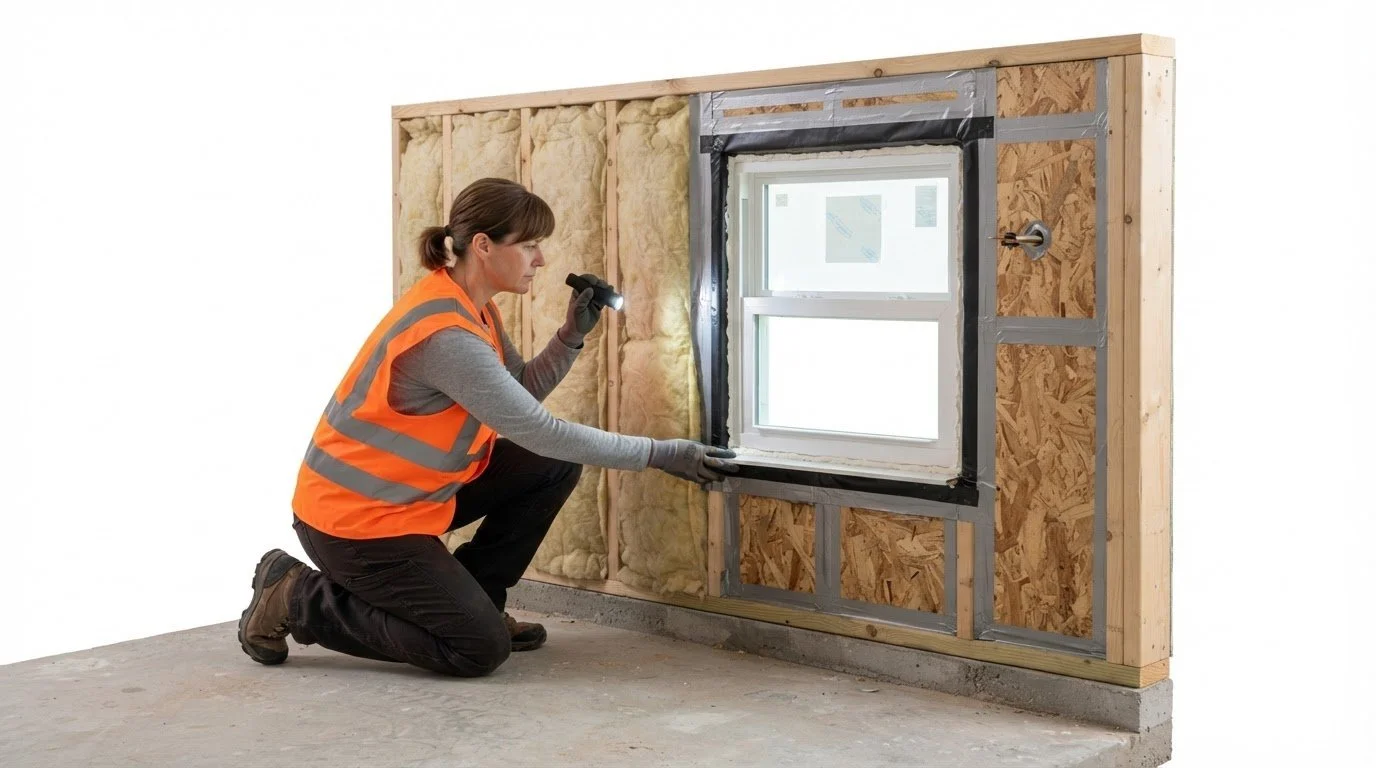
Verify installed conditions and supporting evidence. At the project site, the Green Rater checks items that can be observed directly. For requirements that can’t be confirmed on site, the rater reviews documentation instead. This paired approach connects the physical building with records such as product information, plans, or other supporting materials, helping ensure the certification package addresses both visible work and less observable project features.
Assemble a clear submittal package for review. After verification and documentation review, the Green Rater organizes the residential project’s evidence for certification review by GBCI. A complete package should make it possible to trace each applicable requirement to its supporting observation or record. This final task turns field notes and project documents into a structured submission, rather than leaving the certification reviewer to piece together evidence from scattered files.
Building science knowledge
LEED Green Rater applicants must demonstrate building science knowledge across four connected topics: the building envelope, heat transfer, moisture transfer, and air transfer. The requirement is at least one CEU for each topic. This knowledge helps raters understand how building components interact instead of treating each LEED credit as an isolated checklist item.
Build a foundation in envelope performance. Study how the building envelope separates indoor and outdoor conditions. For example, review how insulation, windows, and air barriers work together. A change to one component can affect heat, air, and moisture movement. That interaction matters when assessing a project’s energy performance and resilience, and when considering how installed details support the selected rating.
Connect heat transfer to project details. Learn how heat moves through assemblies and how that movement relates to the building’s thermal boundary. In practice, a rater should be able to recognize why an interruption in insulation or an unaddressed junction deserves attention. The goal is to interpret observed conditions using building science principles, then relate them to the applicable LEED requirement and project evidence.
Study moisture transfer alongside air transfer. Moisture and air movement can interact within building assemblies. A useful learning exercise is to trace how air leakage could carry moisture through a wall or roof detail. Understanding that relationship helps a rater assess the significance of an observed gap, recognize where additional documentation may be relevant, and describe conditions accurately without making unsupported assumptions about performance.
Meet the continuing education requirement by topic. Applicants need at least one CEU in each of the four required areas, not one CEU total across all topics. Parts 1 and 2 of LEED Green Rater Training count for 8 BPI CEUs. The LEED Green Rater LIVE Training offers 11 continuing education credits. Candidates can connect course learning to the required areas and track which subjects each education record supports.
Prepare to work across residential rating versions. LEED Green Rater training materials cover LEED for Homes v4 and LEED v4.1 residential materials. Green Raters are expected to know how to work in both versions. During training and practice, compare how project requirements are presented in each version, then apply the correct rating criteria to the project under review. This keeps the verification approach aligned with its LEED certification pathway.
Use the Green Associate as a knowledge-building step. A LEED Green Associate credential develops broader familiarity with green building concepts and LEED credits. It can help organize study, but it doesn’t replace the Green Rater’s specific building science requirement. Keep the distinction clear: general rating knowledge supports the work, while the four CEU topics address the technical foundation needed to interpret residential building conditions.
Documentation review and on-site verification
LEED Green Raters combine document review with site verification. They check requirements that can be observed, review evidence for elements that cannot be confirmed on site, verify residential project conditions, and assemble the supporting submittal package.
Raters visually verify LEED features; energy inspections and testing fall within the Qualified Energy Rater’s role. Coordinate both workstreams with construction milestones so that conditions can be checked before they are covered.
Review Project Documentation
Before scheduling verification, compare project records with the applicable LEED requirements. Check plans and supporting documents against the features the team expects to install, and note gaps or inconsistencies. For example, if a document describes an assembly that differs from the current plans, resolve the discrepancy before using it as certification evidence.
Perform On-Site Visual Verification
Inspect visible project conditions and compare them with the LEED requirements and reviewed records. Site verification does not mean the Green Rater performs every building test. Energy inspections and testing are handled through the separate Qualified Energy Rater role, so coordinate the work while keeping responsibilities clear.
Record observations and supporting images. Document what the site visit establishes, including the location and nature of relevant conditions. Photographs can help show visible details, such as an installed component or an area before it becomes concealed. Keep each image connected to its observation and related project documentation, so the assembled evidence explains what was verified rather than presenting unlabelled photos.
Plan visits around concealed work and project completion. A LEED for Homes Green Rater typically visits at least two times. One required visit takes place just before drywall installation, when systems that will be concealed can still be inspected. The final required visit follows completion of the entire project, including landscaping. Coordinate these milestones with the project team to preserve access.
Complete mentorship visits with the mentor. A LEED for Homes Green Rater mentorship requires two pre-drywall verification visits and two final verification visits. The first pre-drywall visit and first final visit must include the mentor accompanying the candidate. Use those visits to practice recording observations and connecting field evidence with the residential project’s submittal materials.
Organize evidence by requirement. After visits, connect each observation and supporting record to the relevant LEED requirement. Include documentation for elements that cannot be confirmed on site, and make clear which evidence supports each item. This organized record helps the project team submit a coherent package for review rather than relying on site observations alone.
Green Rater designation and authorization
Requirements depend on the credential and project role. Approved LEED Green Rater applicants need residential construction experience, a current LEED AP credential, required training, and an assessment.
There is no single total training and certification cost for every candidate. The amount depends on the required course, assessment, exam, and reference materials; these credential expenses are separate from project verification fees.
Confirm which residential rating system applies. LEED Green Rater requirements focus on residential project verification, while the training route can differ by location. Outside the United States and Canada, LEED Addenda 10443 describes an alternative training route of roughly 12 hours. Raters who will perform blower door and duct leakage testing themselves need another 8 hours. Use the route that matches both location and intended testing responsibilities.
Complete the required learning before applying. Candidates must complete the required training and take an online assessment before applying for the designation. The required free online course about LEED v4 residential rating systems lasts 5 hours. Treat that course as one part of the process, then complete the applicable Green Rater training and assessment. Course learning builds rating-system knowledge; it doesn’t by itself establish approved status.
Document relevant construction experience and credentials. Applicants for approved status need at least 3 years of residential construction experience and a current LEED AP BD+C or LEED AP Homes credential. They must also provide two professional references attesting to that residential construction experience. Gather experience details and references that clearly relate to residential projects, rather than relying on a general description of construction work.
Complete the mentorship and package work. Candidates must complete the LEED for Homes Green Rater mentorship within 24 months of passing the exam. The candidate must assemble two LEED for Homes Project Submittal Packages for review by QAD. Schedule mentorship activity so field practice and package preparation fit within that period, and keep the assembled materials consistent with the applicable LEED Residential requirements.
Maintain authorization through active practice. Approved Green Raters must verify at least 2 projects every 2 years to meet the minimum activity requirement, and renew their applications every two years. They must also meet GBCI quality metrics and follow the conflict-of-interest policies in the LEED Residential Quality Assurance Manual. Track completed projects and renewal requirements so active status reflects current, accountable practice.
Separate the Qualified Professional energy role. A Qualified Professional serving as an energy rater for LEED must show energy-inspection and testing experience on at least two similar-scope building projects. This designation supports the energy-rater workstream; it is distinct from Green Rater authorization. Match the experience evidence to the intended energy inspection and testing scope.
Green Rater roles and professional conduct
Work with the project team to gather evidence, then assemble the residential submittal package for GBCI review. The Green Rater verifies project requirements; the Rater does not replace the builder, design team, or certification reviewer.
Work with the Project Team
Set clear responsibilities with the project team at the start of a LEED Residential project. Coordinate verification timing, decide who maintains project records, and connect field observations to the relevant requirements. On a multifamily project, align communication among those responsible for construction and documentation. The Rater does not make every project decision.
Coordinate with GBCI
Prepare the project submittal package for GBCI review, organizing evidence by applicable LEED requirement. The Green Rater verifies conditions and assembles supporting material, but does not represent that certification has already been awarded. Keep observations and documentation consistent so reviewers can trace the basis for evaluating the residential project.
Protect independence in every verification. A LEED Green Rater cannot have a financial stake in the project they verify. This boundary supports objective review: the Rater records what the evidence shows, even when a finding means the team needs to address a gap. Keep verification distinct from financial interests and project decisions that could compromise impartial judgment.
Keep credentials matched to the work. Approved Green Rater candidates must hold a current LEED AP BD+C or LEED AP Homes credential. A LEED Green Associate credential can build general knowledge of LEED, but it doesn’t replace the required AP credential for approved Green Rater status. Match the credential to the residential rating work, and avoid presenting one designation as a substitute for another.
Clarify roles on homes and multifamily projects. The Green Rater verifies LEED requirements and assembles evidence; the project team carries out its construction and documentation responsibilities. The Qualified Energy Rater handles the distinct energy-rater workstream. Make these boundaries clear in project coordination, especially when several professionals contribute records or verification activities to a shared certification package.
Maintain accountable practice after approval. Approved Raters must meet GBCI quality metrics and follow conflict-of-interest policies in the LEED Residential Quality Assurance Manual. They must verify at least 2 projects every 2 years and renew their applications every two years. Track project activity and renewal tasks together, so active status and professional conduct remain part of ongoing practice.
Ekocentric
Ekocentric helps builders and project teams coordinate verification and documentation against certification requirements. For residential projects that need a Green Rater, its LEED Green Rater Services support the process from verification through certification submission.
For projects pursuing other pathways, Ekocentric also provides National Green Building Standard Green Verification, FGBC Certification Consulting, and LEED BD+C Consulting. The right fit depends on the project’s rating system and certification goals. This support helps teams manage technical requirements while pursuing energy performance, resilience, and quality building outcomes.
If your project needs certification guidance or Green Rater support, contact Ekocentric to discuss the next step.
Set Your Project Up for Confident Verification
Make the next step a deliberate project decision: identify the certification pathway, assign an owner for project records, and align verification with construction milestones. Early coordination gives the team a shared plan for documentation and field activity, rather than leaving certification until the final paperwork stage. It also connects building performance goals with practical project planning.
Understanding the role of a LEED Green Rater helps builders decide where independent verification fits and what support their project team needs. Ekocentric offers LEED Green Rater Services, National Green Building Standard Green Verification, and FGBC Certification Consulting. These services support teams pursuing certification and resilient, energy-conscious buildings.
For guidance on LEED rating or the right certification support for your project, contact Ekocentric to discuss LEED rating. A clear plan can help your team move forward with purpose and build toward lasting, measurable value.
Frequently Asked Questions
What are the prerequisites?
Applicants need residential construction experience, an eligible LEED AP credential, relevant building science education, and completed Green Rater training and assessment. Approved-status applications require at least 3 years of residential construction experience, a current LEED AP BD+C or LEED AP Homes credential, and two professional references. Prepare records that clearly connect your experience to residential projects, then complete the required training and online assessment before applying.
What does a LEED Green Rater do?
A LEED Green Rater independently evaluates whether a residential project meets applicable LEED requirements. The Rater connects field observations and supporting records to certification criteria, then prepares evidence for review. The role calls for impartial judgment, not project design or construction management. For example, if an observed condition differs from submitted information, the Rater records the discrepancy rather than assuming the documents reflect the building.
What are the responsibilities of a LEED Green Rater during a building project?
The responsibilities cover project coordination, verification, documentation, and submission. A Rater works with the project team to identify applicable requirements, schedules verification around construction progress, and records evidence clearly. The Rater also distinguishes this work from the energy rater’s inspections and testing. Clear boundaries help direct questions to the right role and keep the certification record aligned with each professional’s responsibilities.
What qualifications or certifications are required to become a LEED Green Rater?
Approved Green Rater status requires a current LEED AP BD+C or LEED AP Homes credential, residential construction experience, and two professional references. Applicants also need building science education covering the envelope, heat transfer, moisture transfer, and air transfer, with at least one CEU in each area. A LEED Green Associate credential can build general LEED knowledge, but it does not replace the required AP credential.
What training and exams are required for LEED Green Rater certification?
Candidates complete the required LEED Green Rater training and online assessment before applying. They also complete a free, 5-hour course about LEED v4 residential rating systems. The Green Rater exam has 85 multiple-choice questions, takes 2 hours, and requires an 80% score to pass. Candidates have six months to complete the exam and may attempt it as many times as needed during that period.
How does the LEED Green Rater verification process work, step by step?
First, identify the applicable LEED Residential requirements and review the project information. Then coordinate site access with construction milestones, inspect observable conditions, and record findings. Review documentation for requirements that cannot be established through site observation. Organize findings and supporting evidence by requirement, assemble the residential submittal package, and submit it for GBCI review. Keep records current when project conditions or documents change.
What documentation must a LEED Green Rater collect and submit?
The Rater assembles a project submittal package with evidence supporting applicable LEED requirements. It may include project records and documentation for features that cannot be verified directly during a site visit. Site observations and photographs can support the record when they show relevant installed conditions. Organize each item so its connection to a requirement is clear, and provide context rather than relying on isolated images or documents.