Building Sustainability: Why Certified Construction Matters
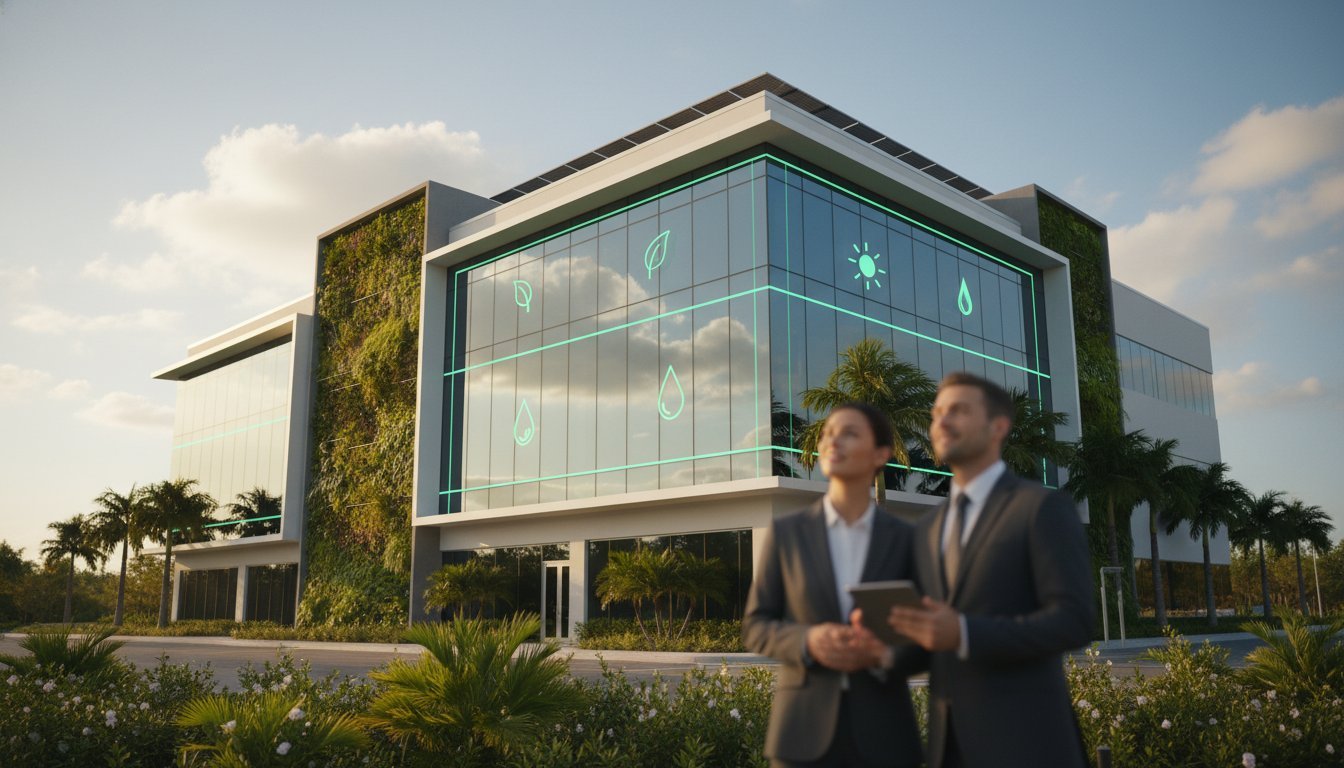
The most expensive green building certification is the one that provides global prestige but fails to address your project's specific regional environment or financial goals. You've likely felt the frustration of managing complex documentation and high third-party verification costs while trying to reconcile conflicting standards. Understanding the different types of green building certifications shouldn't be a source of project risk; instead, it's your strongest asset for increasing property value and marketability.
We believe that environmental stewardship and business pragmatism go hand in hand. This article will help you identify the right certification for your project’s ROI by providing a clear decision-making framework. We'll examine the latest updates for 2026, including the shift to LEED v5 and the 2025 National Green Building Standard (NGBS). You'll learn how to choose a path that minimizes operational friction while delivering the high-quality, resource-efficient spaces your stakeholders demand. By aligning your sustainability goals with the right technical standards, you can transform environmental dedication into a measurable competitive advantage.
Key Takeaways
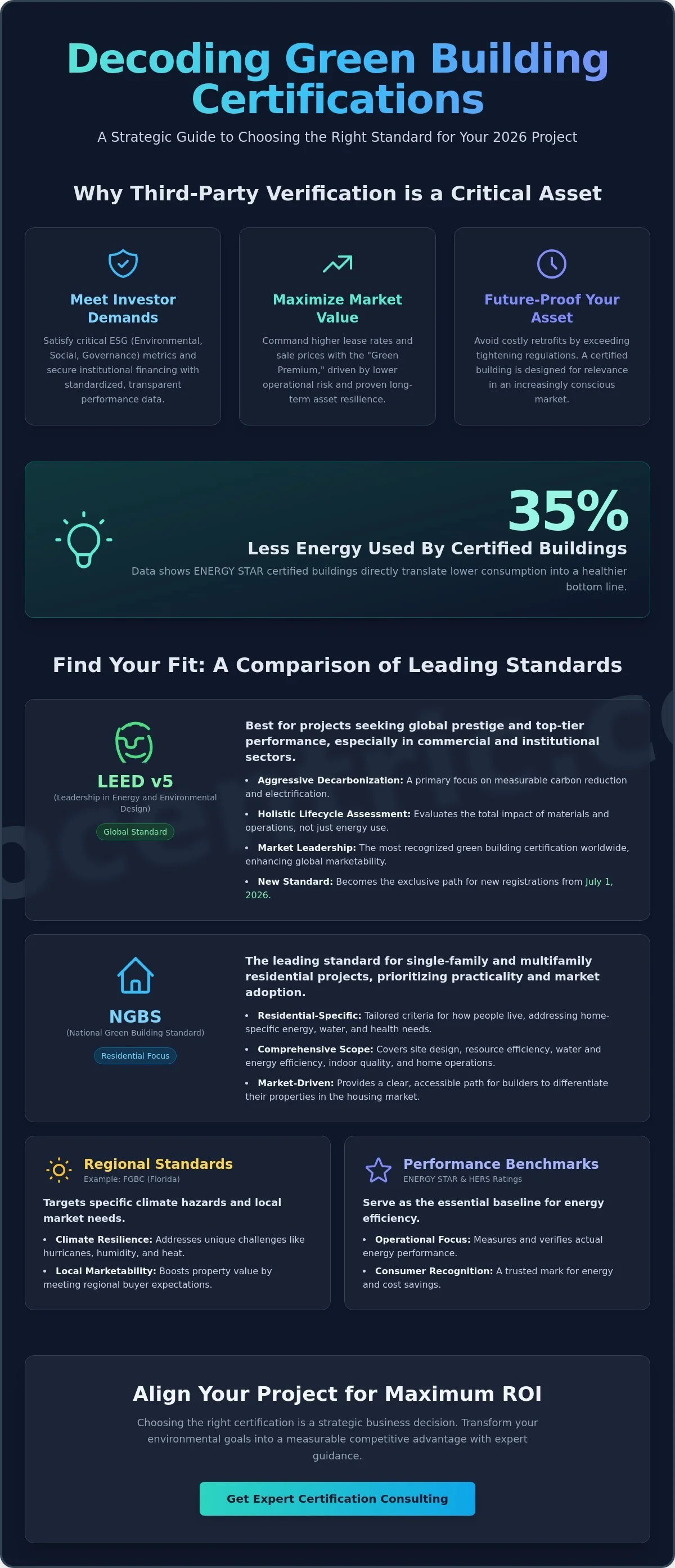
Understand why third-party verification has transitioned from an optional perk to a critical investor requirement in the 2026 real estate market.
Compare the most prominent types of green building certifications, including the global prestige of LEED v5 and the residential focus of the National Green Building Standard (NGBS).
Discover how regional standards like the Florida Green Building Coalition (FGBC) address specific climate hazards while boosting local property marketability.
Identify how performance-based benchmarks like ENERGY STAR and HERS ratings serve as essential baselines for measuring operational efficiency and resource longevity.
Utilize a strategic implementation guide to align your specific project type and market goals with the certification that delivers the highest environmental and financial ROI.
Table of Contents
What are Green Building Certifications and Why Do They Matter in 2026?
Regional Excellence: The Florida Green Building Coalition (FGBC)
Choosing the Right Certification: A Strategic Implementation Guide
What are Green Building Certifications and Why Do They Matter in 2026?
Sustainability in the built environment has evolved from a voluntary "nice-to-have" into a non-negotiable asset class. A green building certification is a rigorous, third-party verified rating system that measures a project's environmental performance against established benchmarks. In the 2026 real estate market, understanding the various types of green building certifications is essential for any developer looking to secure institutional financing or attract top-tier tenants. These standards provide the technical framework necessary to transform ambitious environmental goals into high-performance reality.
Modern investors demand transparency. They aren't just looking at monthly utility bills; they're evaluating comprehensive Environmental, Social, and Governance (ESG) metrics. This shift has pushed the industry beyond simple energy efficiency toward a holistic life-cycle assessment. Green building certification systems provide the standardized data needed to prove a building’s long-term resilience and reduced carbon footprint over its entire operational life. By focusing on the total impact of materials and operations, owners can ensure their assets remain relevant in an increasingly conscious market.
To better understand how these systems function in practice, watch this helpful overview:
The Core Pillars of Sustainable Certification
Sustainable construction is built on three fundamental requirements that ensure a project remains viable and efficient. First, energy efficiency and decarbonization are paramount. With the introduction of LEED v5 in July 2026, there's a heightened focus on measurable carbon reduction and electrification. Second, water conservation and resource management strategies protect local ecosystems while lowering utility costs. Finally, these certifications prioritize indoor environmental quality (IEQ). By focusing on occupant health through superior ventilation and non-toxic materials, buildings become more than just shelters; they become healthy living and working spaces.
Market Value and the "Green Premium"
The "Green Premium" is a documented reality. Certified buildings consistently command higher lease rates and sale prices because they represent lower operational risk. By future-proofing building systems through professional certification consulting, owners avoid the costly retrofits required by tightening local regulations. Choosing between different types of green building certifications allows developers to target specific market segments, whether that's global prestige or regional resilience. Third-party verification is the only way to eliminate "greenwashing" and provide the certainty that stakeholders require. Data shows that certified ENERGY STAR buildings use an average of 35% less energy, directly translating to a healthier bottom line and increased property marketability.
Global and National Leaders: LEED, NGBS, and Beyond
LEED remains the most recognizable name in sustainable construction. As of July 1, 2026, LEED v5 has become the exclusive standard for new commercial registrations, pushing the industry toward aggressive decarbonization and performance. For those seeking an expert explanation on green building certifications, the distinction between global prestige and residential functionality is vital. While BREEAM continues to expand its influence in North America through a focus on lifecycle value, the WELL Building Standard prioritizes the biological health of the people inside the walls. These various types of green building certifications work together to define modern excellence by addressing different facets of the built environment.
LEED BD+C: The Framework for New Construction
The LEED Building Design and Construction (BD+C) framework provides a rigorous path for new structures to prove their environmental worth. Whether aiming for Certified, Silver, Gold, or the prestigious Platinum level, projects must meet strict prerequisites across several categories. This process relies heavily on a LEED Green Rater. These specialists provide the mandatory third-party verification that ensures a residential project’s sustainable features actually perform as designed. It’s a high-bar approach that signals quality to global investors and guarantees that the building's resource efficiency is backed by data. It's not just about the badge; it's about the measurable impact on energy and water use.
NGBS: The Pragmatic Choice for Multifamily Housing
The National Green Building Standard (NGBS) serves as the pragmatic leader for residential and multifamily projects. With the 2025 version approved by ANSI on April 21, 2026, this standard has already reached a milestone of over 750,000 certified dwelling units. Developers often find NGBS more accessible than LEED for Homes because its scoring system aligns more closely with residential construction timelines and practices. It offers four distinct performance levels: Bronze, Silver, Gold, and Emerald. This flexibility allows project leads to choose a target that matches their specific budget and environmental goals. If you’re managing a multifamily development, utilizing professional NGBS green verification is a smart way to ensure compliance while maximizing your project's marketability. Choosing between these types of green building certifications ultimately depends on whether your project needs global branding or a specialized residential focus. Our team understands that the right choice minimizes project risk while delivering a superior living environment for future residents.
Regional Excellence: The Florida Green Building Coalition (FGBC)
National rating systems provide a strong foundation, but they don't always account for the specific environmental stressors of the subtropics. The Florida Green Building Coalition (FGBC) offers a certification path designed specifically for the state’s unique climate and hazard profile. For developers operating in the Southeast, understanding regional types of green building certifications is the key to creating resilient assets that outperform national baselines. FGBC isn't a replacement for global standards; it’s a specialized tool that ensures a building can withstand Florida’s heat, humidity, and hurricane seasons.
This regional focus is critical because Florida’s building codes are already among the strictest in the nation. FGBC certification works in synergy with these codes rather than adding unnecessary layers of conflicting requirements. When reviewing an expert overview of green building certifications, it becomes clear that the best choice is often the one that addresses local risk. By choosing a Florida-specific standard, builders can demonstrate a commitment to both environmental stewardship and structural longevity. It's a way to prove that a project is built for its specific environment, not just a generic standard.
Unique Requirements of the FGBC Standard
The FGBC "Green Home" and commercial standards prioritize disaster mitigation and coastal resilience. While national programs might focus heavily on heating efficiency, FGBC emphasizes energy performance tailored to high-cooling-load environments. This includes specific credits for moisture control and mold prevention, which are vital in our humid climate. The standard also encourages water-wise landscaping using native Florida species. This reduces the strain on local aquifers and ensures that the property’s exterior remains vibrant without excessive irrigation. It’s a pragmatic approach to sustainability that yields tangible results for the local ecosystem.
Why Local Knowledge Wins in Florida
Navigating regional requirements is significantly easier when you partner with experts who live and work in the same environment. Working with consultants who specialize in FGBC certification consulting allows you to streamline the verification process. Regional programs can often be more cost-effective than national alternatives because they leverage local inspectors and align with existing state reporting. This makes it an ideal choice for builders who want to enhance property value without the overhead of international administrative fees. Choosing the right types of green building certifications means finding the balance between global marketability and local operational reality. We're here to ensure your project achieves that balance, turning regional challenges into a distinct competitive advantage.
Performance-Based Standards: ENERGY STAR and HERS
Data is the cornerstone of trust. While holistic systems like LEED and NGBS provide a broad sustainability framework, performance-based standards offer the technical precision needed to measure actual energy output. These are the engines that drive resource efficiency. The HERS Index and ENERGY STAR certification are essential types of green building certifications that focus specifically on how a building performs under pressure. They provide the raw data that investors and owners need to verify that their sustainability claims are backed by physical reality. Without these metrics, a green building is just a collection of good intentions.
HERS Raters: The Foundation of Energy Metrics
A RESNET HERS Rater is the primary technical advocate for a project's efficiency. By performing blower door tests and duct leakage assessments, they assign a numerical value to a home's energy performance. A lower score indicates a more efficient building. This HERS score isn't just a number; it's a mandatory baseline for most major certification programs. Early-stage HERS analysis is a pragmatic necessity. It identifies potential performance gaps during the design phase, which prevents costly late-stage retrofits during construction. Our RESNET HERS Rater services provide the technical roadmap to ensure your project meets its efficiency targets from day one.
ENERGY STAR Certification for Residential and Commercial
ENERGY STAR remains one of the most trusted labels for operational excellence. For commercial buildings, achieving this certification requires a score of 75 or higher on a 100-point scale, proving the facility performs better than 75% of similar structures. This certification must be renewed annually to maintain its status. On the residential side, standards are tightening to meet modern decarbonization goals. In Florida, any single-family home permitted on or after January 1, 2025, must meet ENERGY STAR Version 3.2 requirements. Additionally, as of January 1, 2026, townhouses must be certified under the Single-Family New Homes program rather than the Multifamily track.
These types of green building certifications deliver immediate value through long-term utility savings. Research shows that certified ENERGY STAR buildings use an average of 35% less energy than typical buildings. This efficiency reduces operational risk and protects the asset's value against rising energy costs. Whether you are benchmarking a commercial portfolio or certifying a new residential community, an ENERGY STAR Rater ensures your building meets the rigorous performance standards required for today’s market. It’s a clear, cause-and-effect link between specialized practices and positive financial outcomes.
Choosing the Right Certification: A Strategic Implementation Guide
Selecting from the various types of green building certifications requires more than just picking the most famous logo. It demands a strategic alignment between your project's physical requirements and your stakeholders' financial objectives. Commercial developments aiming for international investment often find their best fit in LEED v5, while multifamily developers might see higher ROI through the National Green Building Standard (NGBS). If your project is located in a coastal environment, the regional resilience of FGBC could be the most pragmatic choice. The decision-making process must account for the specific building type, the desired marketability, and the technical capacity of your existing team.
The Role of the Sustainable Building Consultant
Most project leads realize quickly that they lack the internal resources to manage the exhaustive documentation required for modern standards. A sustainable building consultant acts as your strategic partner, bridging the gap between architectural design and technical verification. We don't just check boxes; we identify the most cost-effective path to your target rating by analyzing building systems early. This partnership ensures that third-party rater schedules are managed efficiently, preventing the administrative bottlenecks that often derail construction timelines. By delegating these specialized requirements, you minimize project risk and ensure your environmental goals are met without compromising your operational focus.
Integrating Certification into the Project Workflow
Success begins with a "Green Charrette" during the early design phase. This collaborative meeting brings together all stakeholders to set clear, achievable sustainability targets before a single shovel hits the ground. As the project moves into construction, on-site inspections become the primary focus. You can expect a LEED Green Rater or NGBS Verifier to perform rigorous field assessments to confirm that the high-performance features specified in your plans are actually installed correctly. These inspections are not just hurdles; they are the verification that protects your investment and ensures long-term resource efficiency. This structured approach ensures that the different types of green building certifications deliver the measurable performance they promise.
Closing the Loop
Once construction is complete, the final documentation is submitted for review. Receiving your certification plaque is the culmination of a dedicated, mission-driven process that proves your commitment to environmental stewardship. This verified status transforms your building into a premium asset that is ready for the 2026 market. Ready to certify? Explore our full range of consulting services to find the right path for your next project. We are here to turn complex standards into achievable solutions that benefit both your bottom line and the planet.
Securing Your Asset's Longevity through Strategic Certification
The transition toward sustainable construction is a strategic necessity for the 2026 real estate market. By carefully selecting from the various types of green building certifications, you align your project with global ESG goals and essential regional resilience requirements. Whether you prioritize the international prestige of LEED or the residential focus of NGBS, third-party verification ensures your sustainability claims are backed by measurable performance data. This commitment to quality doesn't just protect the environment; it significantly enhances the long-term marketability of your property.
Navigating these complex technical standards is easier with a pragmatic partner. Our team offers specialized expertise in LEED BD+C and LEED Green Rater services to guide your project through every verification milestone. We also provide dedicated Florida Green Building Coalition (FGBC) certifiers and National Green Building Standard (NGBS) Green Verifiers to manage your documentation with precision. Partner with Ekocentric for your LEED, NGBS, or FGBC certification today. Together, we can create high-performance spaces that deliver lasting value for both your stakeholders and the planet. Your vision for a more sustainable future is achievable, and we're ready to help you build it.
Frequently Asked Questions
Which green building certification is the most widely recognized?
LEED is the most globally recognized standard among the various types of green building certifications. As of July 1, 2026, LEED v5 is the current version for all new commercial registrations. It provides a prestigious benchmark that investors and tenants worldwide trust for verifying environmental performance and decarbonization goals.
How much does it cost to get a building LEED certified?
Certification costs vary based on the specific rating system, the project’s gross floor area, and your organization's membership level with the USGBC. Members at the Silver level or higher receive discounts on registration and review fees. You should consult the official USGBC fee schedule for the most accurate administrative costs related to your specific project size.
What is the difference between LEED and NGBS?
LEED is a global system applicable to all building types, whereas the National Green Building Standard (NGBS) is specifically tailored for residential and multifamily projects. NGBS has certified over 750,000 dwelling units. It's often viewed as a more pragmatic choice for residential developers because its requirements align closely with standard homebuilding practices and timelines.
Is FGBC certification only for projects in Florida?
Yes, the Florida Green Building Coalition (FGBC) standard is designed exclusively for buildings located in Florida. It addresses the state's unique environmental challenges, such as high humidity and hurricane resilience. This regional focus ensures that your project is optimized for Florida’s specific climate hazards and local building codes.
How long does the green building certification process take?
The certification timeline follows your project’s lifecycle from the initial design phase through post-construction verification. Technical inspections happen during construction, while the final administrative review by the certifying body typically takes several weeks or months. Engaging a consultant early prevents documentation bottlenecks and ensures the process stays on track with your completion date.
Can an existing building be green certified?
Existing buildings can achieve certification through performance-based programs like ENERGY STAR or the LEED Operations and Maintenance (O+M) track. For example, commercial buildings can earn an ENERGY STAR label by achieving a score of 75 or higher. This proves the facility performs better than 75% of similar buildings nationwide and requires annual renewal to maintain its status.
What is a LEED Green Rater and when do I need one?
A LEED Green Rater is a specialized professional required for all residential projects seeking LEED certification. They provide the mandatory third-party verification and on-site performance testing that ensures the home meets its sustainability targets. You need to hire a rater during the design phase so they can verify critical systems before the walls are closed.
Do green building certifications expire?
Certification expiration depends on the specific program you choose. ENERGY STAR certifications for commercial buildings must be renewed annually to remain valid. While new construction certifications like LEED and NGBS don't expire, many owners choose to recertify under newer types of green building certifications to reflect updated performance standards. This ongoing commitment protects the property's market value as industry expectations evolve.