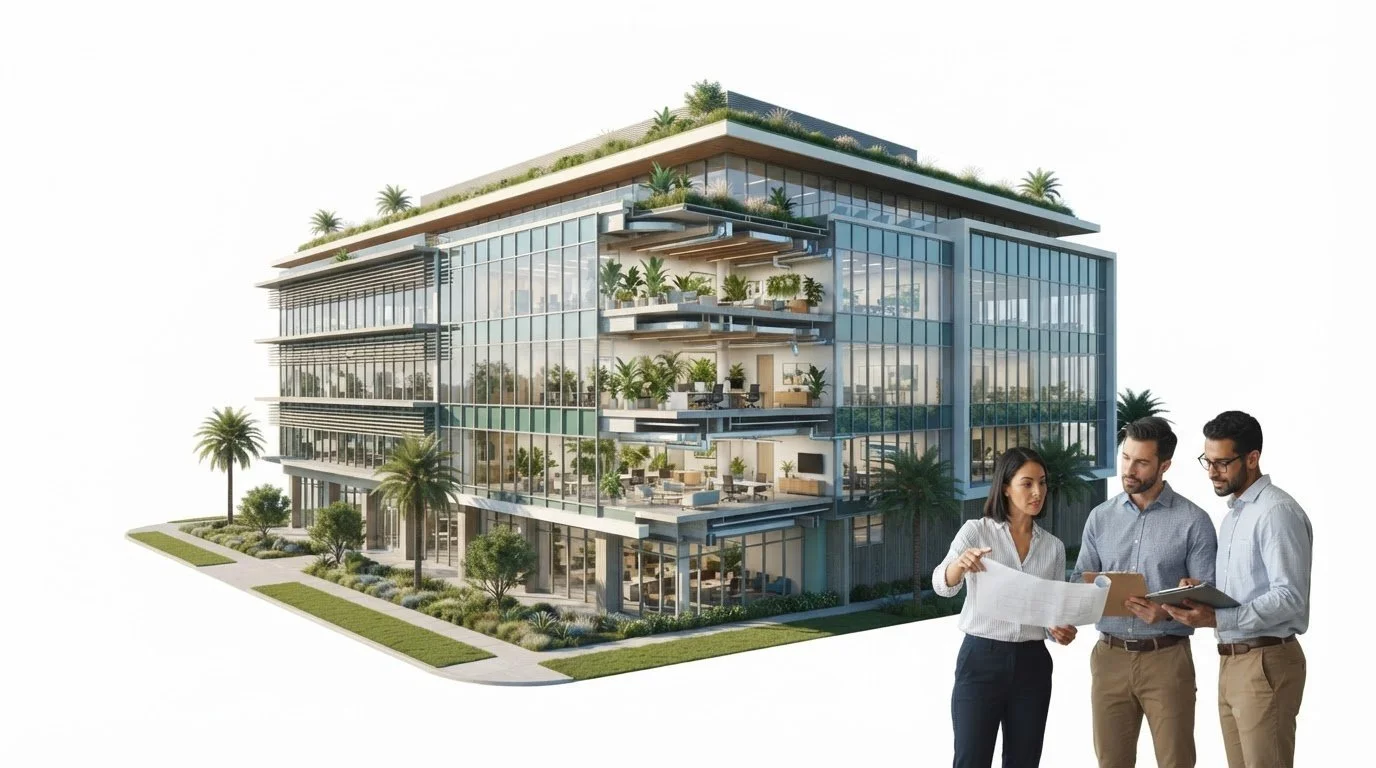
A commercial green building consultant helps property owners across the country set sustainability goals and translate them into practical project decisions, using markets like Florida as prime examples of regional resilience. Ekocentric supports commercial projects nationwide with green building consulting, including LEED BD+C, LEED Green Rating, and regional standards such as the Florida Green Building Coalition (FGBC). This work can help teams coordinate certification requirements with building performance, occupant needs, and operations.
Owners and tenants often want buildings that are comfortable and use energy and materials thoughtfully. Green building planning can address both priorities: indoor air quality and daylight affect the occupant experience, while efficient systems and resilient design contribute to building performance. The right approach depends on the project’s goals, scope, and intended use.
This article explains how commercial green building works in dynamic markets like Florida, why air quality and natural lighting matter, and how certification consulting can help owners bring project goals into focus. You’ll also learn how green building can support tenants, investors, and building performance without treating every project as if it has the same needs.
Key Takeaways
See how building performance assessments, testing, and certification support can help shape commercial projects around energy savings, indoor air quality, natural lighting, and resilience.
Understand how LEED, WELL, and FGBC differ, and which project priorities can guide a certification decision.
Learn how Florida’s commercial energy code and sustainability considerations fit into planning, design coordination, and certification goals.
Explore the role incentives may play in project planning, while accounting for eligibility and changing program terms.
Find out how certification consulting and verification can help move a commercial project’s sustainability goals forward.
Table of Contents
What are Florida's energy code and sustainability requirements for commercial buildings?
How do LEED and Florida Green Building Coalition certification compare for commercial projects
Florida Commercial Green Building Consultant Services
A commercial green building consultant in Florida helps project teams turn sustainability goals into practical building decisions. For example, a consultant can assess how HVAC systems, LED lighting, and daylighting affect energy use. They can also identify where project choices support occupant comfort, resource efficiency, and resilience. The work connects building priorities with measurable documentation and project coordination.
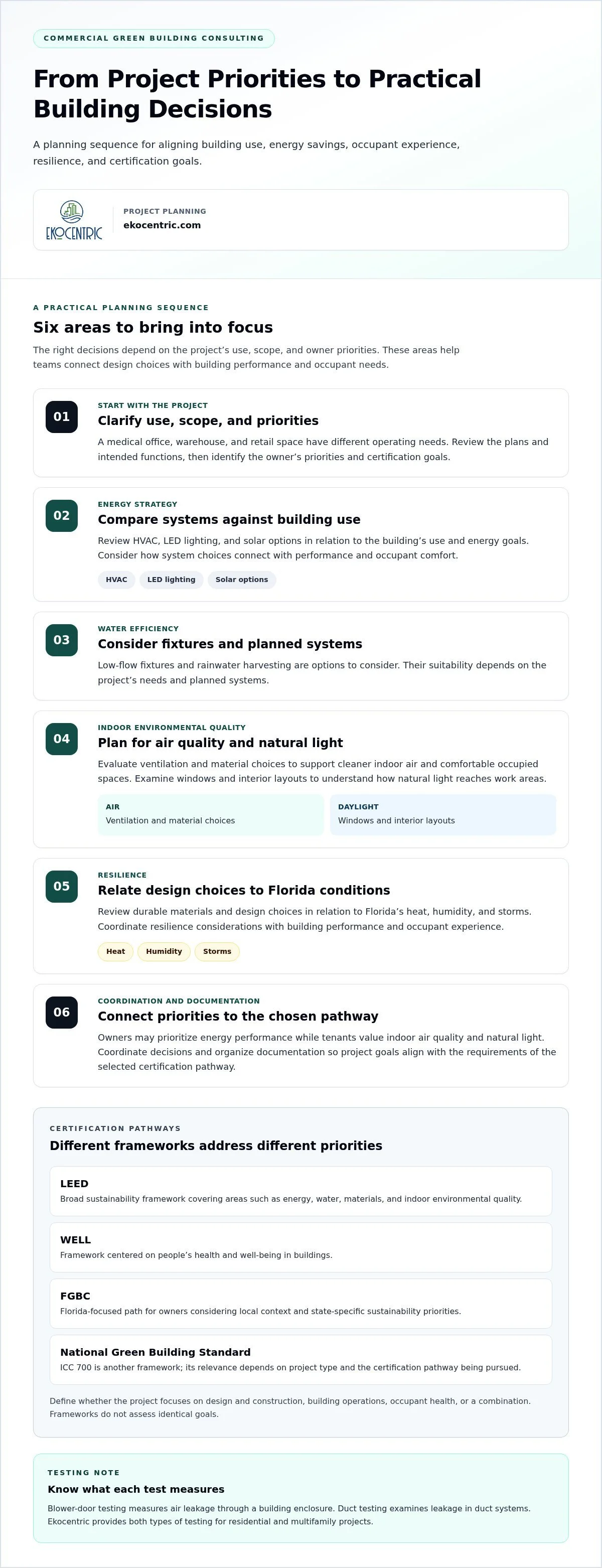
Planning starts by clarifying the building’s use, project scope, and owner priorities. A medical office, warehouse, and retail space have different operating needs. Reviewing the plans and intended functions helps the team weigh indoor air quality, natural lighting, energy performance, water use, and certification goals together.
Typical areas of support include:
Energy strategy: Review HVAC, LED lighting, and solar options. The team can compare these choices against building use and energy goals.
Water efficiency: Consider low-flow fixtures and rainwater harvesting. Their suitability depends on the project’s needs and planned systems.
Indoor environmental quality: Evaluate ventilation and material choices. These decisions can support cleaner indoor air and comfortable occupied spaces.
Daylighting: Examine how windows and interior layouts bring in natural light. Better daylight access can improve the experience of work areas.
Resilience: Review how durable materials and design choices address Florida’s heat, humidity, and storms.
Testing and verification give project teams information about building performance. Blower-door testing measures air leakage through a building enclosure, while duct testing examines leakage in duct systems. Ekocentric provides both types of testing for residential and multifamily projects. Results can help teams identify issues and inform project decisions.
Certification work also involves organizing documentation and coordinating sustainability goals across the project team. Owners may prioritize energy performance while tenants value indoor air quality and natural light. A clear record of decisions, testing results, and verification steps helps connect these priorities with the requirements of the chosen certification pathway.
Florida’s climate makes coordination especially useful. Humidity, heat, and storms can influence building decisions. Project teams can consider HVAC efficiency alongside ventilation, or assess durable materials in relation to resilience goals. Because one design decision can affect performance, occupant experience, and certification documentation, early coordination helps owners compare options with a clearer understanding of the trade-offs.
What green building certifications are available for commercial buildings in Florida, such as LEED, WELL, and FGBC?
Commercial projects in Florida can pursue several sustainability frameworks. LEED, WELL, and FGBC address different priorities. The right fit depends on the building, its occupants, and the owner’s goals. A certification can also give project teams a shared framework for documenting design choices and performance strategies.
LEED, developed by the U.S. Green Building Council, provides a framework for assessing building sustainability, including areas such as energy, water, materials, and indoor environmental quality. WELL focuses on occupant health and well-being. For an office owner, for example, occupant experience and energy performance may both matter, but the frameworks address different priorities.
LEED: A broad sustainability framework for commercial buildings. It can help organize goals covering energy, water, materials, and indoor conditions.
WELL: A framework centered on people’s health and well-being in buildings. It may suit projects emphasizing occupant experience, such as workplace environments.
FGBC: The Florida Green Building Coalition provides a Florida-focused path. Owners may consider it when local context and state-specific sustainability priorities matter.
National Green Building Standard: The ICC 700 standard offers another green building framework. Its relevance depends on project type and the certification pathway being pursued.
Certification scope matters as much as the program name. A new office and an existing retail property have different records, systems, and project stages to consider. Define whether the project focuses on design and construction, building operations, occupant health, or a combination. That distinction helps avoid treating frameworks as if they assess identical goals.
Narrow the options by linking each framework to a specific project objective. A project focused on energy performance may emphasize building systems and performance documentation. A workplace prioritizing occupant experience may give greater weight to indoor conditions. Owners seeking a Florida-focused framework can consider FGBC. Map documentation responsibilities early so design decisions and verification evidence stay coordinated.
Certification does not replace project-specific planning. The building’s use, construction stage, sustainability targets, and available documentation shape the pathway. Comparing those factors can clarify which framework best matches the intended outcome. Project teams evaluating certification routes can explore green building certification services as part of that assessment.
Market and occupant considerations can also inform the choice. Green-certified commercial buildings may appeal to environmentally conscious tenants and investors. Consider this potential appeal alongside the project’s sustainability priorities and intended occupants. That makes certification part of a broader discussion about environmental goals and stakeholder interests, rather than a decision based on the label alone.
Better air quality and natural lighting in sustainable buildings can enhance occupant well-being and productivity. Those outcomes connect building conditions with the experience of people who use a property. For a commercial project, teams may weigh this people-focused benefit when considering how sustainability ambitions relate to everyday occupancy. Considering potential market appeal and occupant outcomes gives owners another way to compare priorities without assuming every certification addresses them in the same manner.
What are Florida's energy code and sustainability requirements for commercial buildings?
Commercial projects need to distinguish code compliance from voluntary sustainability goals. Florida’s energy code belongs in the compliance review; LEED, WELL, and FGBC are certification frameworks, not substitutes for that review. An owner planning an office renovation, for example, should track applicable code decisions separately from certification targets. This distinction keeps required project documentation distinct from optional performance ambitions.
Start by identifying the building type and project scope. A new office, warehouse alteration, and retail fit-out can involve different conditions and work. Record which spaces and systems are affected and what the project is designed to achieve. The responsible design professionals can then identify the energy-code provisions that apply to the specific scope, rather than relying on assumptions from another building.
Energy planning should reflect how the building will be used. An office with varied daylight exposure, for example, may need lighting controls suited to different work areas. A warehouse’s schedule and equipment loads raise different planning questions. Documenting these decisions helps the team explain its energy approach and review the relevant code provisions.
Keep code records organized alongside, but separate from, voluntary certification records. A project file can include:
Scope information: Identify new construction, renovation areas, and affected building systems.
Design documents: Keep current plans and specifications aligned with the project’s energy strategy.
System details: Record the selected equipment and control approach for review by the design team.
Review notes: Track decisions and revisions associated with applicable code provisions.
Certification evidence: Maintain a distinct record for any LEED, WELL, or FGBC goals.
Florida’s climate makes project context important. Heat and humidity can affect decisions about the building envelope, equipment, and indoor conditions. If a team is considering window changes, it should assess how they relate to the project’s energy goals and interior use. Coordinated review helps prevent one design decision from undermining another.
Energy code review is different from an energy rating or voluntary verification. ENERGY STAR Partner verification, RESNET Home Energy Rating services, and National Green Building Standard verification each relate to a specific assessment pathway; none replaces code review. Define which records support compliance and which support voluntary goals. Keeping them distinct helps teams explain decisions, manage revisions, and connect sustainability objectives to the project scope.
Sustainable construction can lower buildings’ carbon footprints and operational costs. For commercial projects, teams can weigh those potential gains alongside the code review and document how selected design choices support the owner’s goals. Sustainable building materials and designs can help commercial buildings withstand Florida’s harsh weather conditions. Considering durability as part of project planning can connect sustainability aims with the building’s climate context, while keeping required compliance decisions distinct from voluntary targets.
Florida commercial buildings can optimize energy use with smart HVAC systems, LED lighting, and solar panels. The design team can assess which options fit the building’s use and intended performance, and record the reasoning with the relevant project documents. These measures can form part of broader sustainability planning, but they do not replace review of applicable energy-code provisions. Keeping performance objectives, system selections, and compliance records coordinated allows owners and designers to evaluate the project’s energy approach without confusing an efficiency goal with a certification or code requirement.
What incentives, rebates, or tax credits are available for commercial green building projects in Florida
Some commercial projects may be eligible for utility rebates or other programs tied to specific upgrades. Program terms depend on the measure, building, and application process. Owners considering efficient lighting, HVAC improvements, or solar should assess each opportunity separately. A program associated with one upgrade does not necessarily apply to another.
Begin by defining the planned work. For a lighting retrofit, identify the existing fixtures, proposed equipment, and installation scope. For an HVAC project, document the system being replaced and the proposed upgrade. These details help owners assess them against applicable program criteria and identify the records an application may require.
Utility programs and other public initiatives may each set their own eligible equipment, application steps, and deadlines. Review the terms for the specific measure under consideration rather than assuming a project qualifies. The existence of a program does not establish eligibility, and certification alone does not determine whether an upgrade meets its criteria.
A useful planning file can include:
Project scope: Describe the building and the exact improvement being considered.
Equipment details: Record product information and installation plans.
Utility information: Keep relevant account and service details together.
Timing: Track purchasing and installation milestones against program deadlines.
Application records: Save submissions, approvals, and supporting documents.
Timing matters. Some programs require an application or approval before equipment is purchased or work begins. For an HVAC replacement, reviewing the program process early helps the owner plan procurement and scheduling. Because a late application may affect eligibility, include incentive review in project planning rather than leaving it until installation.
Rebates and tax credits are separate forms of potential project support. Tax provisions have their own eligibility rules and should not be treated as automatic benefits of efficient equipment or green certification. Keep projected incentives separate from committed project funding until the applicable conditions are understood. This gives owners a sounder basis for comparing upgrade options.
Certification documentation supports a project’s sustainability record, but it does not replace program-specific application requirements. For example, an owner pursuing National Green Building Standard verification should keep those records distinct from utility rebate paperwork. Clear organization helps finance and project teams track each opportunity, understand its conditions, and connect energy goals with realistic budgeting.
Potential support may include utility rebates or other initiatives tied to specific upgrades, such as efficient lighting, HVAC improvements, or solar. Tax provisions may also apply, but their eligibility rules are separate and benefits are not automatic.
How do LEED and Florida Green Building Coalition certification compare for commercial projects
LEED and the Florida Green Building Coalition (FGBC) provide distinct certification pathways. LEED is administered by the U.S. Green Building Council, while FGBC offers a program tailored specifically to the state. Both can help structure sustainability goals, but their different frameworks may suit different priorities. Compare each program’s scope, documentation, and intended audience before choosing.
LEED may suit owners seeking a broad green building framework. For a commercial office, the team can organize sustainability goals around the selected LEED pathway and prepare documentation aligned with its criteria. This can help owners communicate environmental priorities to tenants, investors, and project partners who use the framework.
FGBC offers a Florida-centered alternative. Its regional focus can be relevant when owners want a framework grounded in Florida’s building context. A local retail project, for example, may value a certification route that reflects regional sustainability interests. Project teams should review the applicable FGBC program and its requirements before setting goals or assigning documentation tasks.
Compare the options using project-specific questions:
Recognition goals: Decide whether broader LEED recognition or a Florida-focused FGBC pathway better supports the project’s audience.
Project scope: Match the framework to the building type, construction stage, and sustainability objectives.
Documentation: Identify which records the selected program requires and who will maintain them.
Performance priorities: Determine whether energy savings, occupant experience, resilience, or another goal should guide the pathway.
Team capacity: Consider how project roles and available documentation align with each program’s process.
Neither certification replaces building-code compliance. Keep code records separate from voluntary certification evidence. For a new commercial building, this distinction helps prevent certification goals from being mistaken for code requirements. It also clarifies which decisions support compliance and which advance sustainability objectives.
Some projects may compare both frameworks during early planning. Assess each program’s current criteria against the building’s scope and the owner’s priorities. Then select a preferred pathway and assign responsibility for collecting evidence. A framework is most useful when the team can connect its requirements to project decisions and document progress consistently.
For owners comparing a Florida-focused certification with LEED, the key question is fit, not which label is universally better. Consider the project’s audience, sustainability priorities, and documentation needs. Ekocentric provides consulting for both pathways to help commercial project teams organize certification work.
Ekocentric: LEED Green Rater Services
Ekocentric provides LEED Green Rater and LEED AP consulting for projects pursuing LEED verification. This support helps project teams organize certification documentation and coordinate verification with project goals. Ekocentric also offers LEED BD+C Consulting, FGBC Certification Consulting, and National Green Building Standard Green Verification.
Bring certification support into the project when setting the sustainability pathway or coordinating documentation. For example, teams comparing LEED and FGBC can connect the chosen framework with project priorities and plan verification tasks. Ekocentric’s consulting helps owners and project teams organize the certification process around the project’s goals.
Contact Ekocentric or visit ekocentric.com to discuss certification consulting for your commercial project.
Turn Your Building Goals Into a Clear Next Step
Choose a project priority to guide the next decision, such as occupant comfort, resilience, or energy performance. Connect that goal to the building’s stage, available documentation, and intended use. A commercial green building consultant in Florida can help owners shape these priorities into a practical certification direction.
Start with a focused conversation about your project’s priorities. Consider which outcomes matter to occupants and support the property’s plans. A clear starting point keeps sustainability decisions connected to the building, rather than treating certification as an isolated label.
Ekocentric can help you consider certification and verification pathways that fit your commercial project. Discuss your project’s sustainability goals with Ekocentric, and take the next step toward a building designed with purpose. Thoughtful planning can move your vision forward.
Frequently Asked Questions
Which Florida firms specialize in commercial green building consulting?
Ekocentric provides green building certification consulting for commercial projects, including LEED BD+C and FGBC certification consulting. A developer planning a new office, for example, can discuss which pathway aligns with project goals and how verification fits the project documentation. This helps the team connect sustainability priorities with a coordinated certification approach.
What steps are involved in hiring a green building consultant for a Florida commercial project?
Clarify the building’s use and owner priorities, then review available plans and intended functions. Identify goals such as energy performance, indoor air quality, resilience, or certification, and coordinate documentation, testing, and verification with the project team.
What risks or common challenges affect commercial green building projects in Florida, including hurricanes, humidity, and flood resilience?
Florida’s high humidity, intense heat, and unpredictable storms can affect building performance and occupant comfort. Project teams can consider efficient HVAC and ventilation, durable materials, and resilient design choices; the material does not provide specific guidance on flood resilience.