ENERGY STAR Rater: A Builder’s Strategic Guide to Performance and Certification
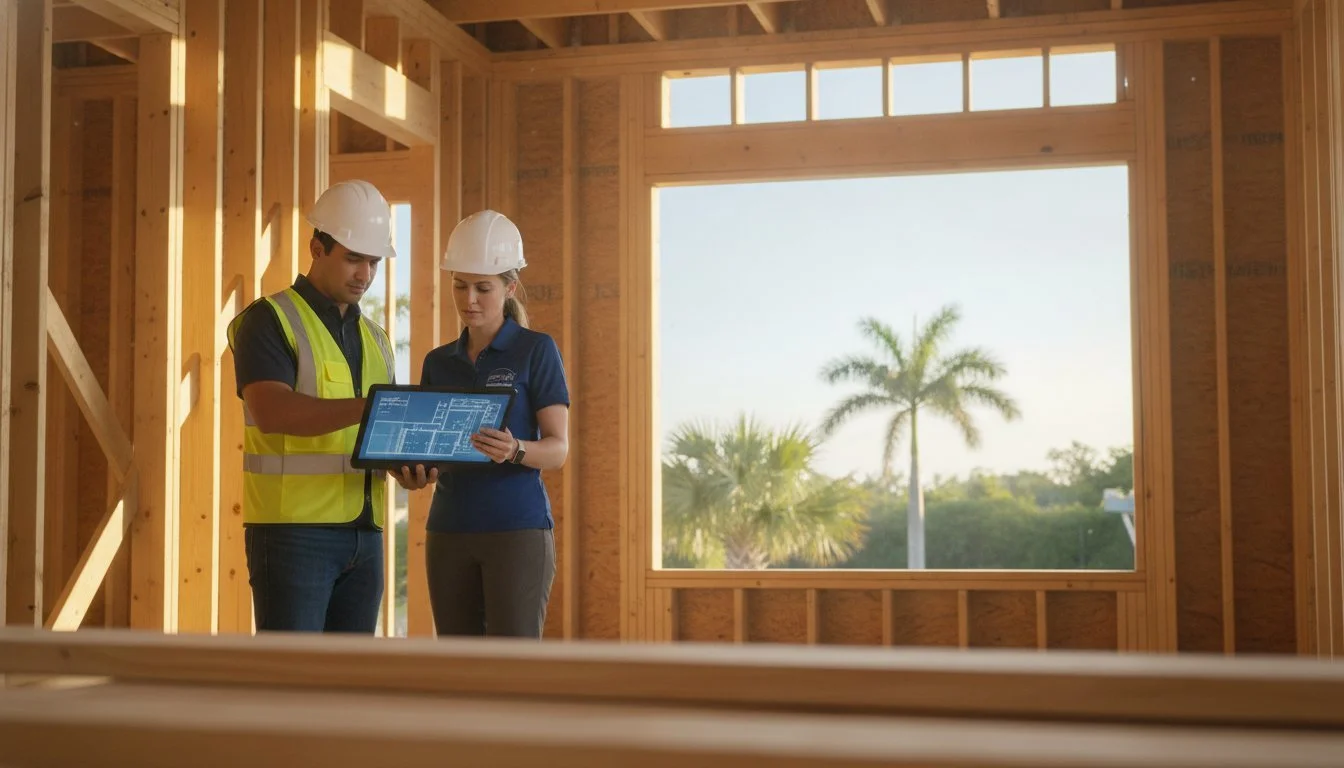
In the high-stakes world of Florida residential construction, a certification is no longer just a plaque on the wall; it's a shield against the region's relentless humidity and shifting regulatory landscape. As you look to scale your projects, partnering with an expert ENERGY STAR rater Tampa builders trust is the difference between a seamless close and a costly delay at the finish line. We understand that many developers view the certification process as a mountain of paperwork or a source of anxiety regarding failed inspections. You know that one missed detail in the thermal enclosure can lead to moisture issues that haunt a project's reputation for years.
This guide shows how a professional rater acts as your strategic partner to streamline compliance, enhance building durability, and increase your project's market value. We'll examine the shift to Version 3.2 standards required for Florida permits as of January 1, 2025, local utility rebates from providers like Tampa Electric, and the third-party verification process that builds long-term buyer confidence. By the end, you'll see why expert oversight is the most pragmatic way to deliver high-performance homes while reducing your overall liability.
Key Takeaways
Understand the technical distinction between a HERS Rater and a certified ENERGY STAR rater Tampa to ensure your projects meet specific EPA standards.
Identify why early engagement during the design phase is the most effective way to select the right compliance path for Florida's climate.
Explore how certification standards bridge the gap between standard building codes and the high-performance requirements needed to mitigate Tampa's humidity risks.
Discover how third-party verification acts as a risk-management tool that increases appraisal values and protects against future performance claims.
Table of Contents
What is an ENERGY STAR Rater and Why is it Essential for Tampa Builders?
The Step-by-Step ENERGY STAR Verification Process for Tampa Construction
Navigating Florida Building Codes and Tampa Climate Challenges
Strategic Business Benefits: Why Tampa Developers Invest in Certification
What is an ENERGY STAR Rater and Why is it Essential for Tampa Builders?
An ENERGY STAR rater is a credentialed third-party professional who ensures a residential project meets the rigorous energy efficiency guidelines set by the Environmental Protection Agency (EPA). While the ENERGY STAR program history began with a focus on consumer appliances, it has evolved into a comprehensive building standard that defines high-performance construction. For builders in Florida, this professional doesn't just check boxes. They act as a technical advocate who verifies that every component of the home works in harmony to reduce energy consumption and manage the intense Florida heat.
To better understand the long-term impact of these building standards on the residential market, watch this helpful video:
Change video
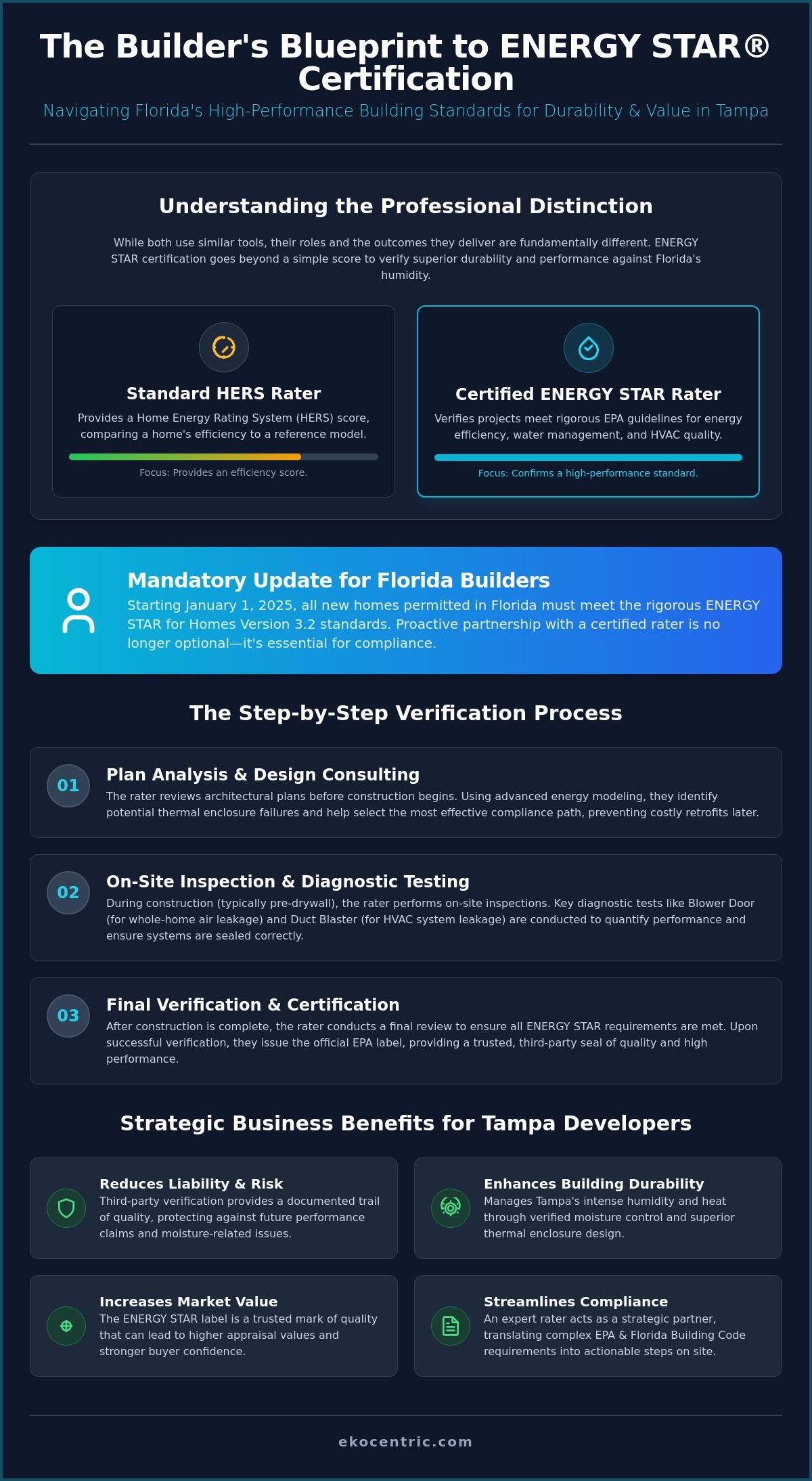
It's easy to mistake a standard RESNET HERS Rater for a certified ENERGY STAR professional. While both use similar diagnostic tools, the ENERGY STAR certification requires much deeper scrutiny of the building's water management and HVAC commissioning. A HERS score tells you how efficient a home is compared to a reference house; however, the ENERGY STAR label proves the home meets a specific, high-performance threshold for durability. In Tampa, where cooling degree days remain consistently high, this distinction is vital. Our climate demands more than just a good score. It requires a holistic approach to moisture control that only a certified ENERGY STAR rater Tampa expert can provide.
The rater serves as a critical bridge between architects, HVAC contractors, and the EPA. They translate complex federal requirements into actionable steps for the job site. This collaboration ensures that the design intent actually translates into field performance. In a city where air conditioning systems run almost year-round, having an independent set of eyes on the HVAC design is a necessity for risk management.
The Core Responsibilities of a Tampa Energy Rater
The rater's work begins long before the first shovel hits the ground. By reviewing architectural plans early, they identify potential thermal enclosure failures that could lead to mold or inefficiency. During construction, they perform diagnostic tests like Blower Door and Duct Blaster testing to quantify air leakage. Finally, they issue the official certification label that signifies a home is built to a higher standard of longevity. This process provides builders with a verified paper trail of quality.
Credentialing and Expertise: What to Look For
Builders should prioritize raters who maintain active RESNET membership and official EPA recognition. However, local technical knowledge is just as important as national credentials. You need a partner who understands the nuances of the Florida Building Code, 8th Edition, and the specific Energy Conservation requirements unique to our subtropical zone. You can find a full list of our specialized services to see how we bridge the gap between design and final certification. A qualified ENERGY STAR rater Tampa professional ensures your project doesn't just pass; it excels.
The Step-by-Step ENERGY STAR Verification Process for Tampa Construction
Success in high-performance building depends almost entirely on your project timeline. Engaging an ENERGY STAR rater Tampa expert during the pre-construction phase prevents expensive retrofits and ensures your design is viable from the start. Following the Official ENERGY STAR certification process allows builders to align every design choice with the rigorous Version 3.2 requirements, which are now mandatory for Florida homes permitted on or after January 1, 2025. This proactive approach transforms certification from a final hurdle into a structured roadmap for quality.
Phase 1: Plan Analysis and Design Consulting
The process begins with advanced energy modeling. We use accredited software to simulate the home's performance before the first slab is poured. This is where we help you decide between the Prescriptive Path, which follows a rigid set of specifications, or the Performance Path. Most Tampa developers choose the Performance Path because it offers greater design flexibility while still achieving the goal of being up to 30% more efficient than typical new construction. During this stage, we also optimize HVAC sizing to handle Tampa's intense latent heat. A system that's too large won't dehumidify properly, which significantly increases the risk of mold and comfort complaints.
Phase 2: Field Inspections and Performance Testing
Once construction is underway, the rater moves from the digital model to the physical job site. The pre-drywall inspection represents the most critical window for verification. We walk the site to confirm the Thermal Enclosure System Rater Checklist, ensuring that insulation is installed without gaps and that air sealing is truly airtight behind the walls. We also verify HVAC Quality Installation (QI) to confirm the equipment delivers the exact airflow specified in the initial design. These inspections act as a safeguard, catching potential failures when they're still easy and inexpensive to fix.
Final testing occurs as the project nears completion. We conduct Blower Door testing to measure air leakage in a pressurized environment and Duct Blaster testing to ensure the distribution system isn't leaking conditioned air into attics or crawlspaces. These performance metrics are required to secure the final certification label. Successfully meeting these standards doesn't just improve durability; it also helps builders qualify for local incentives, such as the $425 rebate offered by Tampa Electric for certified single-family homes. Integrating these milestones into your production schedule ensures a seamless path to the Certificate of Occupancy. You can explore our full range of third-party verification services to see how we manage these critical phases for your team.
Navigating Florida Building Codes and Tampa Climate Challenges
Building in the Tampa Bay area requires a departure from generic national construction practices. The local environment presents a unique challenge where high temperatures meet extreme vapor pressure. Aligning your projects with Florida Building Codes for energy conservation is the baseline, but the 8th Edition code alone doesn't always account for the 'Humidity Gap' found in Climate Zone 2. An ENERGY STAR rater Tampa specialist bridges this gap by ensuring that the building's thermal enclosure and mechanical systems are specifically tuned for a subtropical reality.
Tampa's summer months put an immense strain on standard building materials. When a home is built only to the minimum code, it often lacks the airtightness and moisture management necessary to prevent condensation within wall cavities. This is where mold risk becomes a liability for developers. By verifying high-performance windows with low Solar Heat Gain Coefficients (SHGC) and inspecting radiant barriers or cool roofing, a rater reduces the cooling load before the HVAC even turns on. This integrated approach protects the building's structural integrity and ensures a healthier indoor environment for the occupant.
Florida-Specific ENERGY STAR Requirements
The EPA provides specific checklists for homes in the Southeast to address our unique weather patterns. These requirements often overlap with Florida Green Building Coalition (FGBC) standards, allowing builders to pursue dual certifications more efficiently. ENERGY STAR certification proves that a residence satisfies and surpasses the rigorous energy conservation requirements of the Florida Building Code through independent, data-backed verification. This level of oversight is a powerful tool for builders who want to demonstrate a commitment to quality that goes beyond the bare minimum.
Managing Latent Loads in the Tampa Bay Area
Right-sizing an HVAC system is significantly more difficult in Tampa than in northern climates because of the latent load, or the moisture content in the air. If a system is oversized, it will cool the air quickly but fail to remove humidity, leading to a 'cold and clammy' environment. This is why an ENERGY STAR rater Tampa professional focuses on verifying dehumidification strategies and air sealing. Improved air sealing prevents humid air from infiltrating the home, while a correctly sized system ensures consistent moisture removal. We offer these technical evaluations as part of our certification consulting to help you avoid the comfort complaints that lead to post-sale litigation.
Strategic Business Benefits: Why Tampa Developers Invest in Certification
The decision to certify a project goes far beyond meeting a regulatory requirement. In a real estate market as competitive as Tampa, developers need more than just standard features to stand out. The ENERGY STAR blue label serves as a powerful symbol of quality that resonates with buyers who are increasingly wary of rising utility costs and hidden construction flaws. Partnering with an ENERGY STAR rater Tampa expert isn't just about passing an inspection; it's a strategic investment in your brand's reputation and long-term financial health.
Third-party verification provides a robust layer of risk management. When an independent professional validates the thermal enclosure and mechanical systems, they create a documented paper trail of performance. This verification acts as a safeguard against future liability claims related to comfort or building durability. By catching potential issues during the construction phase, you avoid the high costs of post-sale litigation and expensive retrofits. The financial logic is clear: building it right the first time is always more profitable than managing call-backs later.
Attracting the Modern Tampa Homebuyer
Modern buyers in Florida are shifting their priorities toward wellness and indoor air quality. They understand that a home's performance directly impacts their health and monthly budget. ENERGY STAR certified homes are designed to be up to 30% more energy-efficient than typical new construction, providing a tangible selling point that standard builds can't match. When you educate buyers on the long-term lower cost of ownership, you transform the conversation from price-per-square-foot to total value. This transparency builds trust and often leads to faster sales cycles in a crowded market.
Long-Term Durability and Reduced Call-Backs
Warranty claims are the silent profit-killers of the construction industry. Most comfort-related complaints stem from poor air sealing or incorrectly sized HVAC systems. By working with Ekocentric to ensure project-wide consistency, you eliminate these variables before they become problems. Our rater oversight ensures that every home in your development meets the same high standard of longevity. This dedication to quality reduces the frequency of call-backs and strengthens your relationship with homeowners. If you're ready to enhance your project's market value and reduce operational risk, connect with our team to start the certification process today.
Partnering with Ekocentric: Your ENERGY STAR Rater in Tampa
Choosing an ENERGY STAR rater Tampa isn't just about hiring a consultant; it's about selecting a partner who shares your commitment to building a more resilient Florida. At Ekocentric, our mission is rooted in a deep sense of environmental stewardship. We believe that every high-performance home contributes to a more sustainable future for our state. We combine technical expertise in LEED Green Rater services and National Green Building Standard (NGBS) verification with our role as an ENERGY STAR professional to provide a one-stop solution for your most ambitious sustainability goals.
We recognize that most project managers are already managing tight budgets and aggressive timelines. Overseeing the intricate documentation and specific field inspections required for green certifications is a heavy lift for any internal team. We solve this 'internal capacity' problem by acting as an extension of your staff. We take full ownership of the certification lifecycle, ensuring that technical details never slip through the cracks. This allows your team to focus on the core business of construction while we secure the credentials that increase your market value and reduce your long-term liability.
Why Experience in the Florida Market Matters
Our deep roots in the local market allow us to navigate the specific requirements of the Tampa building department with precision. We understand the nuances of Florida-specific certifications like the FGBC and how they interact with federal standards. After a decade of experience in this region, we've refined a pragmatic approach that prioritizes results over rigidity. We don't just point out failures; we provide the technical guidance needed to correct them quickly and cost-effectively. This local insight ensures your project stays on track and compliant with the latest 8th Edition energy conservation codes.
Get Started on Your Next Tampa Project
The most successful projects begin with a preliminary plan review. This early analysis identifies design optimizations that save you money on materials while improving the building's ultimate performance. Integrating our services into your existing construction schedule is a seamless process. We align our field visits with your key milestones to ensure that verification never becomes a bottleneck for your Certificate of Occupancy. Whether you are a residential developer or a custom home builder, we provide the tailored oversight needed to deliver excellence. Contact Ekocentric today for a comprehensive ENERGY STAR consultation and let's build a more durable future for the Tampa Bay area together.
Building for Longevity in the Tampa Bay Market
The shift toward high-performance construction represents more than just a trend; it's a fundamental change in how we define quality in Florida. By prioritizing third-party verification, you ensure that every home you build is resilient against Tampa's unique climate challenges while offering homeowners a superior living experience. You've seen how early engagement streamlines the path to certification and how these standards bridge the gap between basic code and true building durability. Partnering with a dedicated ENERGY STAR rater Tampa specialist allows you to focus on your core construction goals while we manage the technical complexities of LEED, NGBS, and FGBC standards.
We provide the pragmatic project management support you need to solve internal capacity issues and deliver project-wide consistency. Our team of Florida-specific climate specialists is ready to help you navigate the latest Version 3.2 requirements and unlock the full market potential of your developments. If you're ready to elevate your building standards and reduce long-term liability, schedule your ENERGY STAR project consultation with Ekocentric. Let's work together to create high-quality spaces that stand the test of time and support a more sustainable future for our community.
Frequently Asked Questions
How much does an ENERGY STAR rater cost for a new home in Tampa?
Rater fees depend on the project's total square footage and the complexity of the building's mechanical systems. These costs cover the initial energy modeling, the mid-construction pre-drywall inspection, and the final performance testing required for certification. Most builders find that the investment is quickly offset by the reduction in warranty claims and the increased marketability of the finished high-performance home.
Is ENERGY STAR certification mandatory for new construction in Florida?
ENERGY STAR certification is a voluntary program, though it provides a reliable pathway to meet the stringent requirements of the Florida Building Code, 8th Edition. While the state doesn't mandate the blue label for every home, builders must comply with specific energy conservation standards. For homes permitted on or after January 1, 2025, Version 3.2 of the program is the required standard for those seeking certification in Florida.
What is the difference between a HERS rating and an ENERGY STAR certification?
A HERS rating is a numerical score representing a home's relative energy efficiency, while ENERGY STAR certification is a comprehensive performance standard. Every certified home receives a HERS score, but not every home with a HERS score meets the EPA’s strict requirements for water management and HVAC commissioning. An ENERGY STAR rater Tampa specialist ensures the home meets these additional benchmarks for durability and comfort.
How long does the ENERGY STAR verification process take?
The verification process follows your existing construction timeline, beginning with a plan review that typically takes a few business days. Field inspections occur at two critical milestones: the pre-drywall stage and final completion. Each of these on-site visits usually requires a few hours to perform diagnostic tests like the blower door test. We provide final documentation shortly after the home passes all required performance metrics.
Can an existing Tampa home be ENERGY STAR certified?
The ENERGY STAR Certified Homes program is specifically designed for new construction and homes undergoing gut rehabilitations. Existing homes that aren't undergoing major structural renovations typically aren't eligible for this specific label. However, homeowners can still improve performance through the ENERGY STAR Home Upgrade program, which focuses on high-efficiency equipment like heat pumps and smart thermostats to reduce monthly utility costs.
Does Tampa Electric (TECO) offer incentives for ENERGY STAR certified homes?
Yes, Tampa Electric provides financial rebates to builders who achieve certification for their residential projects. Currently, TECO offers a $425 rebate for each new single-family home and a $345 rebate for each residential unit within a multifamily building that receives the certification. These incentives help developers offset the costs associated with third-party verification from an ENERGY STAR rater Tampa professional.
What happens if a home fails the blower door or duct blaster test?
If a home fails a diagnostic test, the rater identifies the specific areas of air leakage or duct inefficiency so the contractor can make corrections. This is why we advocate for pre-drywall inspections, as it's much easier to seal gaps before the walls are finished. Once the necessary repairs are made, we perform a re-test to ensure the home meets the program's required airtightness and distribution standards.
How does ENERGY STAR certification affect the resale value of a Tampa home?
Certified homes often command higher resale values because they offer documented proof of lower operating costs and superior building quality. Buyers are often willing to pay a premium for homes that are designed to be up to 30% more energy-efficient than typical new construction. This certification acts as a seal of approval that differentiates the property from older, less efficient inventory in the competitive Tampa real estate market.