FGBC Standards for Water Conservation in Florida: A 2026 Guide for Builders
Water Conservation in Florida utilizing the Florida Green Building standard
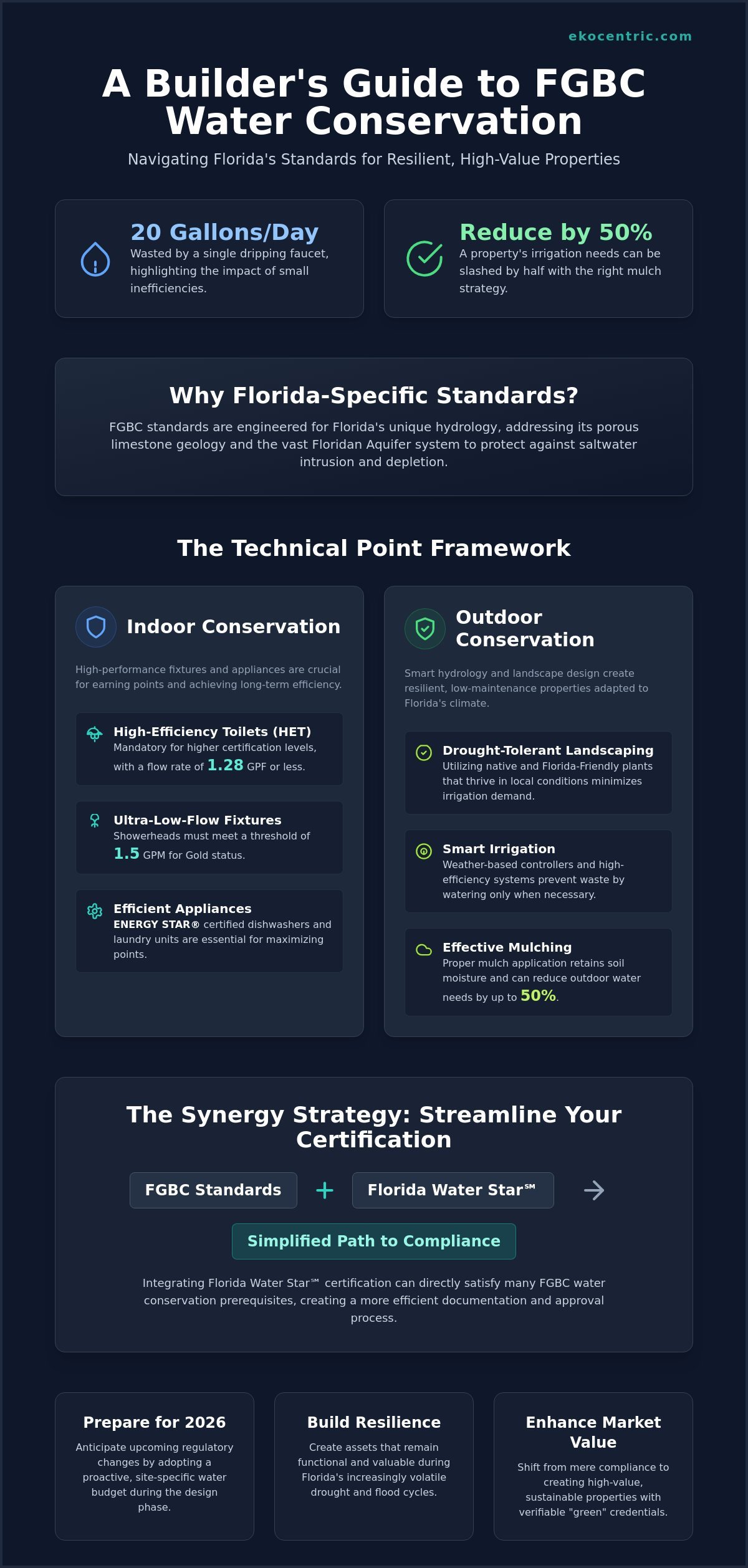
Did you know that a single dripping faucet wastes 20 gallons of water every day, or that the right mulch can slash a property's irrigation needs by 50%? For builders, these statistics represent more than just environmental stewardship; they are the foundation of a high-performance project. We know that mastering the FGBC standards for water conservation in Florida can feel like a daunting administrative hurdle, especially when you're balancing Florida's sandy soil with its heavy seasonal rains. It's difficult to manage complex point-based systems when your internal team is already focused on meeting tight construction deadlines.
This guide will show you how to navigate the technical requirements and strategic synergies of FGBC standards to build resilient, market-ready properties. You'll learn how to turn these conservation mandates into a competitive advantage that lowers utility costs and secures valuable green credentials. We'll preview the 2026 regulatory updates and provide a clear roadmap for streamlining your certification documentation process.
Key Takeaways
Understand why the Florida Green Building Coalition tailors its standards to the state's unique limestone geology and aquifer systems.
Learn to optimize the technical point framework by balancing high-efficiency indoor fixtures with smart outdoor hydrology strategies.
Discover how integrating Florida Water Star SM certification can streamline your path to meeting FGBC standards for water conservation in Florida.
Implement a site-specific water budget during the design phase to ensure your project remains resilient against 2026 regulatory changes.
Shift your perspective from mere compliance to creating high-value, sustainable properties with the help of specialized FGBC certification consulting.
Table of Contents
Understanding FGBC Water Conservation Standards in the Florida Context
The Synergy Strategy: FGBC and Florida Water Star SM Integration
Practical Implementation: A Checklist for Florida Developers
Understanding FGBC Water Conservation Standards in the Florida Context
Florida's geography is defined by its porous limestone and the vast Floridan Aquifer. Unlike national standards that apply a broad brush to sustainability, the FGBC standards for water conservation in Florida are engineered for our specific hydrological reality. 2026 builders face a unique environment of rapid population growth and shifting climate patterns. This makes water efficiency a non-negotiable priority for any developer who values long-term asset protection and resident satisfaction. By choosing to follow these guidelines, you're participating in a larger movement of green building that prioritizes the longevity of our shared resources.
To better understand how these standards impact Florida projects, watch this helpful video:
The Role of the Florida Aquifer and Regional Water Districts
Protecting the Floridan Aquifer from saltwater intrusion and depletion is at the heart of the FGBC mission. Regional authorities like the St. Johns River Water Management District (SJRWMD) influence how certification criteria are weighed based on local water scarcity. For example, a project in South Florida might prioritize different irrigation technologies than one in the Panhandle due to varying soil types and rainfall patterns. 2026 builders must also account for new state regulations that include stricter testing for private wells and updated rules for water softener drainage. These shifts make the FGBC framework even more essential for maintaining compliance and resilience. Adhering to FGBC standards for water conservation in Florida allows developers to mitigate rising municipal costs while protecting the state's natural beauty.
Certification Levels: Bronze to Platinum Requirements
The certification process follows a rigorous point-based system where water conservation serves as a core pillar. Builders can aim for Bronze, Silver, Gold, or Platinum designations based on their total point accumulation. While some water credits are mandatory to ensure a baseline of efficiency, optional credits allow developers to customize their strategy. These points often come from indoor fixture choices and outdoor landscape design. Achieving higher levels like Platinum requires a deep commitment to resource efficiency, which ultimately creates a more marketable "green" asset. With over 18,000 projects certified by the FGBC since 2018, the coalition has proven that these practices are a viable solution to Florida's environmental challenges. If you need assistance managing these complex requirements, our FGBC certification consulting services provide the technical oversight needed to succeed.
Indoor vs. Outdoor: The Technical Point Framework
The FGBC framework divides credits between what happens inside the walls and what happens on the grounds. In the face of 2026 climate projections, which suggest more volatile drought and flood cycles, these points aren't just scores. They represent a property's ability to remain functional when municipal resources are strained. Aligning with Florida's water conservation initiatives ensures your project contributes to long-term regional stability. Builders who master this point framework don't just pass inspections; they create assets that are inherently more resilient to Florida's weather extremes.
Indoor Fixtures and Appliance Efficiency
Indoor conservation starts with the specified flow rates of every fixture installed. While federal standards provide a baseline, FGBC standards for water conservation in Florida push for significantly higher performance. To achieve FGBC Gold status, indoor fixtures must typically meet thresholds such as 1.28 gallons per flush for toilets and 1.5 gallons per minute for showerheads. These requirements ensure that high-efficiency toilets (HET) and ultra-low-flow showerheads become the standard rather than an upgrade.
Beyond flow rates, appliance selection is critical for your final score. ENERGY STAR certified dishwashers and laundry units are essential for maximizing your point tally. However, the most innovative developers are now looking at leak detection technology. Smart water shut-off valves can earn significant bonus points because they prevent the catastrophic waste associated with burst pipes or minor, unnoticed leaks. If you're unsure which fixtures best align with your point goals, our team can help through FGBC certification consulting to ensure every selection adds tangible value to the project.
Outdoor Landscaping and Florida-Friendly Principles
Outdoor efficiency marks the shift from "traditional irrigation" to "smart hydrology." This approach uses the 9 principles of Florida-Friendly Landscaping™ as its foundation. In 2026, we're seeing a major trend toward limiting turfgrass areas. Many developers now opt for unirrigated backyards or native plant beds that require zero supplemental water once they're established. This reduces the burden on the local aquifer and lowers the homeowner's monthly expenses.
Soil quality is often overlooked but plays a massive role in water retention. Incorporating compost and moisture-retaining additives into Florida’s sandy soil can drastically reduce the frequency of irrigation cycles. This is vital during the intense heat of a Florida summer when evaporation rates are highest. By focusing on soil health and native species, you create a landscape that thrives in both heavy rains and prolonged dry spells. This resilience makes your properties more attractive to buyers who want "green" credentials without the high maintenance costs of a traditional lawn. Integrating these strategies ensures your build meets the highest FGBC standards for water conservation in Florida while remaining cost-effective.
The Synergy Strategy: FGBC and Florida Water Star SM Integration
Many builders view green certifications as isolated checklists that complicate the construction process. In practice, achieving Florida Water Star (FWS) certification often automatically satisfies the bulk of your required credits for FGBC standards for water conservation in Florida. This synergy is a powerful tool for developers who want to maximize their sustainability ROI without doubling their administrative workload. By aligning these two programs, you can verify criteria for both certifications during a single site inspection. This streamlined approach directly addresses the lack of internal capacity many firms face when managing complex documentation.
The 2023 and 2024 updates to FWS Gold criteria are specifically designed to meet 2026 sustainability goals. These standards move beyond simple fixture efficiency to address broader environmental impacts. The Gold tier focuses heavily on water quality protection and the integration of wildlife habitats. This means your project isn't just saving water; it's actively restoring the local ecosystem. This holistic vision is exactly what modern Florida buyers are looking for in a high-performance home. It transforms a standard build into a mission-driven project that appeals to environmentally conscious residents.
Stormwater as a Conservation Asset
We often view heavy Florida rains as a drainage problem rather than a resource. Smart hydrology flips this perspective by treating stormwater as an asset that can recharge local aquifers. Implementing these strategies helps you secure points for both certifications while building a more resilient site.
Pervious Surfaces: Use pavers or porous concrete to allow water to percolate directly into the soil rather than pooling on the surface.
Directed Drainage: Route gutters and downspouts toward landscaped areas or rain gardens rather than municipal storm drains.
Landscape Grading: Implement swales, berms, and planted terraces to slow runoff and filter pollutants naturally before they reach the water table.
These features earn significant points under the FGBC framework. They protect local water bodies from sediment and chemical contamination while reducing the burden on municipal drainage infrastructure.
Native and Non-Invasive Plant Diversity
Native plants are the secret weapon for securing outdoor points. These species have adapted to Florida's intense heat and sandy soil over millennia. They require far less supplemental water than exotic varieties, making them a cornerstone of the FGBC standards for water conservation in Florida. A major trend for 2026 is the use of site-appropriate, drought-tolerant turfgrasses. These varieties provide the aesthetic appeal of a traditional lawn without the high-maintenance irrigation requirements. Additionally, strategically placed shade trees contribute to thermoregulation. By cooling the ground, these trees reduce evaporation rates across the entire landscape. If you're struggling to balance these technical requirements with your project's aesthetic goals, our FGBC certification consulting team can provide the technical expertise needed to bridge that gap.
Practical Implementation: A Checklist for Florida Developers
Successful implementation of FGBC standards for water conservation in Florida requires moving beyond a simple checklist mentality. It demands a proactive strategy that begins during the earliest stages of pre-development. When you integrate water-saving measures into your sustainable building design from day one, you avoid the costly retrofits and delays that plague poorly planned projects. This isn't just about compliance; it's about building a superior, more efficient product for the Florida market. We've seen that builders who prioritize these steps early often secure their certifications faster and with fewer technical setbacks.
Design with Data: Start with a site-specific water budget calculator. This tool accounts for your property's unique landscape square footage and expected indoor demand, providing a clear roadmap for point accumulation.
Vet Your Team: Only hire landscape and irrigation contractors who carry the "Florida Water Star Accredited" status. Their specialized knowledge is essential for meeting rigorous FGBC outdoor criteria.
Prioritize Documentation: Capture high-resolution photos of all underground irrigation components before they're buried. Save every invoice for high-efficiency fixtures and appliances to provide a clear paper trail for your certifier.
Designing for the Florida Climate
Florida's weather is notoriously unpredictable, swinging from torrential summer downpours to bone-dry winter months. Your irrigation scheduling must account for these seasonal rainfall patterns to avoid waste. We recommend selecting rain sensors and smart controllers that adapt to real-time Florida weather data. These systems ensure your landscape only receives water when it actually needs it. Additionally, designing "micro-zones" allows you to group plants with similar hydration needs together. This technique prevents you from overwatering drought-tolerant native species just to keep a small patch of turf alive, which is a common mistake that wastes thousands of gallons annually.
The Inspection and Verification Process
During mid-construction and final inspections, an FGBC certifier or LEED Green Rater performs a deep dive into your project's water systems. They don't just look at the fixtures; they look at the execution. A common pitfall occurs when high-performance fixtures fail to earn points because of poor installation techniques that lead to minor leaks or suboptimal flow rates. These small errors can derail your point tally and delay your final certification. You can streamline this entire verification process and ensure your project meets the highest FGBC standards for water conservation in Florida through expert FGBC certification consulting. Our team acts as your pragmatic partner, ensuring that every technical requirement is met and documented correctly the first time.
Partnering with Ekocentric for FGBC Success
Navigating the FGBC standards for water conservation in Florida requires more than a passing familiarity with the manual; it demands a dedicated technical partner. We understand that your primary focus is on the construction cycle and managing subcontractors. Ekocentric fills the gap by providing the specialized expertise needed to transform complex requirements into a streamlined path to certification. Our team moves your project beyond a simple compliance mindset. Instead, we help you create high-value, sustainable properties that stand out in a competitive market. As a pragmatic partner, we balance your environmental goals with the reality of project timelines and budget constraints.
The 2026 building landscape in Florida is shifting, and yesterday's strategies won't meet tomorrow's expectations. You need a mission-driven advocate who understands the nuances of evolving state standards and hydrological pressures. We don't just offer consulting; we offer a commitment to environmental stewardship that translates into tangible business benefits. Whether you're aiming for a Bronze designation or pushing for Platinum, our role is to ensure your vision becomes a high-performance reality.
Solving Internal Capacity Challenges
Managing the documentation and submission process for FGBC can be an administrative burden that many firms aren't equipped to handle internally. We take this weight off your shoulders by overseeing every technical detail, from fixture specifications to site-specific water budgets. Our deep experience with LEED BD+C consulting informs our FGBC strategy, allowing us to apply rigorous national best practices to Florida's unique certification framework. This cross-disciplinary knowledge is invaluable for builders who need specific credentials to qualify for specialized financing or to satisfy the demands of eco-conscious investors. We provide the pragmatic solutions that allow you to focus on building while we handle the intricacies of the point system.
Leading the Future of Florida Building
Our commitment to "building for longevity" means we look past the immediate inspection to the long-term resilience of the property. By prioritizing resource efficiency, we help you reduce long-term utility costs for future residents and protect the local environment. Aligning with FGBC standards for water conservation in Florida becomes an asset rather than a hurdle when you have the right team in place. We help you achieve the highest tiers of certification efficiently, ensuring your projects are recognized as leaders in sustainable development. If you're ready to elevate your next project and secure your place in Florida's green building future, schedule your FGBC project consultation with Ekocentric today. Together, we can build properties that are as resilient as they are profitable.
Securing Your Project’s Hydrological Future
Mastering the FGBC standards for water conservation in Florida is more than a regulatory requirement; it's a commitment to the longevity of our state's most precious resources. By integrating high-efficiency indoor fixtures and adopting smart outdoor hydrology through Florida Water Star synergy, you create properties that are resilient against the climate shifts of 2026. Successful certification rests on proactive planning and meticulous documentation from the design phase through final verification. These steps ensure your project delivers lower utility costs and high-performance value to every resident.
As a certified LEED Green Rater with specialized FGBC certification expertise, Ekocentric acts as your pragmatic partner in this journey. We're passionate advocates for Florida environmental stewardship who understand the operational challenges of modern development. We provide the technical oversight and mission-driven advocacy needed to navigate complex standards without disrupting your construction timelines. Let us help you transform environmental goals into marketable green credentials that set your projects apart.
Partner with Ekocentric to achieve your FGBC Certification goals. Together, we can build a more sustainable and prosperous future for the Sunshine State.
Frequently Asked Questions
What are the mandatory FGBC water conservation requirements for new homes?
Every FGBC project must meet a baseline of mandatory credits that include basic indoor fixture efficiencies and the adoption of Florida-Friendly Landscaping™ principles. These prerequisites ensure that no certified home wastes potable water for non-essential tasks from the moment it's occupied. Builders must satisfy these foundational requirements before they can accumulate the optional points needed to reach higher certification tiers like Gold or Platinum.
How does Florida Water Star certification affect my FGBC point total?
Achieving Florida Water Star certification acts as a powerful multiplier that often satisfies all mandatory water credits and a large portion of optional points. This synergy is a strategic way for developers to streamline their certification process through a single technical inspection. It's an efficient method to master FGBC standards for water conservation in Florida while minimizing the administrative burden on your internal project team.
Can I get FGBC points for using reclaimed water in my irrigation system?
Yes, the FGBC rewards builders who utilize reclaimed water for irrigation to reduce the demand on the state's potable drinking water supply. By connecting to local reclaimed water lines, you earn significant optional points that contribute to your overall sustainability score. This practice is highly encouraged in regions where water management districts have invested in non-potable infrastructure to protect our shared aquifer systems from depletion.
Do FGBC water standards require the use of specific turfgrass like Bahia?
FGBC standards don't mandate a specific species like Bahia; instead, they prioritize the "right plant, right place" principle for landscape resilience. You have the flexibility to choose any turfgrass that is drought-tolerant and appropriate for your project's specific soil conditions. The goal is to design a landscape that thrives with minimal supplemental irrigation, allowing you to meet your water budget without sacrificing the property's aesthetic appeal.
How much water can a developer expect to save by following FGBC Gold standards?
Projects that adhere to high-efficiency benchmarks like FGBC Gold or Florida Water Star can save up to 20% more water than standard new construction. These savings result from a holistic strategy that combines ultra-low-flow indoor fixtures with smart outdoor hydrology. For your residents, this efficiency translates directly into lower monthly utility bills and a property that remains resilient during Florida's increasingly common drought and flood cycles.
What is the role of a third-party inspector in the FGBC water certification process?
A third-party evaluator provides the unbiased technical verification required to confirm that every installed system meets the coalition's rigorous standards. They conduct mid-construction and final site visits to inspect fixture flow rates and verify that the landscaping matches the approved design plans. This oversight ensures the integrity of the certification and provides the documentation you need to market your project's "green" credentials to buyers.
How do FGBC water conservation standards compare to LEED BD+C requirements?
While LEED BD+C offers a broad national framework, FGBC standards for water conservation in Florida are specifically engineered for our state's unique limestone geology and sub-tropical climate. FGBC is often more flexible and cost-effective for local builders because it addresses regional environmental pressures like saltwater intrusion directly. Both programs demand high performance, but FGBC’s localized focus makes it a pragmatic choice for Florida-resilient development.
Are there regional differences in FGBC water standards within Florida?
The core FGBC manual is consistent statewide, but regional water management districts often influence how specific credits are applied based on local scarcity. For example, a project in South Florida may face different irrigation restrictions or soil requirements than a build in the Panhandle. Builders must stay informed about local building codes, as many municipalities now integrate these green standards into their own water supply and conservation goals.