
FGBC Assisted Living Standards: A Builder’s Guide
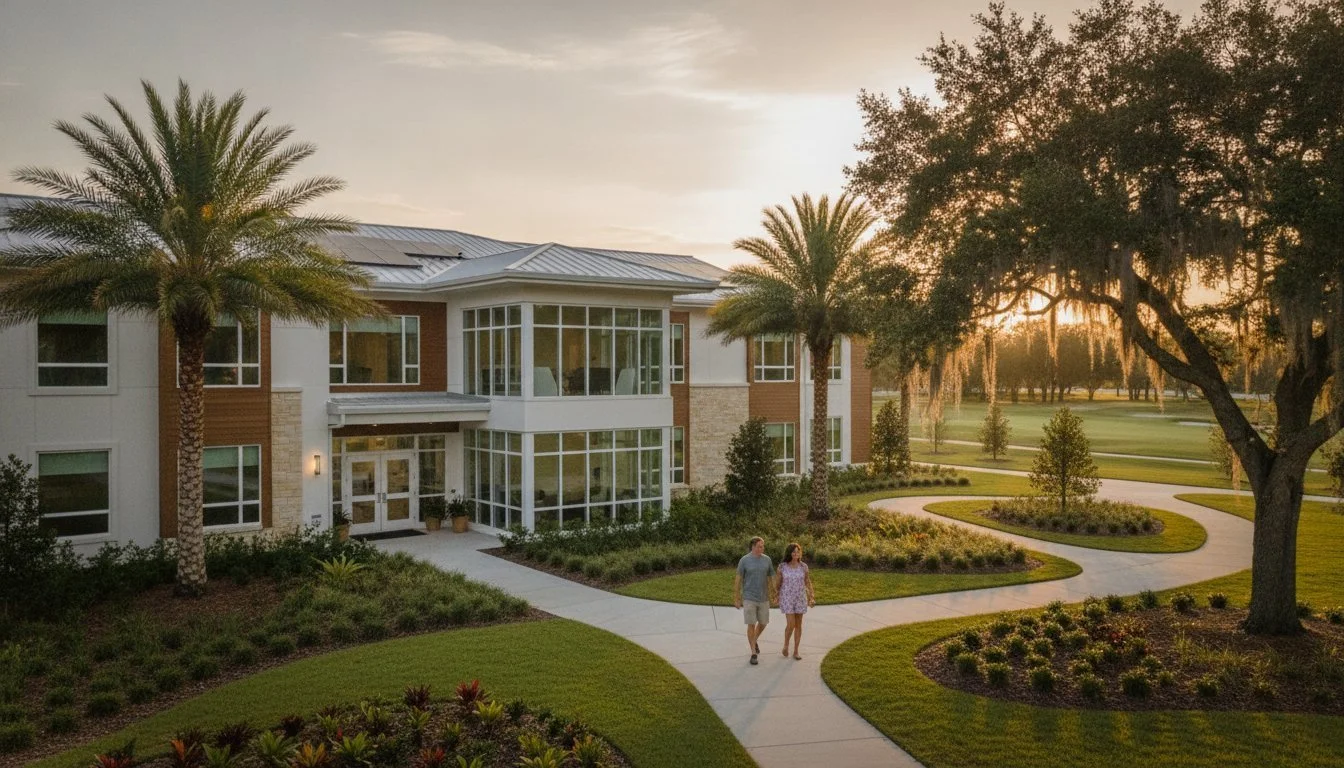
In Florida's most iconic retirement community, a facility's success isn't just measured by its amenities, but by its ability to protect and nourish the seniors who call it home. Mastering the FGBC standards for assisted living facilities in The Villages has become a strategic necessity for developers preparing for the 9th Edition of the Florida Building Code. You likely already know that balancing the community's rigorous architectural guidelines with high-performance energy goals feels like a constant tug-of-war. We understand that pressure, especially with the 2026 FGI Guidelines mandating 90% single-occupancy rooms in skilled nursing environments. This shift is fundamentally reshaping how we approach resident privacy and environmental health.
This guide will show you how to navigate the Florida Green Building Coalition requirements to build a resilient, high-performance facility that thrives in our unique subtropical climate. You'll learn how to streamline the certification process, improve indoor air quality for your residents, and differentiate your project in a crowded senior living market. We'll break down the critical 2026 updates, from hurricane-force wind resilience to water conservation strategies that lower operational costs while keeping your facility beautiful and compliant.
Key Takeaways
Understand how FGBC certification elevates senior care by combining Florida-specific climate resilience with enhanced resident health and wellness.
Learn to optimize 24/7 healthcare operations through energy-efficient HVAC systems and medical-grade water conservation strategies.
Navigate the intersection of FGBC standards for assisted living facilities in The Villages and local architectural guidelines to ensure seamless project approval.
Master a clear, step-by-step roadmap for achieving certification, from early pre-design planning to final technical verification.
Discover how expert consulting transforms complex sustainability requirements into tangible assets for your facility's long-term real estate performance.
Table of Contents
Technical Breakdown of FGBC Commercial Building Standards for ALFs
Navigating The Villages' Local Requirements and Climate Factors
Strategic FGBC Consulting: How Ekocentric Optimizes Senior Living Projects
Why FGBC Certification Matters for Assisted Living
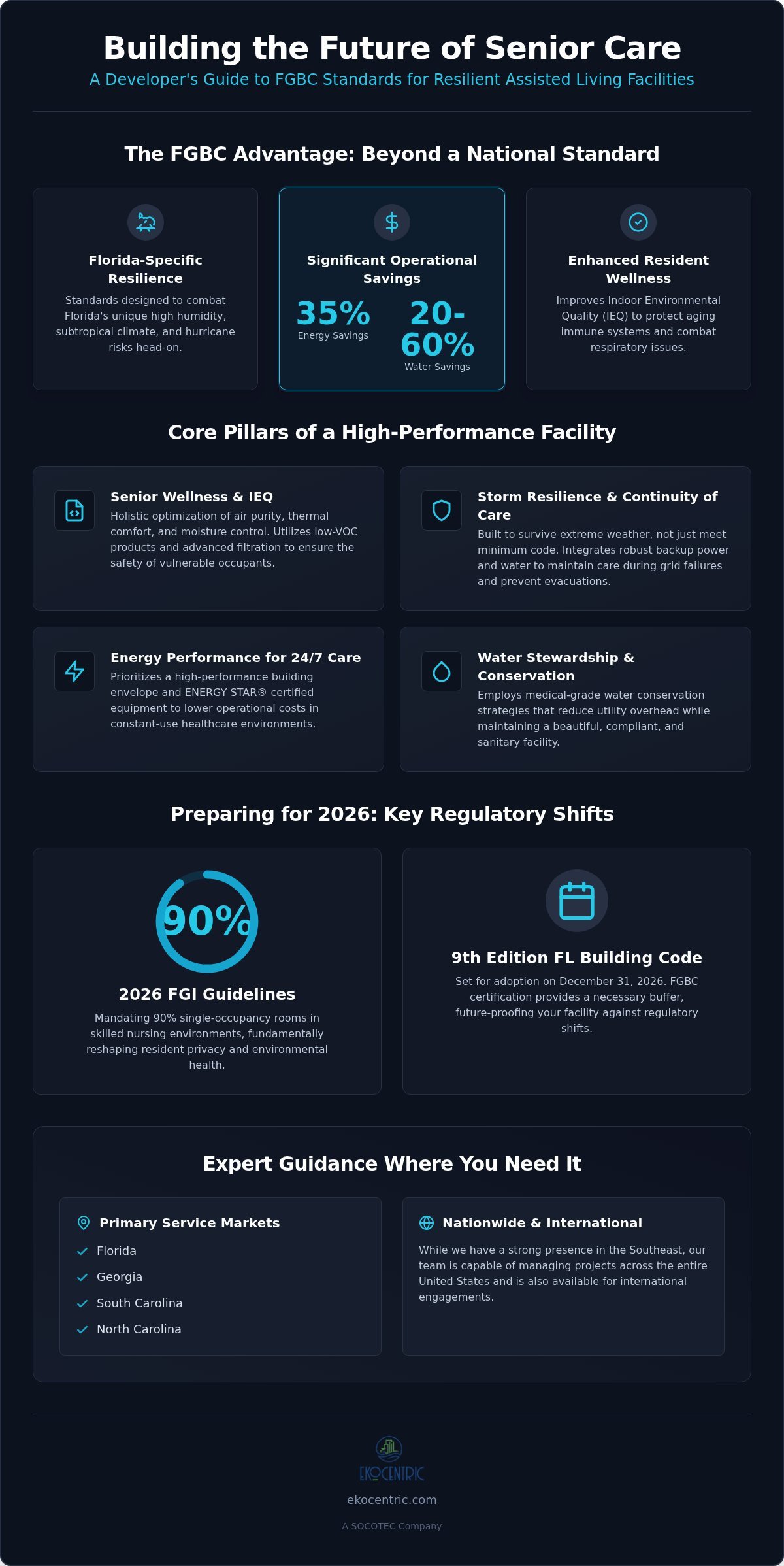
The Florida Green Building Coalition (FGBC) provides a localized framework that outperforms national standards by focusing on our state's specific environmental stressors. Unlike generic certifications, FGBC standards for assisted living facilities in The Villages address high humidity and hurricane risks head-on. By applying foundational Green building principles to the senior living sector, developers can significantly reduce utility overhead while improving the longevity of their assets. Research shows that green-certified commercial buildings can achieve energy savings of 35% and water savings between 20% and 60%. These figures represent the difference between a facility that struggles with moisture intrusion and one that operates as a high-performance healthcare environment.
Residents in The Villages prioritize health, longevity, and active lifestyles. Building to FGBC standards provides a visible commitment to wellness that distinguishes a facility from standard builds. It's also a way to ensure alignment with the upcoming 9th Edition of the Florida Building Code, which is set for adoption on December 31, 2026. Because FGBC requirements often exceed local Sumter, Lake, and Marion county codes, they provide a necessary buffer against future regulatory shifts. This proactive approach turns technical compliance into a powerful marketing asset.
Senior Wellness and Indoor Environmental Quality (IEQ)
Protecting aging immune systems requires a specialized approach to construction materials. Adhering to FGBC standards for assisted living facilities in The Villages ensures the use of low-VOC products, which eliminate the off-gassing of harmful chemicals found in many standard paints and adhesives. When paired with advanced filtration systems, these standards directly combat the respiratory issues that often affect senior populations in high-humidity climates. Within the context of Florida's 2026 building standards, IEQ is the holistic optimization of air purity, thermal comfort, and moisture control to ensure the safety of vulnerable occupants.
Storm Resilience and Continuity of Care
In Florida, a building's resilience is a life-safety issue for assisted living residents. FGBC’s focus on disaster mitigation ensures that facilities are built to survive extreme weather rather than just meeting minimum safety thresholds. This framework encourages the integration of robust backup power and water systems to maintain continuity of care during grid failures. Protecting physical assets against hurricane-force winds and flooding reduces long-term insurance costs and prevents the trauma of emergency evacuations. Developers looking to secure their investments can utilize FGBC certification consulting to map these resilience credits to their specific architectural plans.
Technical Breakdown of FGBC Commercial Building Standards for ALFs
Applying FGBC standards for assisted living facilities in The Villages requires a deep understanding of how 24/7 healthcare environments interact with Florida's climate. Traditional residential builds don't face the same constant mechanical loads or rigorous sanitary requirements as an ALF. By moving beyond the minimum requirements of the 9th Edition of the Florida Building Code, developers can engineer facilities that are both high-performing and fiscally responsible. The technical framework focuses on four core pillars: energy optimization, water stewardship, site resilience, and material longevity.
Energy Performance in 24/7 Healthcare Facilities
Senior residents often require higher indoor temperatures for comfort, which can drive cooling and dehumidification costs to unsustainable levels. FGBC standards address this by prioritizing a high-performance building envelope. Utilizing advanced insulation and high-reflectivity roofing materials reduces the initial cooling load before the HVAC system even engages. To earn maximum points, developers should integrate ENERGY STAR certified medical and commercial kitchen equipment. These choices don't just lower bills; they ensure the facility remains habitable during peak demand periods. If you're looking to optimize these systems, our FGBC certification consulting can help align your mechanical specs with long-term performance goals.
Water Management in the Florida Landscape
Water conservation in an ALF must balance aggressive reduction goals with the non-negotiable hygiene standards found in Florida's assisted living facility regulations. FGBC standards encourage the use of low-flow, medical-grade fixtures that reduce consumption without sacrificing the water pressure necessary for resident care. Outside the building, the focus shifts to Central Florida's unique geography. Effective water management includes:
Florida-Friendly Irrigation: Utilizing smart controllers and moisture sensors to prevent over-watering.
Reclaimed Water Systems: Integrating treated water for large-scale landscaping to preserve the local aquifer.
Pervasive Stormwater Design: Using bioswales and pervious paving to manage heavy tropical rainfall and prevent site flooding.
Site Sustainability and Material Resources
Large senior living campuses often struggle with the "heat island" effect, where expansive parking lots and dark roofs trap heat. FGBC credits reward the use of light-colored hardscaping and strategic native canopy trees to lower ambient site temperatures. Indoors, the focus turns to durability. High-traffic healthcare corridors require flooring and wall finishes that withstand constant cleaning and equipment impact. Sourcing sustainable, locally produced materials reduces the carbon footprint of construction while ensuring the facility remains in peak condition for decades. This commitment to resource efficiency is what defines the next generation of senior housing in Florida and across the Carolinas.
Navigating The Villages' Local Requirements and Climate Factors
Building an assisted living facility in The Villages involves a delicate dance between high-performance engineering and strict aesthetic conformity. While FGBC standards provide the technical roadmap, the Architectural Review Committee (ARC) defines the visual boundaries. Success depends on proving that Mediterranean or Florida-ranch designs can coexist with cutting-edge efficiency. This is where Florida's green building programs become invaluable; they offer a recognized framework that validates these sustainability efforts to local stakeholders while ensuring the facility remains an asset to the community's iconic landscape.
Heat island effects are a major concern in Central Florida's sprawling, paved environments. Large ALF campuses can act as thermal batteries, driving up cooling costs and resident discomfort. To combat this, we focus on high-albedo hardscaping and dense native canopy coverage. These strategies lower the microclimate temperature of the facility, providing a tangible benefit for seniors who spend time in outdoor common areas. Integrating FGBC standards for assisted living facilities in The Villages requires early collaboration with designers to ensure solar-ready roofs don't disrupt the community's signature skyline.
Architectural Synergy: Aesthetic vs. Performance
Selecting windows is a critical intersection of form and function. You need glazing that satisfies the ARC's color palettes while meeting the high wind-load and thermal performance required for certification. Implementing "Florida-friendly" landscaping allows a project to secure certification points under the FGBC framework while simultaneously satisfying the strict aesthetic and water-use ordinances mandated by The Villages. We help developers select FGBC-compliant materials that mirror the traditional Mediterranean styles of the community without sacrificing the building envelope's integrity.
Climate-Specific Building Science for Sumter County
Humidity management is the most critical climate factor in Sumter County. Standard building practices often fall short in the face of Central Florida's moisture levels, leading to mold risks and degraded air quality. FGBC’s moisture control standards are non-negotiable here. We utilize specialized dehumidification systems for large common areas and ensure the building orientation optimizes natural light without inviting excessive solar heat gain. This science-based approach protects your physical asset and the respiratory health of your residents. If you're managing a healthcare project, our FGBC certification consulting ensures these building science principles are baked into your design from day one.
The importance of mold-resistant construction cannot be overstated in this climate. By using moisture-tolerant materials and proper rainscreen assemblies, we prevent the structural decay that often plagues standard builds in humid environments. These choices ensure that your facility remains a safe, healthy, and durable home for residents for decades to come.
The Step-by-Step Path to Achieving FGBC Certification
Achieving FGBC certification is a disciplined journey that transforms a standard construction project into a high-performance asset. It isn't a happy accident. The process requires a structured timeline that begins long before the first shovel hits the dirt. During the Pre-Design phase, we establish clear sustainability goals and assemble a project team that shares a commitment to environmental stewardship. We then move into Design Integration. This is where we map specific credits within the FGBC standards for assisted living facilities in The Villages directly to your architectural plans. This proactive approach ensures that every structural and mechanical choice serves the dual purpose of resident wellness and long-term resource efficiency.
The Role of the Designated Evaluator
The Florida Green Building Coalition requires a third-party Designated Evaluator to oversee the certification process. This professional is not a general building inspector. While a city inspector focuses on minimum safety codes, an evaluator ensures your project hits the specific performance benchmarks required for the FGBC award. Early involvement is vital. When we act as your evaluator from the start, we identify potential credit gaps before they become expensive mid-construction fixes. This pragmatic oversight bridges the gap between technical theory and job-site reality. Our team manages these complex requirements for developers in Florida, Georgia, and the Carolinas, and we also support projects across the entire United States and international markets.
Documentation and Performance Verification
The construction phase is where the vision becomes tangible, and it requires meticulous tracking. We monitor material receipts and VOC certificates to ensure every interior finish protects senior health. Performance verification involves rigorous on-site testing to prove the building operates as designed. Key verification steps include:
Blower door testing: Verifying the building envelope's airtightness to prevent moisture intrusion.
Duct leakage testing: Ensuring healthcare wings have optimized HVAC efficiency for 24/7 operation.
Site inspections: Confirming the installation of Florida-friendly landscaping and smart irrigation systems.
These final site visits are the culmination of the process. The evaluator reviews the completed facility against the initial design goals to ensure every promise of high performance has been met. If you are ready to begin this process, you can secure expert guidance through our FGBC certification consulting. Following the FGBC standards for assisted living facilities in The Villages ensures your project is ready for the 2026 regulatory shifts while providing a superior living environment for your residents.
Strategic FGBC Consulting: How Ekocentric Optimizes Senior Living Projects
Ekocentric doesn't just process paperwork. We bridge the critical gap between technical certification and real estate performance. As a licensed Florida Certified Building Contractor and an NGBS Green Verifier, we bring a builder's perspective to sustainability. This dual expertise is vital when implementing FGBC standards for assisted living facilities in The Villages. We understand that a developer's bottom line is just as important as the facility's environmental footprint. Our approach prioritizes pragmatic performance, focusing on tangible resident outcomes and operational ROI rather than just collecting badges for the wall.
Our team possesses a deep familiarity with the local developer landscape in Central Florida. The Villages presents a unique set of architectural and landscaping hurdles that require a partner who knows the local expectations. We help you navigate these challenges without compromising your sustainability goals. Our mission is to provide the technical bandwidth your internal team might lack, ensuring your project stays on track and within budget. Our dedication to environmental stewardship isn't just a service; it's a mission to ensure the longevity of our communities.
Integrated Consulting for Multi-State Developers
Our expertise isn't limited to the Florida border. We provide comprehensive support for developers operating across Georgia, South Carolina, and North Carolina. By standardizing green building protocols across your regional portfolio, we help you achieve consistent performance and brand value. Whether you're navigating the transition from LEED to FGBC or pursuing NGBS certification in different markets, we scale our services to meet your needs. Our team is equipped to handle projects across the entire United States and is available for international assignments outside the US.
Partnering for Long-Term ALF Value
Successful certification starts with identifying "low-hanging fruit" credits. These are the high-impact, low-cost strategies that maximize your certification level while minimizing initial capital expenditure. We analyze your ALF's specific architectural plans to find these opportunities early. This strategic planning ensures that the FGBC standards for assisted living facilities in The Villages work for your business, not against it. We act as your advocate throughout the design and construction phases, protecting your investment from costly oversights.
If you're ready to optimize your next senior living project, we're here to help. Contact us at INFO@EKOCENTRIC.COM for a project-specific roadmap tailored to your goals. Let's build a more resilient and environmentally conscious future together.
Building a Resilient Future for Senior Care
Mastering the FGBC standards for assisted living facilities in The Villages is more than a regulatory hurdle; it's a commitment to the longevity of your asset and the health of your residents. By prioritizing indoor environmental quality and storm resilience, you create a high-performance environment that stands out in a competitive market. We've explored how technical optimization and early design integration prevent costly construction delays while lowering long-term utility overhead.
As a Licensed Florida Certified Building Contractor and National Green Building Standard Green Verifier, Ekocentric provides the technical bandwidth you need to navigate complex certifications. We serve developers across Florida, Georgia, South Carolina, and North Carolina, with the capacity to manage projects across the United States and internationally. Our mission is to turn sustainability goals into tangible business results that benefit both your bottom line and the environment. Optimize your assisted living project with Ekocentric’s FGBC consulting services. Together, we can build facilities that are as resilient as they are welcoming.
Frequently Asked Questions
Is FGBC certification different from LEED for assisted living facilities?
FGBC certification differs from LEED by focusing exclusively on Florida's subtropical climate and hurricane resilience. While LEED provides a global framework, FGBC standards for assisted living facilities in The Villages prioritize local building science such as high-humidity moisture control and native landscaping. This specialization often makes FGBC a more practical and affordable choice for developers focused on the Florida market.
How much does it cost to certify an ALF in The Villages under FGBC?
Total certification costs depend on the facility's square footage and project complexity. According to FGBC guidelines, a non-refundable minimum deposit of $1,500 is required for high-rise residential building standards. Beyond registration fees, developers should budget for consulting and technical verification to ensure the project meets performance targets. We recommend a pre-design assessment to establish a realistic project budget.
Can existing assisted living facilities in Florida get FGBC certified?
Existing facilities can achieve certification through the FGBC Remodeling Standard. This pathway focuses on improving energy efficiency, indoor air quality, and water conservation in established structures. Retrofitting an older building allows owners to modernize mechanical systems and enhance resident comfort while lowering operational overhead. It's a strategic way to remain competitive against newer, green-certified developments.
Does FGBC certification help with Florida building code compliance?
FGBC certification often exceeds the requirements of the Florida Building Code, making compliance easier to document. Since the standards are built on Florida-specific science, they align perfectly with state mandates for wind resistance and energy performance. Projects following these guidelines are typically better prepared for the adoption of the 9th Edition of the Florida Building Code on December 31, 2026.
How do FGBC standards impact the insurance premiums for senior living facilities?
Many insurance providers offer reduced premiums for facilities that demonstrate superior disaster resilience. FGBC standards emphasize hurricane-force wind mitigation and survivable structures, which directly lowers the risk profile of the building. By documenting these resilient features through third-party verification, owners can negotiate better rates with carriers who value hardened physical assets in high-risk zones.
What are the most heavily weighted categories for ALFs in the FGBC standard?
Energy efficiency and indoor environmental quality are typically the most heavily weighted categories for healthcare facilities. Because ALFs operate 24/7, high-performance HVAC systems and low-VOC materials offer the greatest impact on both operational costs and resident health. Water conservation also carries significant weight in Central Florida, where managing the local aquifer is a high priority for community stakeholders.
Are there specific FGBC credits for dementia-friendly or memory care design?
While FGBC doesn't have a dementia-specific category, many credits support memory care goals through improved indoor environmental quality. Credits for natural daylighting and acoustic control create the calm, predictable environments necessary for dementia-friendly design. Utilizing FGBC standards for assisted living facilities in The Villages ensures these wellness-focused features are technically verified and integrated into the building’s core performance.
How long does the FGBC certification process take from design to completion?
The certification timeline usually mirrors the standard construction schedule, typically ranging from 12 to 24 months. It begins during the pre-design phase and concludes with a final site visit after construction is finished. Engaging a consultant early prevents delays, as documentation is collected in real-time rather than during a frantic rush at the project's end.