FGBC Commercial Building Standards: A Developer’s Guide to Florida Green Certification
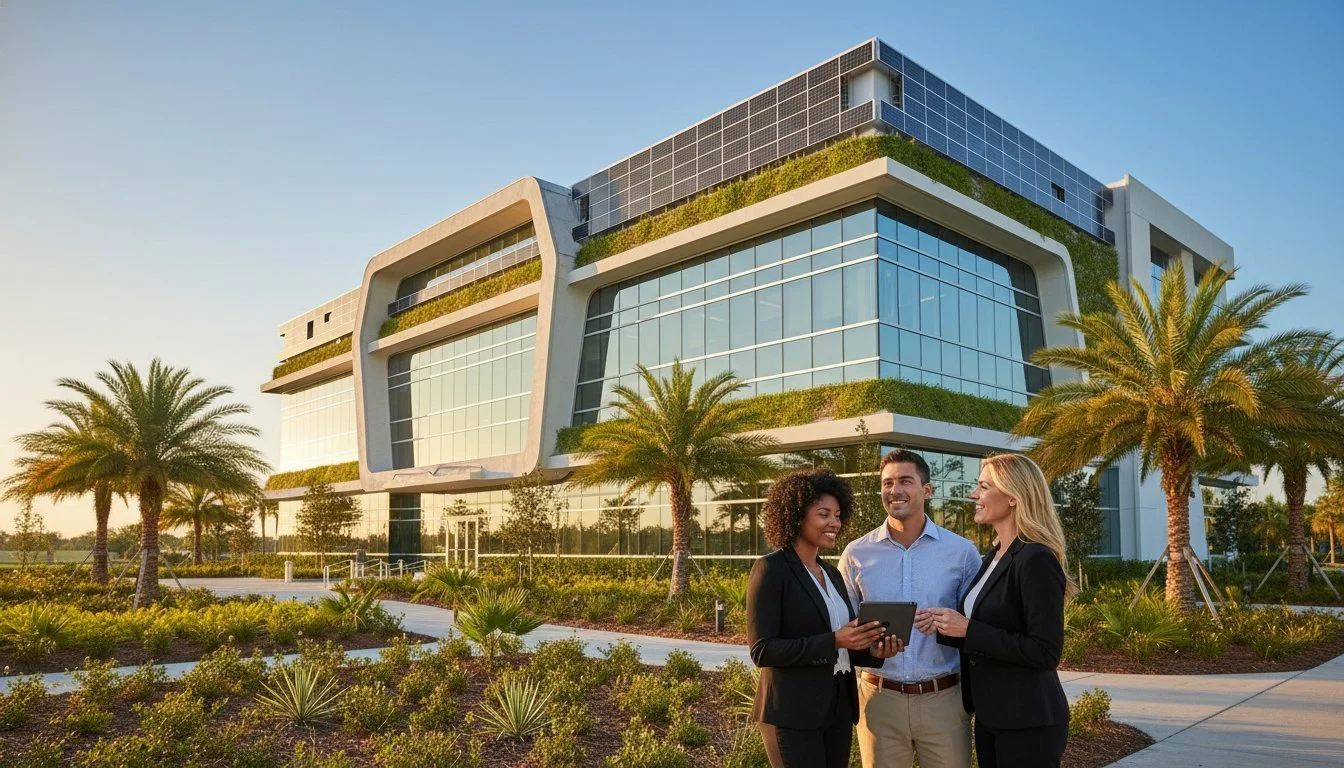
With 33,598 projects already certified across the state, the Florida Green Building Coalition has proven that sustainable development is more than a badge of honor; it's a necessity for our unique environment. You understand that building in Florida means facing intense humidity and the constant threat of hurricanes. Navigating the FGBC commercial building standards is the most effective way to ensure your project stands up to these specific challenges while maintaining a healthy bottom line. We know that many developers don't have the internal bandwidth to manage the extensive documentation required for Commercial Certification Version 3.
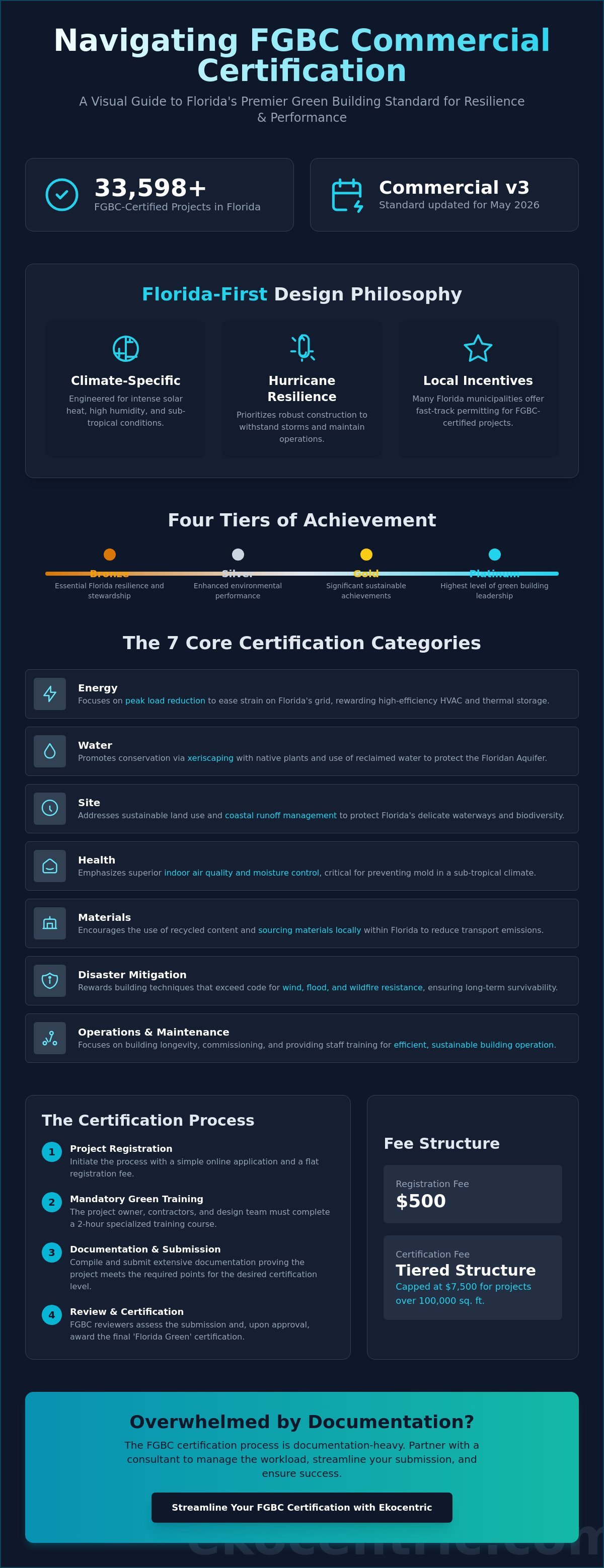
You'll learn how to streamline your process, from handling the $500 registration fee to meeting the mandatory two-hour green project training for your design team. This article provides a clear roadmap for certification, explains the tiered fee structure that caps at $7,500 for projects over 100,000 square feet, and highlights why Florida-specific standards often outperform national alternatives in our climate. By the end, you'll see exactly how to balance upfront costs with the long-term resilience your tenants and investors expect.
Key Takeaways
Discover how FGBC commercial building standards prioritize Florida’s unique sub-tropical climate and hurricane resilience over generic national benchmarks.
Learn to optimize the seven core certification categories, focusing on high-impact areas like peak load reduction and Florida-specific xeriscaping.
Understand the technical differences between regional performance and global standards like LEED to select the most cost-effective path for your project.
Identify the critical milestones in the certification process, from mandatory project team training to the tiered application fee structure.
Find out how to solve internal bandwidth challenges by partnering with a consultant to manage the heavy documentation and management workload.
Table of Contents
What are the FGBC Commercial Building Standards?
The Florida Green Building Coalition (FGBC) is a non-profit organization that's dedicated to creating a healthier, more resilient future for the Sunshine State. Unlike national programs that apply broad rules to diverse climates, FGBC commercial building standards focus specifically on the unique environmental stressors found in Florida. This includes our intense solar heat, high humidity, and the seasonal threat of hurricanes. While these standards are voluntary, they've become a preferred framework for developers because many local governments, such as Pinellas County and the City of St. Petersburg, offer incentives or fast-track permitting for certified projects.
In our local ecosystem, there's a vital distinction between "green" and "sustainable" design. A green building might use recycled materials, but a sustainable building is engineered to survive a Category 4 storm and maintain indoor air quality during a power outage. Version 3 of the standard covers both new construction and existing building retrofits. This flexibility allows owners of older properties to modernize their assets, reducing operating costs while contributing to the state's broader environmental goals. It's about protecting the planet while creating spaces where businesses can thrive despite the changing climate.
To better understand how these standards apply to your next project, watch this helpful video from the coalition:
The Evolution of Commercial Version 3
The Commercial Version 3 standard represents a significant shift in how we approach high-performance buildings. Updated for May 2026, this version introduces stricter requirements for indoor air quality and moisture control. These are critical in our sub-tropical environment where mold and humidity are constant threats. The evolution of FGBC commercial building standards ensures that project teams, including owners and contractors, participate in at least two hours of specialized green project training before work begins on-site. This requirement aligns with the latest Florida Building Code but pushes performance thresholds higher for commercial high-rises.
Certification Levels: Bronze to Platinum
FGBC uses a point-based system to reward developers for making smarter choices across seven core categories. Projects earn points to move through four distinct tiers of achievement: Bronze, Silver, Gold, and Platinum. To be considered "FGBC Green," a building must meet a minimum point threshold that proves it has exceeded standard construction practices. The Bronze tier serves as the essential baseline for ensuring long-term Florida resilience and basic environmental stewardship. If you're feeling overwhelmed by the point mapping, our team at Ekocentric provides FGBC Certification Consulting to manage the heavy lifting.
The 7 Core Categories of FGBC Commercial Certification
The FGBC commercial building standards evaluate a project's performance across seven distinct areas. Unlike national standards that apply a "one size fits all" approach, these categories prioritize the specific environmental pressures of the Gulf and Atlantic coasts. For instance, the Energy category focuses heavily on peak load reduction. In Florida, the cooling demand during late afternoon hours puts immense strain on the grid. By implementing thermal storage or high-efficiency HVAC systems, developers can lower operational costs while earning certification points. It's a pragmatic way to align environmental goals with the reality of Florida's utility structure.
Water conservation is equally localized. With Florida's growing population, protecting the Floridan Aquifer is vital for our future. The standards reward xeriscaping, which uses drought-tolerant native plants, and the integration of reclaimed water systems for irrigation. Similarly, the Site category addresses coastal runoff management. Preventing silt and pollutants from entering our local waterways protects the biodiversity that makes Florida a premier destination for business. Finally, the Materials category encourages sourcing within the state. This reduces transportation-related carbon emissions and supports our local economy. Managing these seven categories requires a deep understanding of the technical manual. If your project team is already at capacity, partnering with an FGBC consultant can provide the management bandwidth needed to track these credits effectively.
Resilience and Disaster Mitigation
Florida's weather isn't just a comfort issue; it's a financial risk. The Resilience and Disaster Mitigation category is where FGBC truly shines compared to national benchmarks. It rewards the use of hurricane-resistant glazing and reinforced structural integrity that exceeds the basic building code. These choices aren't just about safety. Many commercial insurance providers offer premium reductions for buildings that demonstrate this level of hardiness. Implementing robust flood mitigation strategies for developments in low-lying areas further protects the asset's long-term value and ensures the building remains operational after a major storm event.
Indoor Environmental Quality in Sub-tropical Climates
In a sub-tropical climate, the Indoor Environmental Quality (IEQ) category must address the invisible threat: moisture. High humidity leads to mold growth, which can devastate a commercial property's reputation and tenant health. FGBC commercial building standards require advanced humidity control systems that maintain a stable environment. We also look for low-VOC materials to ensure high productivity and better air quality for occupants. When you pair these with natural lighting strategies that account for Florida's high solar gain, you create a workspace that's both healthy and inspiring.
FGBC vs. LEED: Choosing the Right Standard for Florida
Choosing between LEED and FGBC isn't just about prestige; it's about practical application. LEED offers global benchmarking that appeals to international investors who want a recognized name on their portfolio. However, FGBC commercial building standards provide a framework engineered specifically for our sub-tropical climate. From a cost perspective, the entry point for FGBC is highly accessible with a $500 registration fee. Total certification costs are predictable and transparent. For example, a project between 25,001 and 50,000 square feet requires a total certification fee of $4,500, while projects over 100,000 square feet are capped at $7,500. This transparency helps developers budget accurately without the membership tiers often associated with national programs.
Documentation is another area where the two diverge significantly. LEED requires exhaustive proof that can sometimes feel disconnected from local building practices. FGBC is designed to be more streamlined for Florida-based teams who are already working within the state's stringent building codes. If your goal is international prestige for a flagship high-rise, LEED might be the answer. But if you want a resilient building that leverages local incentives and simplifies the management workload, FGBC is the pragmatic choice for the local market.
Regional Relevance and Climate Adaptation
National standards sometimes struggle with Florida's intense humidity. Some LEED energy credits are difficult to achieve in environments where dehumidification is a constant power draw. FGBC recognizes this reality by offering specific credits for Florida-friendly landscaping and water-efficient irrigation that national standards might overlook. Working with local certifiers who understand our unique environment ensures that your sustainability goals don't clash with the practical needs of a building in a hurricane zone. These regional nuances make the FGBC commercial building standards a more "Florida-friendly" option for developers focused on long-term performance.
Economic Impact and Financing
Securing a green certification is a vital financial strategy. Many lenders now offer "Green Bonds" or specialized commercial financing for projects that meet verified sustainability benchmarks. These certifications also boost long-term property valuation by proving lower operating costs to potential buyers. To avoid the common "bandwidth" issue where your team gets bogged down in paperwork, it's essential to select a standard that fits your team's experience. Whether you choose LEED or FGBC, our consulting services help you navigate the requirements without distracting from your core construction goals.
The FGBC Commercial Certification Process
The journey to certification follows a structured path designed to ensure every project meets the rigorous FGBC commercial building standards without derailing the construction schedule. It begins with Step 1: Project Registration. This step involves submitting the initial $500 fee and selecting a qualified Certifying Agent who holds the necessary specialist designations. Step 2 focuses on pre-design credit mapping. This is a critical phase where we align your project's budget with its sustainability goals. By identifying which points are most achievable early on, you avoid costly change orders later in the process.
Step 3 moves into construction-phase verification. This isn't just a paper exercise; it requires active third-party site visits to ensure that materials and systems are installed according to the green design intent. Finally, Step 4 is the final application submission. Once the project is complete, all documentation is sent to the Coalition for a formal review. Given the updated 2026 review timeline, having a clean, well-organized submission is essential for a timely approval. If you need an expert to manage this intensive workload, hire Ekocentric for FGBC Certification Consulting to streamline your project's path to approval.
The Role of the Certifying Agent
Every commercial project seeking certification must designate a Certifying Agent. This professional is required by the Coalition to ensure that the technical requirements of the standard are met with precision. The agent's primary responsibility is to verify documentation and confirm site compliance through rigorous inspections. Essentially, the Certifying Agent acts as the bridge between the developer and the Coalition. They provide the professional oversight needed to ensure that the "Green" claims made during the design phase are actually realized in the finished building.
Documentation and Final Submission
Documentation is where many projects falter. A common pitfall is the failure to provide specific manufacturer data sheets for low-VOC materials or high-performance glazing, which frequently leads to point denials during the review. To facilitate a faster review on the 2026 timeline, organize your final application chronologically according to the seven core categories mentioned earlier. This logical flow helps the Coalition reviewers verify your credits efficiently. Additionally, be aware of post-certification requirements. Maintaining your "Green" status often requires tracking energy and water performance to prove the building continues to operate at its peak sustainable potential.
Partnering with Ekocentric for FGBC Success
Achieving certification requires more than just following a technical manual. It demands a specialized focus on the administrative and verification tasks that often fall outside the scope of a traditional design team. At Ekocentric, we provide that critical additional layer of management. We understand that most developers don't have the internal bandwidth to track every credit or manage the dense documentation required by the FGBC commercial building standards. Our role is to act as your pragmatic partner, ensuring that your sustainability goals are met without slowing down your construction schedule or inflating your budget.
Our approach is rooted in an unwavering dedication to Florida’s sustainable future. We don't view green building as a trend; it's a vital solution to the environmental challenges our state faces. By integrating these standards with other frameworks like LEED BD+C or ENERGY STAR, we help you create a comprehensive performance strategy. We've seen how architects and developers can struggle with the nuances of Florida's specific codes. Our team steps in to bridge that gap, providing a clear roadmap that balances high-performance engineering with the business realities of commercial real estate development.
Our Expert Consulting Services
We specialize in creating customized sustainability roadmaps for commercial high-rises and complex developments. These roadmaps are designed to be actionable from day one, ensuring that every member of the project team understands their role in the certification process. Because we serve as an independent third party, our verification builds a high level of trust with your investors and future tenants. They need to know that the "Green" label on the building is backed by rigorous data and professional oversight. You can Florida Green Building Coalition services to see how we specifically manage the Certifying Agent requirements for non-residential projects.
Why Mission-Driven Consulting Matters
There's a significant difference between checking boxes on a list and creating a building that actually protects the planet. Our mission-driven consulting focuses on the latter. We prioritize resilience and long-term efficiency because we're passionate about the health of Florida's ecosystems. This commitment ensures your project has the bandwidth to succeed, even when the certification process becomes complex. We handle the technical side of the FGBC commercial building standards so you can focus on what you do best: building the future of Florida. Contact us today for a sustainable project consultation to learn how we can streamline your next certification journey.
Building a Resilient Florida Future
Choosing the right framework for your development is a strategic decision that affects your asset's value for decades. You now understand how the FGBC commercial building standards provide a specialized roadmap for Florida’s sub-tropical environment, prioritizing disaster mitigation and humidity control. By focusing on regional performance rather than broad national benchmarks, you ensure your building is prepared for our state's unique pressures while reducing long-term operating costs.
Managing the technical documentation and site verification doesn't have to strain your team's bandwidth. At Ekocentric, we combine our Florida-based expertise in resilience with a mission-driven approach to sustainable development. Our certified FGBC Agents and LEED Green Raters are ready to serve as your pragmatic partners, bridging the gap between your vision and a certified reality. We don't just check boxes; we help you build structures that protect our planet and provide healthier spaces for your tenants.
Partner with Ekocentric for your FGBC Certification to streamline your project and secure your building's legacy. Let's work together to nurture a more sustainable future for all Floridians.
Frequently Asked Questions
What is the current version of the FGBC Commercial standard in 2026?
The current standard is Commercial Certification Version 3. This version is active as of May 2026 and includes updated mandates for indoor air quality and moisture control. It's the primary framework used by the 33,598 projects currently certified across the state to ensure climate-specific performance.
How much does it cost to register a commercial project with FGBC?
It costs $500.00 to register a commercial project with the Florida Green Building Coalition. This initial fee is the first step in the process and is separate from the final certification fees, which are tiered based on the total square footage of the building.
Can an existing commercial building earn FGBC certification?
Existing commercial buildings can definitely earn certification. The Commercial Version 3 standard provides a specific pathway for retrofits, allowing owners of older properties to modernize their assets and improve their environmental performance without starting from the ground up.
How does FGBC certification affect commercial property insurance in Florida?
Certification often leads to lower insurance premiums for commercial properties. By meeting specific credits in the Disaster Mitigation category, developers prove their building's resilience to high winds and flooding, which reduces the overall risk profile for Florida-based insurers.
What is the difference between an FGBC Certifying Agent and a LEED Green Rater?
An FGBC Certifying Agent is a professional with a Florida-specific specialist designation focused on our regional climate. A LEED Green Rater is a specialist who manages the documentation and verification for the national LEED program's global benchmarks.
How long does the FGBC commercial certification process typically take?
The timeline usually aligns with the construction schedule, spanning from pre-design mapping to final site verification. Once the final application for FGBC commercial building standards is submitted, the review period follows a streamlined 2026 timeline designed for faster project approval.
Does FGBC certification help with Florida Building Code compliance?
Certification helps ensure your project meets and often exceeds Florida Building Code (FBC) requirements. It provides a structured way to document compliance with state mandates while pushing for higher performance thresholds in energy and water efficiency than the code minimums require.
Are there specific hurricane resilience credits in the FGBC standards?
Specific hurricane resilience credits are a core part of the Disaster Mitigation category. These credits reward developers for using impact-resistant glazing and structural reinforcements that protect the building's integrity and ensure it remains operational after a major storm event.