Florida Drought 2026: A Developer’s Guide to Water-Resilient Building
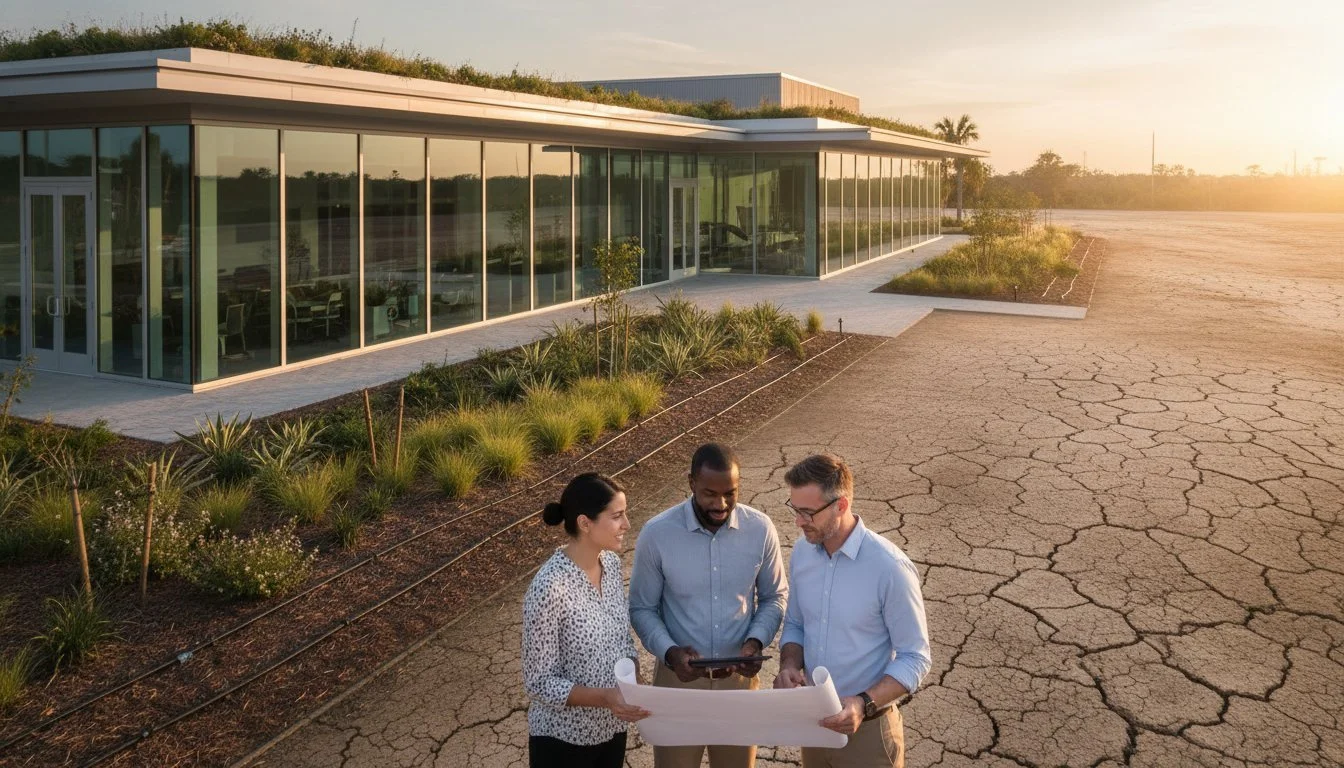
Florida’s daily water demand is projected to increase by nearly 1 billion gallons by 2040, yet the challenges of the 2026 Florida Drought are already forcing local municipalities to tighten their permitting requirements. You’ve likely seen how traditional irrigation plans are no longer enough to satisfy regulators or stabilize a project’s future operational costs. It’s frustrating when landscaping failures and evolving codes threaten your delivery schedule and your reputation for building quality, high-value assets.
We understand that most developers don’t have the internal bandwidth to manage every technical aspect of water conservation. This guide promises to simplify that process by teaching you how to mitigate scarcity through sustainable design and high-performance green certifications. We’ll examine how frameworks like LEED and the Florida Green Building Coalition provide a structured path to reduce water dependency. By adopting these resilient practices, you can ensure your projects remain compliant while significantly boosting property value in an increasingly water-scarce market.
Key Takeaways
Understand the evolving Florida Drought landscape and its transition from seasonal dry spells to persistent, multi-year water scarcity.
Mitigate the financial risk of "stranded assets" by identifying how prolonged drought impacts unique soil compositions and building foundations.
Compare traditional high-flow fixtures with modern greywater reuse systems and smart irrigation to ensure long-term operational efficiency.
Leverage LEED BD+C and FGBC frameworks to set high-performance water efficiency standards that future-proof your development projects.
Learn how professional oversight from a LEED Green Rater provides the critical management needed to navigate a water-constrained market.
Understanding the Florida Drought Landscape in 2026
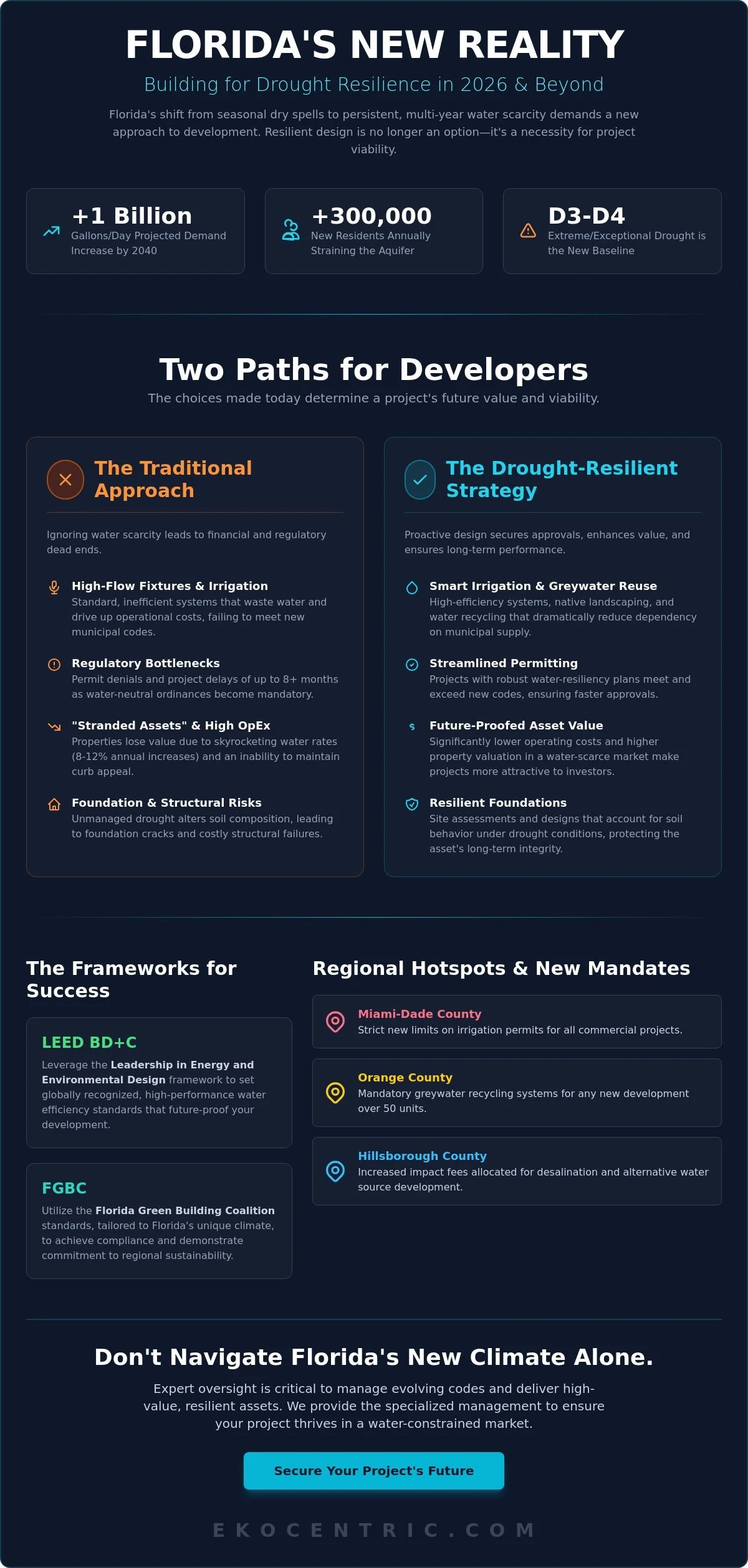
Florida's water reality has fundamentally shifted. By January 2026, the traditional cycle of brief winter dry spells has evolved into a persistent, multi-year crisis that challenges every aspect of new construction. The U.S. Drought Monitor now frequently shows South and Central Florida trapped in D3 (Extreme) and D4 (Exceptional) intensity levels. These aren't just seasonal fluctuations; they're the new baseline for a state that's added over 300,000 new residents annually for the last five years, placing unprecedented strain on the Floridan Aquifer.
Municipalities across the state have reached a breaking point. 2026 marks a turning point as 20-year regional water supply plans expire, leading to the implementation of aggressive "water-neutral" development ordinances. Developers who don't adapt to these scarcity-driven regulations face significant project bottlenecks. We've moved past the era of voluntary conservation into a period of mandatory resilience. At Ekocentric, we understand that builders don't always have the bandwidth to manage these evolving sustainability requirements, but staying informed is the first step toward project viability.
The Science of Florida Water Scarcity
The drought spectrum ranges from D0 (Abnormally Dry) to D4 (Exceptional), and in 2026, the "Exceptional" tag has become a recurring headline for the I-4 corridor. High temperatures have driven evapotranspiration rates up by 12% compared to the previous decade, meaning water evaporates from the soil and surfaces much faster than rainfall can replenish it. This creates a deficit that the Floridan Aquifer, which provides 60% of the state's fresh water, can't easily overcome.
For developers, this science translates to higher costs and stricter site assessments. When the aquifer's pressure drops, saltwater intrusion becomes a catastrophic risk for coastal developments, leading to immediate halts in utility expansion. Understanding these geological limits is essential for anyone looking to secure professional green building services that prioritize long-term resource management.
Regional Drought Hotspots
Counties like Miami-Dade, Orange, and Hillsborough are currently the epicenters of the Florida Drought crisis. In these regions, the gap between water demand and available supply has forced local governments to delay utility hookups for new subdivisions by as much as eight months. Comparing current conditions to historical drought patterns shows that 2026 is significantly more severe than the 2007 or 2017 cycles because of the sheer volume of concurrent infrastructure demand.
Miami-Dade: Strict limits on new irrigation permits for commercial projects.
Orange County: Mandatory greywater recycling systems for any development over 50 units.
Hillsborough: Increased impact fees specifically allocated for desalination and alternative water source development.
Permit delays are no longer just administrative; they're environmental. If a site's projected water usage exceeds the local basin's capacity, the project simply won't move forward without a robust water-resiliency plan. This makes early-stage consulting not just a "green" choice, but a necessary business strategy for 2026.
Why Drought Resilience is a Non-Negotiable for New Construction
In 2026, the Florida Drought isn't just an environmental concern; it's a significant financial liability. Developers risk creating "stranded assets," which are properties that lose market value because they can't sustain basic operations or curb appeal under strict water restrictions. Rising municipal water rates, which have seen average annual increases of 8% to 12% in several Florida counties since 2022, directly erode the ROI of multi-family developments. When water costs spike, the operating expenses for high-density projects climb, making them less attractive to institutional investors.
Many builders don't have the bandwidth to manage the technical side of water-efficient design while juggling tight construction schedules. This is where specialized sustainability management ensures that every gallon is accounted for during the design and planning phase. By integrating water-resilient strategies early, developers protect their projects from the volatility of future utility costs and regulatory shifts.
Structural Risks: Soil Stability and Foundations
The Florida Drought significantly alters the behavior of the state's unique soil compositions. In regions with high clay content, such as North and Central Florida, the lack of moisture causes the soil to shrink and pull away from foundation footings. This movement leads to uneven settling and structural cracking in new builds. This instability is often exacerbated by groundwater depletion, which removes the buoyant support for Florida’s limestone base. Subsidence is the gradual caving in or sinking of an area of land due to the loss of underground support from water or soil movement. These conditions increase the risk of sinkhole formation, with historical data showing a 15% increase in reported geological disturbances during prolonged dry periods.
Landscape Viability and Maintenance Costs
The traditional model of expansive, non-native turf is no longer viable. During mandatory watering bans, St. Augustine grass and other common turf varieties show an 80% failure rate within the first 60 days of a severe drought. Developers who don't prioritize Florida water conservation through xeriscaping face massive replacement costs. Most builders carry a one-year warranty on landscaping, and replacing an entire site's sod twice in twelve months can completely eliminate the profit margin on a project.
Warranty Liability: Builders are often held responsible for plant failure during the initial establishment period, even during drought conditions.
Asset Appeal: Dead or dying landscapes decrease the "drive-by" appeal, slowing down lease-up rates for multi-family projects by as much as 20%.
Native Species: Utilizing Florida-friendly plants reduces the need for supplemental irrigation by 60% once established, protecting the developer's bottom line.
Adopting a proactive approach to water resilience isn't just about being "green." It's a pragmatic business strategy that ensures a project remains structural sound and financially solvent throughout its lifecycle.
Standard vs. Drought-Resilient Building Strategies
Traditional Florida construction often relies on municipal water supplies with little regard for long-term scarcity. As the 2026 Florida Drought intensifies, the gap between standard practices and resilient design becomes a critical factor for project viability. Standard high-flow showerheads typically use 2.5 gallons per minute (GPM). In contrast, LEED-compliant models reduce this to 1.75 GPM or less. This 30% reduction directly lowers the burden on local aquifers without compromising the resident's experience.
Water efficiency also dictates building energy performance. Heating water is the second largest energy expense in most Florida homes. By reducing the volume of hot water used through high-efficiency fixtures, developers simultaneously lower the building's HERS Index. This cause-and-effect relationship means a water-resilient building is inherently more energy-efficient. Builders often find they don't have the bandwidth to track these intersecting metrics, which is where our specialized sustainability management services provide essential oversight.
Indoor Water Use Reduction
Implementing low-flow plumbing requires a shift in procurement, not a sacrifice in quality. Modern WaterSense labeled fixtures use air-induction technology to maintain high pressure while using 20% less water than federal standards. High-efficiency appliances, such as ENERGY STAR certified clothes washers, use approximately 33% less water than regular models. For larger developments, the cost-to-benefit ratio of greywater recycling systems is becoming increasingly favorable. These systems treat water from sinks and showers for reuse in toilet flushing; this can cut total potable water demand by 40% in multi-family units.
The Xeriscaping Revolution in Florida
The Florida Drought has made traditional St. Augustine turf lawns an operational liability. These lawns require roughly one inch of water per week to stay green. Xeriscaping replaces these thirsty monocultures with native Florida plants like Saw Palmetto and Muhly Grass. These species are naturally adapted to the local climate and require zero supplemental irrigation once they're established. This approach maintains high curb appeal while adhering to the strictest municipal water restrictions.
Strategic landscaping also combats the heat island effect. Hardscapes and traditional lawns can increase local surface temperatures significantly. According to data from the EPA, shaded surfaces and native canopies can stay 20 to 45 degrees Fahrenheit cooler than unshaded materials. This temperature reduction lowers the cooling load on the building's HVAC system. It's a pragmatic solution that protects the environment and the developer's bottom line. By integrating these strategies, builders can achieve FGBC or LEED certifications that prove their commitment to a sustainable future.
Designing for Scarcity: LEED and FGBC Frameworks
The 2026 Florida Drought presents a rigorous challenge for developers who want to maintain asset value while water resources dwindle. Adopting established frameworks like LEED and FGBC isn't just about the plaque on the wall. It's about building a project that remains functional during a resource crisis. These standards provide a measurable roadmap for water conservation that protects your investment from rising utility costs and local municipal restrictions.
Navigating LEED Water Efficiency Credits
LEED BD+C (Building Design and Construction) sets a high bar for water performance. To earn certification, projects must first meet a 20% indoor water use reduction prerequisite. Developers often aim for the 40% threshold to maximize points. This is achieved by installing EPA WaterSense labeled fixtures, which are 20% more efficient than standard models. Outdoor water use reduction is equally critical. By utilizing Florida-friendly landscaping and smart irrigation systems, developers can achieve a 50% or even 100% reduction from the calculated baseline. According to data from the U.S. Green Building Council, LEED-certified buildings use 11% less water on average. Implementing permanent submetering for at least two water subsystems, such as irrigation and domestic hot water, allows for real-time leak detection and long-term operational resilience.
The FGBC Advantage for Florida Builders
While LEED offers a global standard, the Florida Green Building Coalition (FGBC) focuses on the state's specific environmental quirks. FGBC standards are tailored to our high humidity and unique soil conditions. They provide a clear path for builders to meet municipal sustainability requirements that are becoming more common as the Florida Drought intensifies. These standards encourage the use of reclaimed water and moisture-sensing irrigation controllers that won't activate during a rain event. Many developers don't have the internal bandwidth to manage the complex documentation required for these certifications. You can streamline this process by leveraging Ekocentric's certification services to ensure your project stays on track and meets every local benchmark.
Holistic efficiency requires integrating HERS Rater and ENERGY STAR standards into the design phase. A HERS Rater provides the third-party verification needed to prove that water-saving measures actually perform in the real world. For example, ENERGY STAR certified dishwashers and clothes washers use significantly less water than non-certified units. This data-driven approach ensures that your green building isn't just a marketing claim. It's a high-performing asset designed for a water-scarce future. Third-party verification builds confidence with investors and future residents alike.
Ready to secure your project's future? Explore how we can help with professional green building consulting.
Navigating Florida’s New Climate Reality with Ekocentric
The Florida Drought of 2026 proved that water resilience is no longer optional for developers. It's a fundamental requirement for market viability. As water scarcity becomes a permanent fixture of the regional landscape, builders who prioritize high-performance systems are the ones who will capture the attention of savvy buyers. We help you position your project for success in this water-constrained market by turning sustainability into a measurable asset. Buyers are looking for homes that won't face steep municipal surcharges or landscape failures during dry spells. We're here to help you meet that demand.
Moving beyond basic compliance allows you to lead the green building revolution. It's about more than just checking boxes; it's about creating a legacy of environmental stewardship. By integrating advanced water-saving technologies, you create a product that stands out in a crowded marketplace. This market differentiation is vital for long-term value and project longevity in a state where resources are increasingly scrutinized.
Expert Guidance for Developers and Architects
Many developers and builders don't have the bandwidth to manage the sustainability side of a project. Ekocentric provides that additional layer of management. We ensure your water-saving goals actually materialize on the job site. Hiring a LEED Green Rater early in the design phase is a strategic financial move. Professional consulting is significantly cheaper than retroactive drought mitigation. In fact, industry data shows that retrofitting water-efficient systems after a build is finished can cost up to 300% more than integrating them during the initial design phase.
Consider the lessons learned from the Florida Drought of 2026. Projects in Central Florida that utilized greywater recycling and smart irrigation controllers saw 40% lower utility costs compared to traditional developments. These resilient projects didn't just survive the water restrictions; they thrived. Their landscapes remained vibrant while neighbors faced fines and dying turf. We bring this level of expertise to your team, ensuring every gallon is accounted for and every efficiency is maximized.
Your Partner in Sustainable Development
The certification landscape is complex and constantly shifting. Between LEED, FGBC, and ENERGY STAR, it's easy to lose focus on the primary goal of resilience. Ekocentric guides builders through this intricate process. We act as your pragmatic partner, identifying which certifications provide the most value for your specific project. This oversight often leads to better insurance benefits. Many carriers now offer reduced premiums for homes with a lower risk profile for water damage and resource failure.
We're ready to help you navigate these challenges with unwavering dedication. Our team evaluates your project's water resilience plan to ensure it meets the highest standards of the Florida Green Building Coalition and other key bodies. Don't wait for the next crisis to adapt your building practices. Schedule a consultation today to see how we can streamline your path to certification and market leadership. Contact Ekocentric to start your green certification journey and build a more resilient future for Florida.
Secure Your Project's Future in a Water-Stressed Market
The Florida Drought landscape of 2026 requires a fundamental shift in how developers approach new construction. Relying on outdated building standards isn't an option when water scarcity becomes a permanent fixture of the regional landscape. Integrating LEED BD+C protocols or the Florida Green Building Coalition (FGBC) standards provides a verified path toward resilience. These frameworks don't just save water; they protect your investment's long-term viability and market appeal.
Many builders don't have the internal bandwidth to manage these complex certification requirements alone. Ekocentric provides the specialized Green Rater services and technical expertise needed to navigate these changing regulations. Our team brings deep knowledge of LEED and FGBC frameworks to ensure your site meets every rigorous metric for conservation. By prioritizing water-resilient design today, you're securing your project's future in an increasingly thirsty market. We're committed to your success and the health of our local ecosystems.
Partner with Ekocentric for your LEED or FGBC certification
Let's work together to build a legacy that stands strong against the climate challenges ahead.
Frequently Asked Questions
Is Florida currently in a drought?
Current data from the U.S. Drought Monitor shows that 15% of the state faces abnormally dry conditions as of early 2024. While a Florida drought can fluctuate seasonally, long-term projections for 2026 indicate more frequent dry spells. Developers must monitor the South Florida Water Management District for weekly updates on local water availability and regional shortage warnings.
How do water restrictions affect new construction projects in Florida?
Water restrictions primarily limit irrigation schedules and can delay the permitting of high-volume water features. The five regional Water Management Districts often restrict landscape watering to just one or two designated days per week. If a project doesn't meet specific efficiency standards, local municipalities may withhold certificates of occupancy until the site demonstrates compliance with emergency conservation orders.
What are the best drought-tolerant plants for Florida landscaping?
The best options include Saw Palmetto, Firebush, and Muhly Grass, which are all native species recommended by the University of Florida's IFAS Extension. These plants survive on natural rainfall once established, reducing the need for permanent irrigation. Integrating these species helps projects meet the 60% native plant requirement often found in regional sustainability checklists.
Can LEED certification help my project survive water scarcity?
LEED certification provides a rigorous framework that reduces indoor and outdoor water use by 20% to 35% compared to standard code. By implementing low-flow fixtures and smart irrigation controllers, your project maintains functionality during a Florida drought. This proactive approach ensures your building remains operational and attractive to tenants even when local municipalities enforce strict usage caps.
What is the difference between LEED and FGBC for water efficiency?
LEED is a global standard that requires a 20% baseline reduction in water use, while the Florida Green Building Coalition (FGBC) focuses on state-specific challenges like Florida-Friendly Landscaping. LEED uses a prescriptive and performance-based path for indoor efficiency. FGBC offers more flexibility for local climate conditions, emphasizing the protection of the Floridan Aquifer through site-specific permeable pavers and cisterns.
Does building for drought resilience increase construction costs significantly?
Building for resilience typically adds 2% to initial construction costs according to data from the USGBC. You'll often see these costs offset by a 15% reduction in long-term utility expenses. Using high-efficiency irrigation and native plants can actually lower your initial landscaping budget by reducing the need for complex piping and expensive exotic flora.
What is a greywater system and is it legal in Florida?
A greywater system collects untreated wastewater from bathtubs, showers, and clothes washers for reuse in toilet flushing or subsurface irrigation. These systems are legal and encouraged under Florida Statute 403.892, provided they meet Department of Health safety standards. Implementing this technology can reduce a residential building's total potable water demand by up to 30% annually.
How do I find a LEED Green Rater in Florida?
You can find a qualified professional through the Green Business Certification Inc. (GBCI) directory or by partnering with a specialized firm like Ekocentric. Our team provides the expert management and technical oversight needed to navigate the certification process. We ensure your project meets all verification requirements, allowing you to focus on the core construction while we handle the sustainability documentation.