Green Building Certification Consultant for Architects in Florida: A 2026 Strategic Guide
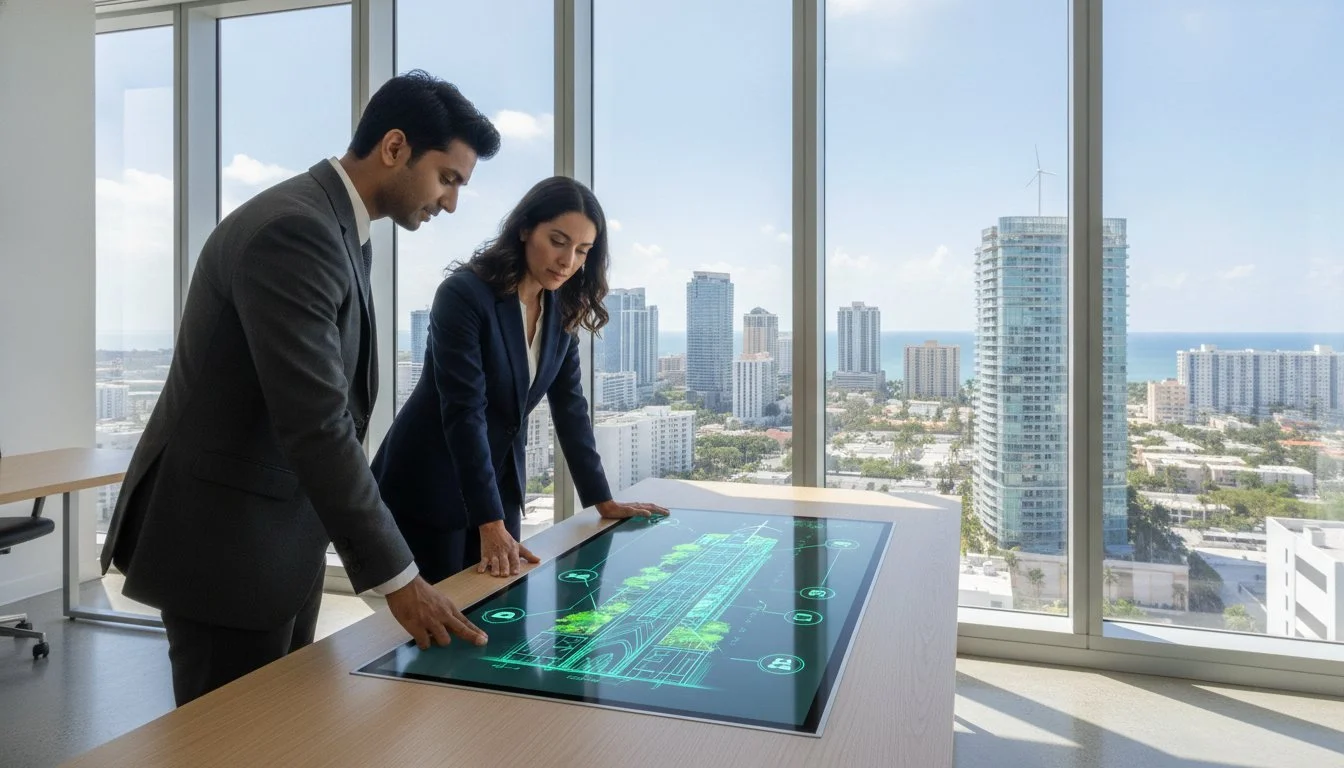
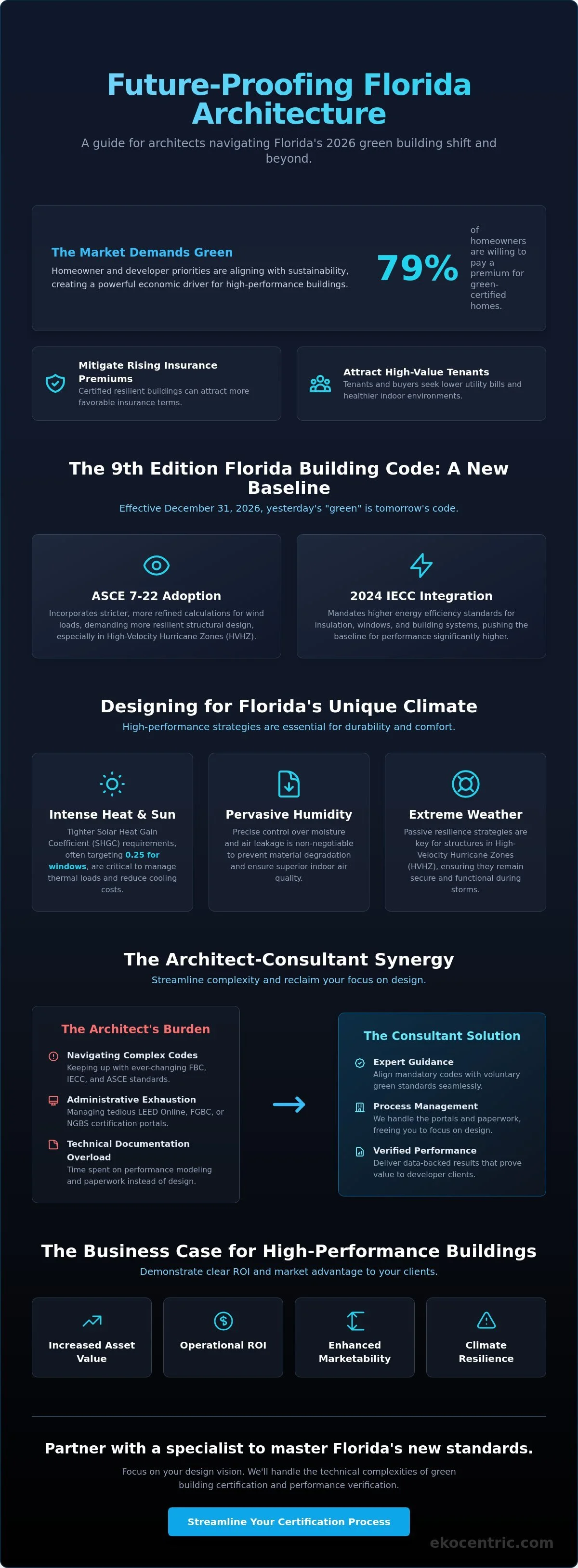
Did you know that 79% of homeowners are now willing to pay a premium for a green-certified home to secure long-term utility savings? For Florida designers, this demand isn't just a trend; it's a technical performance mandate. You're likely feeling the weight of the 9th Edition Florida Building Code, which adopts stricter wind load and insulation standards starting December 31, 2026. Balancing these regulations with the administrative exhaustion of LEED Online or FGBC portals can pull you away from your true passion for design. Partnering with a specialized green building certification consultant for architects Florida allows you to reclaim your time while ensuring every project meets the rigorous decarbonization goals of LEED v5.
We believe that building for the future is a mission, not just a checklist. We understand that managing moisture and thermal loads in our unique hot-humid climate requires more than just good intentions; it demands verified data and strategic foresight. This guide provides a clear roadmap to master Florida-specific certifications and climate-resilient design through high-performance consulting partnerships. You'll discover how to streamline your certification process, verify building performance, and deliver the marketable credentials your developer clients need to thrive in the 2026 market.
Key Takeaways
Navigate the complexities of the 9th Edition Florida Building Code by aligning mandatory requirements with voluntary green standards for seamless project delivery.
Evaluate the strategic advantages of LEED v5, FGBC, and NGBS to determine which framework best serves your client's specific asset value and sustainability goals.
Discover how a green building certification consultant for architects Florida streamlines the certification process by managing complex administrative portals and technical documentation.
Master climate-specific design techniques that optimize thermal performance and moisture control to ensure long-term building durability in Florida's intense environment.
Build a compelling business case for developer clients by demonstrating the operational ROI and marketability of verified high-performance buildings.
Table of Contents
The Florida Context: Why Sustainable Building for Architects is Unique in 2026
Navigating Certifications: LEED vs. FGBC vs. NGBS for Florida Projects
Designing for the Hot-Humid Climate: High-Performance Strategies
The Florida Context: Why Sustainable Building for Architects is Unique in 2026
The 9th Edition of the Florida Building Code, effective December 31, 2026, represents a massive leap in construction standards. It adopts ASCE 7-22 for wind calculations and incorporates the 2024 International Energy Conservation Code (IECC). This shift means that what was once considered "extra" or "green" is now becoming the baseline for code compliance. Architects now face a complex intersection where mandatory codes meet voluntary high-performance standards. This is why many firms choose to work with a green building certification consultant for architects Florida to ensure every project remains compliant and competitive. A Green Building Overview helps define our broader goals: reducing carbon footprints while maximizing resource efficiency.
To better understand how specific frameworks like LEED fit into your design process, watch this helpful video:
Economic drivers in Florida are shifting rapidly. Sun Belt developers increasingly demand certified green projects to mitigate rising insurance premiums and attract high-value tenants. In April 2026, the Tampa area led the state with 1,846 new residential permits. These developers aren't just looking for aesthetics; they want resilient assets that can withstand a changing climate. Engaging a green building certification consultant for architects Florida early in the process ensures these performance goals are met without compromising your architectural vision.
Environmental Challenges: Heat, Humidity, and Hurricanes
Designing in Florida requires a specialized approach to thermal loads and moisture. The 2026 code updates include tighter Solar Heat Gain Coefficient (SHGC) requirements for windows, often targeting 0.25. We prioritize moisture management as a core pillar of sustainability. Without precise control over humidity and air leakage, indoor air quality suffers and building materials degrade. We help you implement passive resilience strategies. These techniques ensure that structures in High-Velocity Hurricane Zones (HVHZ) remain secure and functional during extreme weather events.
The Architect’s Responsibility in the 2026 Market
Your role is evolving from a designer to a visionary for climate-adaptive structures. The 2026 market demands more than just "green" labels; it requires data-backed results. Integrating sustainability into the early schematic design phase is the only way to ensure success. When you partner with us for specialized verification services, you can focus on the creative aspects of the project. We handle the technical heavy lifting of LEED v5 or FGBC documentation. This synergy allows you to deliver high-performance buildings that provide a genuine return on investment for your clients.
Navigating Certifications: LEED vs. FGBC vs. NGBS for Florida Projects
Architects in the Sunshine State face a unique challenge when selecting a sustainability framework. The choice isn't just about prestige; it's about aligning a building's performance with its environmental context and the developer's long-term vision. While international standards offer global recognition, local certifications provide a focused lens on Florida's specific ecological needs. Partnering with a green building certification consultant for architects Florida helps clarify this decision early in the design phase. This ensures that your technical choices translate into verified performance and asset value.
LEED BD+C Consulting and Green Rater Services
LEED v5 remains the international gold standard for prestige. It pushed the industry toward deeper decarbonization and improved quality of life when it launched in 2025. For architects working on high-profile commercial or luxury multi-family projects, LEED BD+C (Building Design and Construction) offers a rigorous path to excellence. However, this path requires specialized oversight. Residential and multi-family projects pursuing LEED must engage a LEED Green Rater to provide mandatory on-site verification. We help you manage these requirements without letting the administrative burden of LEED Online derail your creative timeline. You can explore our LEED and FGBC services to see how we integrate these roles into your existing workflow.
The FGBC Advantage for Local Florida Builds
The Florida Green Building Coalition (FGBC) offers a certification specifically tailored to our state's unique climate and environmental challenges. Many Florida-based developers and municipalities prefer this standard because it rewards strategies that address local realities, such as hurricane resistance and native landscaping. State-level commitment to these practices is evident in Florida's Government Green Initiatives, which emphasize the importance of sustainable procurement and waste reduction. FGBC certification focuses heavily on water conservation and the use of drought-tolerant, native plants. This approach often allows architects to achieve certification with minimal disruption to their design intent, as the credits align naturally with Florida’s best practices for landscaping and site development.
NGBS: Versatility for Multi-Family and Tropical Zones
The National Green Building Standard (NGBS) has become a dominant choice for residential builders due to its practical compliance pathways. The 2024 NGBS update introduced critical new pathways for buildings in the Tropical Climate Zone. This is especially relevant for projects in South Florida. NGBS is highly versatile, making it an excellent fit for everything from single-family homes to massive multi-family developments. It provides a clear, point-based system that rewards energy efficiency and indoor environmental quality. If you're looking to maximize a project's marketability while keeping construction costs manageable, NGBS offers a verified route to high performance. Deciding between these frameworks requires a deep understanding of your project's scale and your developer's ultimate goals. We invite you to consult with our team to determine which certification path will best future-proof your next Florida project.
Designing for the Hot-Humid Climate: High-Performance Strategies
In Florida, architectural excellence is measured by how well a structure manages the relentless combination of solar radiation and high humidity. Designing for this environment requires a departure from standard practices used in more temperate zones. Every design choice, from the orientation of the building to the specific chemical makeup of the wall assembly, impacts the project's ability to achieve high-performance ratings. Engaging a green building certification consultant for architects Florida early in the design phase allows you to validate these technical decisions before they're set in stone. This partnership ensures that your aesthetic vision remains intact while meeting the rigorous energy and moisture standards of the 2026 regulatory landscape.
Managing the Thermal Envelope and Moisture
The thermal envelope is your first line of defense against Florida's intense heat. We focus on insulation strategies that prioritize air sealing and vapor management to prevent mold and interstitial condensation. High-performance projects often utilize Insulated Concrete Forms (ICFs) or advanced spray foam systems to create a continuous thermal barrier. Incorporating cool roofs and radiant barriers can significantly reduce building energy loads by reflecting solar radiation away from the attic space. In the context of Florida's high humidity, a thermal bridge is a specific point or component in the building envelope that conducts heat more effectively than the surrounding insulation, often creating cold spots where moisture can condense and trigger mold growth. Eliminating these bridges is essential for maintaining building longevity and indoor air quality.
Energy Efficiency and On-Site Renewables
Achieving top-tier certification in 2026 requires a sophisticated approach to energy. While high-efficiency HVAC systems and dedicated dehumidification units are standard, the integration of on-site renewables is what pushes a project toward LEED Gold or Platinum status. We help you integrate solar PV arrays into the architectural design so they enhance rather than detract from the building's profile. Verification is a critical part of this process. Our RESNET HERS Rater services provide the data-backed evidence needed to secure energy performance credits. We also leverage smart building technology to provide real-time energy monitoring, which is a powerful tool for earning additional LEED points and ensuring the building operates as intended long after the ribbon-cutting.
Strategic glazing remains one of the most difficult balancing acts for Florida architects. You must provide natural daylighting to satisfy wellness standards while adhering to the 9th Edition Florida Building Code's Solar Heat Gain Coefficient (SHGC) target of 0.25. We analyze glazing specifications to find the optimal balance between UV protection and visible light transmittance. By selecting low-impact, locally sourced materials like bamboo or regional limestone, you further reduce the project's embodied carbon. Our role as your green building certification consultant for architects Florida is to provide the technical expertise that turns these complex variables into a cohesive, certified reality.
The Architect-Consultant Synergy: Streamlining the Process
Success in Florida's high-performance building market depends on a seamless partnership between the lead designer and technical specialists. While you focus on the spatial and aesthetic integrity of the project, a green building certification consultant for architects Florida manages the intricate web of compliance. This collaboration starts long before the first shovel hits the ground. Involving an expert during the pre-design phase allows for a proactive strategy. We identify the most efficient certification path and integrate energy goals into the initial massing and orientation studies. This early synergy prevents the need for costly redesigns later in the project lifecycle.
The verification workflow follows a logical progression from plan review to final field inspections. We act as a technical bridge. We ensure that the high-performance features specified in your drawings are correctly implemented on-site. This objective oversight protects your design intent. It also provides the developer with verified proof that the building will perform as promised. By delegating the technical heavy lifting, you maintain project speed and design innovation while we handle the rigorous demands of the certification bodies.
The Role of the LEED Green Rater
For residential and multi-family projects, the presence of a LEED Green Rater is a mandatory requirement. We coordinate all on-site inspections and performance testing, such as blower door and duct leakage tests. Our role is to bridge the gap between the builder, the architect, and the USGBC. We identify potential certification pitfalls during construction, such as improper insulation installation or air sealing gaps, before they become expensive problems. This hands-on approach ensures that the final structure earns its plaque and delivers real environmental value.
Optimizing the Documentation Workflow
One of the most significant burdens for any design firm is the administrative weight of LEED Online or FGBC portal submissions. We take full ownership of this process. We collect and verify material specifications, ensuring that every low-VOC sealant and recycled-content material meets the necessary credit criteria. You can learn about our consulting approach to see how we remove the administrative friction from your workflow. Our team ensures that every piece of data is accurate and submitted on time, allowing you to focus on your next visionary project.
Don't let technical paperwork slow down your creative process. Connect with us today to request a verification plan that streamlines your next Florida project from pre-design to final certification.
Future-Proofing Florida’s Skyline with Ekocentric
Florida’s skyline is undergoing a fundamental transformation. As we move through 2026, the distinction between "standard" and "sustainable" construction is disappearing. High-performance design is no longer a niche preference; it's a financial and environmental necessity. By working with a green building certification consultant for architects Florida, you position your projects at the forefront of this movement. We provide the technical rigor required to turn visionary designs into resilient, certified realities that stand the test of time. Our partnership allows your firm to lead with confidence, knowing that every project is optimized for the state's evolving regulatory landscape.
The operational ROI of these buildings extends far beyond the prestige of a LEED or FGBC plaque. Data from early 2026 indicates that green buildings reduce energy consumption by 30-40% and water usage by 20-30% compared to traditional structures. These savings directly improve a developer's bottom line and increase long-term asset value. A 2026 report found that Americans are willing to pay up to $74,000 more for a green home. This consumer demand, driven by utility savings and wellness, makes certified projects more marketable and profitable in a competitive Sun Belt market.
Building for Longevity and Resilience
Resilience is the cornerstone of Florida's future. Our state's environmental realities demand structures that can withstand intense thermal loads and hurricane-force winds. Certified buildings command higher resale and rental values because they offer a level of security and efficiency that conventional builds simply cannot match. We act as the technical backbone for your firm. We ensure that every design choice is validated against the latest standards. This proactive approach prepares your portfolio for future updates to the Florida Building Code, ensuring your work remains relevant as regulations continue to tighten.
Next Steps: Partnering for Your Next Project
Leading the green building movement requires a dedicated partner who understands the intersection of design and data. We empower your firm to take on complex, high-performance projects with confidence. Whether you need a LEED Green Rater to verify a multi-family build or a HERS Rater to document energy excellence, we provide the expertise to elevate your portfolio. Initiating a consultation is a straightforward process that begins with a review of your project goals and a customized verification roadmap. We're here to manage the technical complexities so you can focus on the art of architecture.
The path to a more sustainable Florida is built on collaboration and technical precision. We invite you to partner with Ekocentric for your next Florida project and see how our mission-driven expertise can transform your architectural vision into a high-performance landmark.
Building a Resilient Florida Together
The 9th Edition Florida Building Code isn't just a regulatory hurdle; it's a powerful opportunity to redefine excellence in our state. By mastering the intersection of mandatory codes and voluntary certifications like LEED v5 or FGBC, you ensure your designs remain both compliant and visionary. We've explored how early integration and technical synergy remove the administrative burden from your firm, allowing you to focus on creating spaces that inspire and protect.
Partnering with a specialized green building certification consultant for architects Florida provides the technical backbone your firm needs to thrive. Our team offers expert LEED Green Rater verification and specialized FGBC certification consulting tailored to the unique demands of our tropical environment. We bring deep expertise in hot-humid climate engineering to every partnership, ensuring your projects achieve verified performance and lasting asset value. We're committed to helping you navigate these complexities with pragmatic, results-oriented solutions.
It's time to transform Florida’s architectural landscape with data-backed resilience and mission-driven design. Elevate your design with Florida’s leading green building consultants and let's build a more sustainable, high-performance future together.
Frequently Asked Questions
How does LEED certification differ from FGBC for Florida architects?
LEED is an international standard recognized globally for prestige and environmental performance, while FGBC is specifically tailored to Florida’s unique climate and ecological challenges. FGBC certification rewards strategies like hurricane resistance and water conservation using native plants. A green building certification consultant for architects Florida helps you choose based on whether your developer wants global recognition or a locally optimized, resilient asset that addresses specific regional stressors.
Why do I need a LEED Green Rater for my residential project?
A LEED Green Rater is a mandatory third-party professional required for all LEED for Homes and multi-family residential projects. They provide essential on-site verification and performance testing to ensure the building meets USGBC standards. Without their field inspections and data validation, your project cannot achieve final certification. They act as your technical eyes on the ground, identifying potential pitfalls before they become costly construction errors during the build phase.
What are the most important sustainable materials for Florida’s climate?
Priority materials for Florida include those that manage heat and moisture effectively, such as Insulated Concrete Forms (ICFs) and low-VOC spray foam. Bamboo and locally sourced limestone are excellent for reducing embodied carbon while maintaining durability in salty, humid air. Additionally, high-performance glazing with a Solar Heat Gain Coefficient (SHGC) of 0.25 or lower is critical for meeting the 2026 code and reducing cooling loads in our intense sun.
How much time does a sustainability consultant save an architectural firm?
Engaging a consultant saves your firm hundreds of hours by delegating the administrative burden of LEED Online or FGBC portal management. We handle the technical documentation, material specification verification, and coordination between subcontractors and rater services. This allows your design team to focus on the creative schematic and development phases rather than getting bogged down in complex certification paperwork and compliance tracking throughout the project lifecycle.
Can I achieve green certification without a HERS rating in Florida?
While some commercial standards differ, most residential certifications like NGBS, LEED for Homes, and ENERGY STAR require a HERS rating for compliance. The HERS Index provides the verified energy performance data necessary to earn critical efficiency points. As a green building certification consultant for architects Florida, we integrate RESNET HERS ratings into your workflow to ensure your project meets the baseline requirements for high-performance certification and long-term energy savings.
What is the impact of the 2026 Florida Building Code on sustainable design?
The 9th Edition of the Florida Building Code, taking effect December 31, 2026, significantly raises the floor for energy efficiency and resilience. It adopts ASCE 7-22 for wind loads and incorporates 2024 IECC standards, which include stricter insulation R-values and tighter window SHGC requirements. These changes mean that sustainable design is no longer optional; it's now the mandatory baseline for code compliance across the state for new construction projects.
How do smart building technologies contribute to LEED points?
Smart building technologies contribute to LEED points primarily through the Energy and Atmosphere and Indoor Environmental Quality categories. Automated lighting controls, integrated climate systems, and real-time energy monitoring allow for precise resource management. These systems provide the data needed for advanced commissioning and ongoing performance verification. They ensure the building operates at peak efficiency, which is a core requirement for higher-level LEED v5 certifications in the 2026 market.
Is it possible to achieve Net Zero energy in a hot-humid climate?
Achieving Net Zero in Florida is entirely possible through a combination of aggressive passive design and on-site renewable energy. You must first minimize cooling loads through superior envelope airtightness and high-performance glazing. Once the baseline demand is reduced, a properly sized solar PV array can offset the remaining energy consumption. Success requires early integration of mechanical systems and dedicated dehumidification to manage the latent load without over-cooling the interior space.