Hurricane Resistant Building Standards Florida: 2026 Resilience & Certification Guide
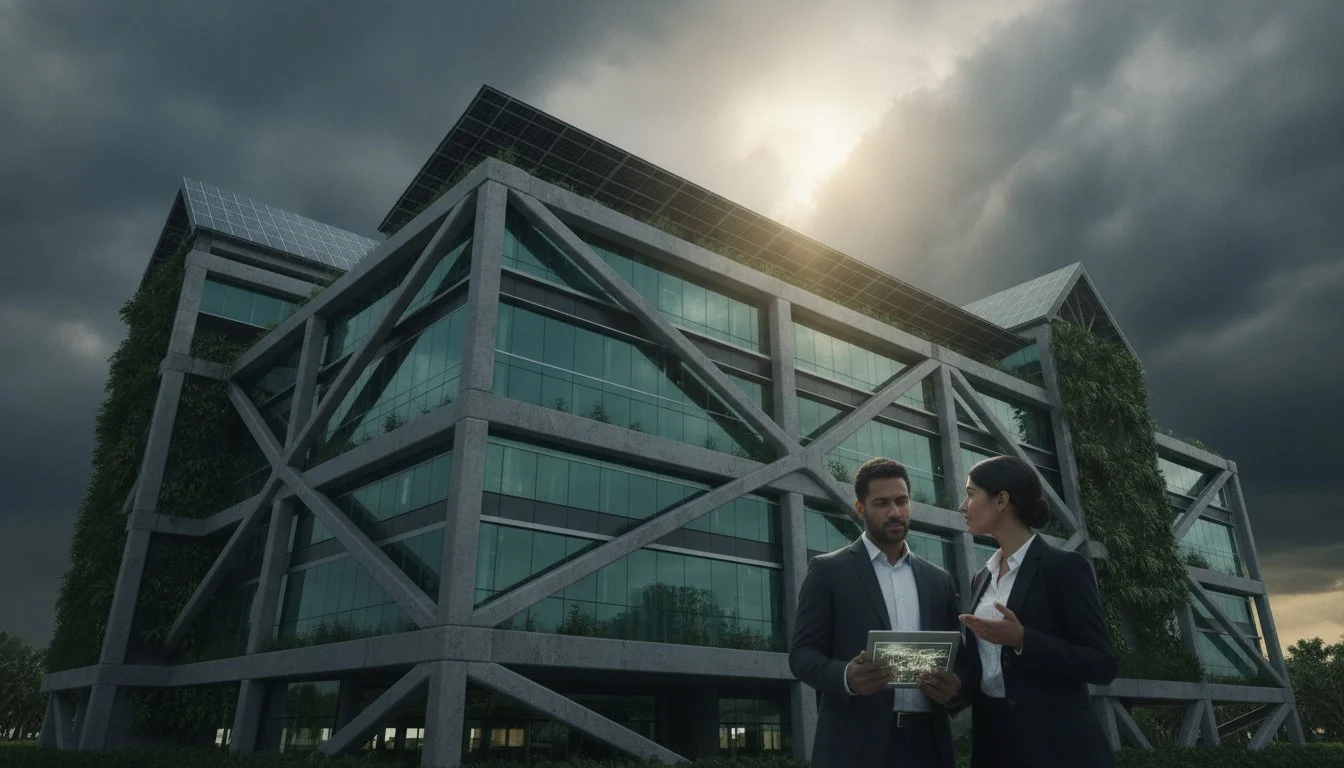
Building to the minimum code in 2026 isn't just a missed opportunity; it's a structural liability in an era of increasing climate volatility. As you prepare for the 9th Edition of the Florida Building Code, aligning your project with the LEED Green Rater checklist Florida ensures your building is as efficient as it is indestructible. We know that balancing High-Velocity Hurricane Zone (HVHZ) requirements with rigorous energy goals often feels like a constant tug-of-war between upfront costs and long-term performance. It's a complex landscape, but we believe that true environmental stewardship starts with a structure that's built to last.
This guide will help you master the technical nuances of the 2026 FBC while leveraging certifications like LEED and FGBC to boost durability and secure insurance benefits. You'll learn how to optimize structural hardening without sacrificing your sustainability targets. We'll explore the mandatory shift to ASCE 7-22 wind-load standards and provide a roadmap for streamlining compliance across Florida, Georgia, and the Carolinas. Whether your project is in the Southeast or at an international site, these practices create high-quality spaces that stand the test of time.
Key Takeaways
Prepare for the 9th Edition Florida Building Code by mastering the stringent High-Velocity Hurricane Zone (HVHZ) requirements designed for maximum structural safety.
Integrate the LEED Green Rater checklist Florida into your planning to ensure that storm-hardened features contribute directly to your project's sustainability and resource efficiency.
Leverage third-party verification through FGBC or NGBS to bridge the gap between basic code compliance and superior, insurance-optimized performance.
Streamline permitting and compliance across Florida, Georgia, and the Carolinas by understanding how regional code variations impact structural engineering for wind resistance.
Enhance long-term asset value by aligning technical contracting requirements with sustainable certifications for projects across the United States and internationally.
Table of Contents
Evolution of the Florida Building Code (FBC) and 2026 Safety Standards
Synergizing Storm Resilience with Green Building Certifications
The Performance Gap: Why Third-Party Verification is Essential
Strategic Resilience Consulting: Florida, the Carolinas, and Beyond
Evolution of the Florida Building Code (FBC) and 2026 Safety Standards
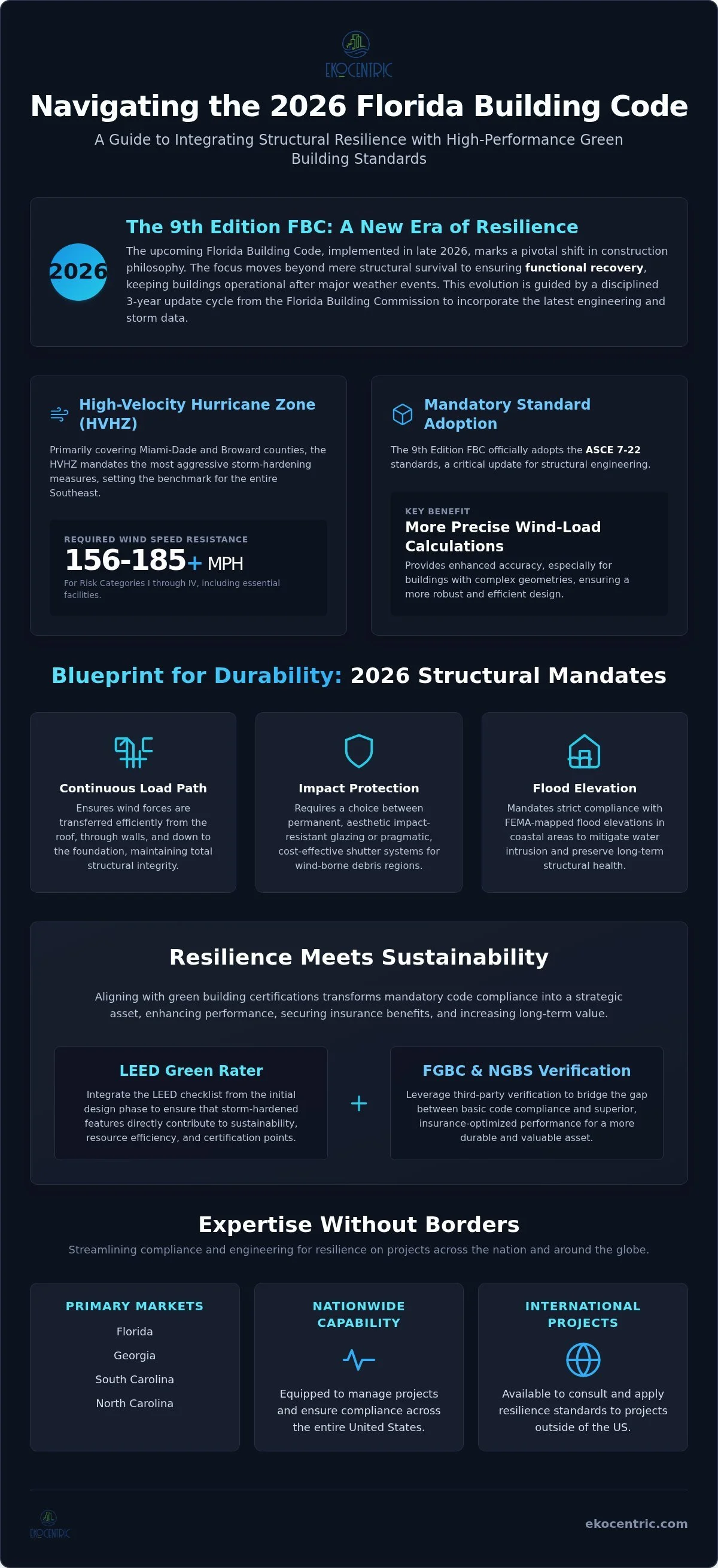
The Florida Building Code stands as the most rigorous hurricane-resistant framework in the United States. It isn't just a set of rules. It's a testament to resilience-driven engineering. As we approach the implementation of the 9th Edition in late 2026, the industry is witnessing a pivotal shift from mere survival to functional recovery. Modern designs don't just aim to keep the roof on; they ensure the building remains operational after a major weather event. Integrating the LEED Green Rater checklist Florida during the initial design phase helps developers meet these high-stakes structural demands while ensuring the building remains a high-performance, sustainable asset.
A critical component of this framework is the High-Velocity Hurricane Zone (HVHZ). This designation is triggered by specific geographic boundaries, primarily covering Miami-Dade and Broward counties. In these zones, the risk of extreme wind speeds and wind-borne debris necessitates the most aggressive protective measures. These standards serve as the benchmark for storm hardening across the Southeast, influencing how we approach projects in Georgia, the Carolinas, and our international sites.
The Role of the Florida Building Commission
The Florida Building Commission operates on a disciplined three-year update cycle. This ensures the code incorporates the latest engineering research and field data from recent storm seasons. While the state code provides a uniform foundation, local amendments in South Florida often set the national bar for impact resistance and structural integrity. Under Florida Statute 553.73, the Florida Building Code serves as the statewide unified building code that provides the legal authority for construction regulations across all jurisdictions.
Key Structural Requirements for 2026
The 2026 standards prioritize a continuous load path. This engineering principle ensures that wind forces are transferred efficiently from the roof through the walls and down to the foundation. Maintaining structural envelope integrity is vital for longevity and resource efficiency. We help clients navigate these technical layers through specialized LEED Green Rater services and FGBC consulting, bridging the gap between technical contracting and real estate value.
Wind Load Resistance: The 9th Edition adopts ASCE 7-22 standards, which provide more precise wind-load calculations for complex building geometries.
Impact Protection: Developers must choose between impact-resistant glazing or shutter systems. While glazing offers permanent protection and better aesthetics, shutters can be a pragmatic, cost-effective choice for specific residential scales.
Flood Elevation: Compliance with FEMA-mapped flood elevations is mandatory for coastal developments. This mitigates the risk of water intrusion and preserves the building's structural health over time.
Designing for these standards requires a pragmatic partner who understands both the construction realities and the certification goals. By focusing on these 2026 requirements early, project leads can optimize building performance for insurance benefits and long-term durability across the entire United States and beyond.
Engineering for Resilience: Wind Loads and Impact Testing
FBC Chapter 16 sets the bar for wind resistance across the United States. It's not just a regulatory hurdle. It's a blueprint for durability. When you're working through the LEED Green Rater checklist Florida, you're looking for evidence that the structural envelope is impenetrable. By consulting the official Florida Building Codes and Standards, we align your engineering with the most stringent TAS and ASTM testing protocols. This ensures your project, whether in Florida or an international location, stands up to the most intense pressures while maximizing resource efficiency.
High-Velocity Hurricane Zone (HVHZ) Standards
Risk Categories I through IV define the intensity of a project's wind speed requirements. In the HVHZ, these speeds climb from 156 mph to 185 mph and beyond for essential facilities. Mandatory product testing for wind-borne debris regions is a non-negotiable part of the process. We're seeing builders in coastal Georgia and the Carolinas adopt these standards to future-proof their investments against a changing climate. A key tool here is the Miami-Dade Notice of Acceptance (NOA). This document proves a product can handle the real-world conditions of a major hurricane through verified TAS (Testing Application Standards) protocols.
Secondary Water Barriers and Roof Integrity
Roof failure often starts with a single weak connection. We focus on roof-to-wall connections and hurricane straps that keep the structure unified during high-wind events. It's about preventing catastrophic uplift before it starts. Following ASTM testing standards for roof coverings ensures your materials are up to the task. These structural connections are the backbone of a resilient building, ensuring the continuous load path remains intact even under extreme stress.
Water intrusion is the next threat. Even if you lose shingles, a secondary water barrier like advanced synthetic underlayment keeps the interior dry. We often integrate ENERGY STAR Rater assessments with these structural inspections. A resilient roof is an efficient one. It protects the building's thermal envelope while providing a shield against storm damage. If you're looking to bridge the gap between technical code and high-performance value, our expert consulting can streamline the process for your next multi-state development.
Synergizing Storm Resilience with Green Building Certifications
Resilience is the ultimate sustainability. A building that collapses during a hurricane represents a total loss of embodied carbon and resources. We believe that long-term environmental stewardship must begin with structural integrity. By aligning the LEED Green Rater checklist Florida with Florida Building Code requirements, builders create structures that are both efficient and enduring. This synergy isn't just about safety; it's about protecting the investment in high-performance systems and materials.
The business case for dual certification is clear. Storm-hardened features often overlap with energy-efficiency goals. For instance, impact-resistant windows provide superior thermal performance, reducing the cooling load on the HVAC system. This results in immediate insurance savings and long-term energy cost reductions. Whether your project is in North Carolina or an international market, these principles ensure superior structural performance and resource efficiency.
FGBC Certification for Florida Projects
The Florida Green Building Coalition (FGBC) offers a certification specifically tailored to our state's unique environmental risks. Unlike national standards, FGBC places a heavy emphasis on moisture control and disaster mitigation. Points are awarded for features like reinforced roof-to-wall connections and impact-rated openings. These elements prevent water intrusion, which is the leading cause of post-storm mold and structural decay. You can learn more about our FGBC Certification Consulting to see how these credits can be integrated into your next build.
LEED BD+C and Resilient Design Pilot Credits
LEED BD+C (Building Design and Construction) has evolved to include specific pilot credits for resilient design. These credits reward projects that conduct climate-risk assessments and implement mitigation strategies. A qualified LEED Green Rater verifies that the residential storm resilience measures meet these rigorous standards through the LEED Green Rater checklist Florida. For example, impact-rated windows are evaluated not just for their strength, but for their U-factor and Solar Heat Gain Coefficient (SHGC). These metrics contribute directly to energy points while satisfying hurricane code requirements. Our team provides comprehensive LEED BD+C Consulting to help you optimize actual performance and achieve these high-value certifications across Florida, Georgia, and the Carolinas.
The Performance Gap: Why Third-Party Verification is Essential
Compliance is a starting point, not the finish line. There is often a significant disconnect between a high-performance architectural design and the actual execution on a construction site. While a project might be "code-compliant" on paper, minor field errors can lead to catastrophic failures during a hurricane. We bridge this performance gap by providing rigorous oversight that ensures every structural and environmental target is met. This level of scrutiny is why architects and developers rely on third-party experts to protect their reputations and their clients' investments.
Hiring specialized building consultants for high-stakes projects provides a clear ROI through reduced insurance premiums, enhanced durability, and increased resale value. This is especially true for multi-state developers managing compliance across Florida, Georgia, and the Carolinas. By closing the gap between intent and reality, we help create high-quality living spaces that perform as promised under the most extreme conditions.
LEED Green Rater and NGBS Verification
The verification process for residential LEED projects is a multi-stage commitment to quality. Every critical detail is systematically documented using the LEED Green Rater checklist Florida to ensure that both sustainability and resilience targets are achieved. Similarly, NGBS (ICC 700) verification provides a framework to confirm that the building actually matches its design intent. A RESNET HERS Rater provides the essential energy modeling and field testing required to verify a home's HERS Index score for energy code compliance. These assessments catch common construction defects, such as improperly spaced fasteners or misaligned hurricane straps, before they are hidden behind drywall.
Optimizing Building Performance Beyond the Certificate
We believe in moving from simple checklist compliance to data-driven building optimization. This proactive approach identifies opportunities for resource efficiency that a standard building inspector might miss. For example, achieving ENERGY STAR Partner status validates that the building envelope is superior to standard code-built homes. Our dual expertise as a licensed Florida Certified Building Contractor and a certification specialist allows us to speak the language of both trades and owners.
This technical oversight is vital for projects across the United States and internationally. It ensures that the structural envelope remains intact and the thermal systems operate at peak efficiency. If you want to ensure your project delivers superior structural performance and long-term value, explore our LEED and NGBS verification services to see how we can support your next development.
Strategic Resilience Consulting: Florida, the Carolinas, and Beyond
Managing the regulatory landscape of the Southeastern construction market requires more than just a local perspective. While Florida often leads with its 2026 Building Code updates, the neighboring states of Georgia, South Carolina, and North Carolina each present unique compliance challenges. We provide the expert guidance needed to harmonize these diverse requirements with a single, high-performance vision. Using the LEED Green Rater checklist Florida as a baseline for excellence, we help developers implement resilient practices that transcend state lines and deliver lasting value.
Our commitment to environmental stewardship drives us to look beyond simple code adherence. We understand that developers often lack the internal capacity to manage specialized project requirements across multiple jurisdictions. By serving as a pragmatic partner, we ensure that your structural goals align with your sustainability targets. This approach minimizes operational friction and maximizes the long-term durability of your assets.
Multi-State Licensing and Expertise
Our team brings a unique dual perspective to every project. We are licensed building contractors and realtors in Florida, North Carolina, and South Carolina. This allows us to bridge the gap between technical construction standards and real estate market positioning. By working with a consultant familiar with Southeastern storm patterns, you ensure your project is built for the specific climate risks of its location. You can view our full range of Sustainability Services to see how we support multi-family and commercial developments across the region.
Consulting for International and US-Wide Projects
Resilience knows no borders. Florida's hurricane codes are widely considered the "Gold Standard" for coastal protection. We adapt these rigorous standards for international coastal markets and projects across the entire United States. Our B2B partnership models are specifically designed for developers managing national portfolios. Using the LEED Green Rater checklist Florida as a benchmark for quality, we don't just provide a certificate; we provide a roadmap for structural performance.
Starting your journey toward a more resilient future begins with a clear strategy. Whether you need a project solar consultation or a comprehensive green certification roadmap, we are ready to act as your expert advocate. Our mission is to transform specialized industry practices into achievable solutions for global environmental challenges. Request a consultation for your next resilient development to ensure your building stands as a beacon of durability and resource efficiency.
Building for a Resilient and Sustainable Future
Mastering the 2026 Florida Building Code is just the first step in creating a truly resilient asset. By integrating the LEED Green Rater checklist Florida into your project strategy, you ensure that every structural choice also serves your sustainability goals. This dual approach bridges the gap between basic code compliance and high-performance building optimization. Whether you're developing in Florida, the Carolinas, or an international coastal market, specialized technical oversight is the key to longevity and increased real estate value. It's about more than just checking boxes; it's about building a legacy of environmental stewardship.
As a Licensed Florida Certified Building Contractor and an expert LEED Green Rater and NGBS Verifier, we bring the pragmatic business acumen needed to manage complex certification goals. We've seen how dedicated field verification prevents common defects and secures significant insurance benefits for our clients across FL, GA, SC, and NC. We're ready to act as your expert advocate in the field. Optimize your next resilient project with Ekocentric expert consulting. Together, we can build a future where high-quality living spaces are designed to withstand the challenges of a changing climate.
Frequently Asked Questions
What are the primary differences between the Florida Building Code and the IBC?
The Florida Building Code is a unified statewide code based on the International Building Code but heavily modified to address Florida's extreme hurricane risks. It includes more stringent requirements for the High-Velocity Hurricane Zone and specific wind-borne debris protection standards. While the IBC provides a general framework for the United States, the FBC mandates rigorous TAS and ASTM testing for structural components like roofing and impact-resistant glazing.
Does LEED certification require specific hurricane-resistant features in Florida?
LEED doesn't mandate specific hurricane features by default, but its resilient design pilot credits reward projects that implement storm-mitigation strategies. For residential builds, the LEED Green Rater checklist Florida provides a framework to verify that these features meet performance standards. Integrating impact-rated windows and reinforced structural connections helps earn points while satisfying the strict demands of the Florida Building Code, ensuring a durable build.
What are the benefits of FGBC certification compared to national standards?
FGBC certification is uniquely tailored to Florida's sub-tropical climate and hurricane threats, while national standards like LEED are more general. It prioritizes moisture control, disaster mitigation, and local environmental impacts. Builders often find FGBC more accessible for Florida-based projects because it aligns directly with state code requirements. It rewards structural hardening and the use of materials that resist decay in high-humidity environments, providing a practical path to sustainability.
How do impact-resistant windows affect a building energy efficiency rating?
Impact-resistant windows improve energy efficiency by providing superior thermal insulation and lower Solar Heat Gain Coefficients. These windows consist of multiple layers of glass with a durable interlayer that significantly reduces heat transfer. This reduces the cooling load on HVAC systems, which is a critical factor for HERS Index scores and ENERGY STAR certification. They protect the building's thermal envelope while simultaneously meeting the state's rigorous wind-borne debris requirements.
Can Ekocentric provide green building verification for projects outside of Florida?
Yes, Ekocentric provides green building verification and consulting for projects across the entire United States and internationally. While we have deep roots in Florida, we are licensed realtors in North Carolina and South Carolina and serve the broader Southeast region including Georgia. Our expertise in national standards like LEED and NGBS allows us to support developers in any jurisdiction seeking to optimize building performance and achieve sustainable certifications.
What is the role of a LEED Green Rater in a multi-family construction project?
A LEED Green Rater provides mandatory third-party verification for residential and multi-family projects seeking LEED certification. They conduct on-site inspections to verify that the project meets the requirements of the LEED Green Rater checklist Florida. Their role is to bridge the gap between design and construction, ensuring that energy systems, building envelopes, and material choices perform as intended. This process provides the documentation needed for final project certification.
How does the High-Velocity Hurricane Zone (HVHZ) affect building costs?
Building in the HVHZ increases costs due to the requirement for specialized materials and rigorous engineering standards. Projects in Miami-Dade and Broward must use products with a Notice of Acceptance and undergo specific TAS testing. These features, such as reinforced roof-to-wall connections and impact-rated glazing, add to the upfront investment. However, these costs are often offset by long-term insurance savings and the significantly higher resale value of a storm-hardened property.
Are there specific NGBS requirements for coastal storm resilience?
The National Green Building Standard includes specific criteria for durability and resilience in disaster-prone areas. This includes practices like elevated foundations in flood zones and enhanced wind-resistance measures for coastal structures. As an NGBS Green Verifier, we ensure these practices are implemented correctly to protect the building from environmental stressors. These requirements help projects achieve higher certification levels while ensuring the structure remains functional after a major weather event.