NGBS for Multifamily Developments in Florida: A 2026 Developer's Guide
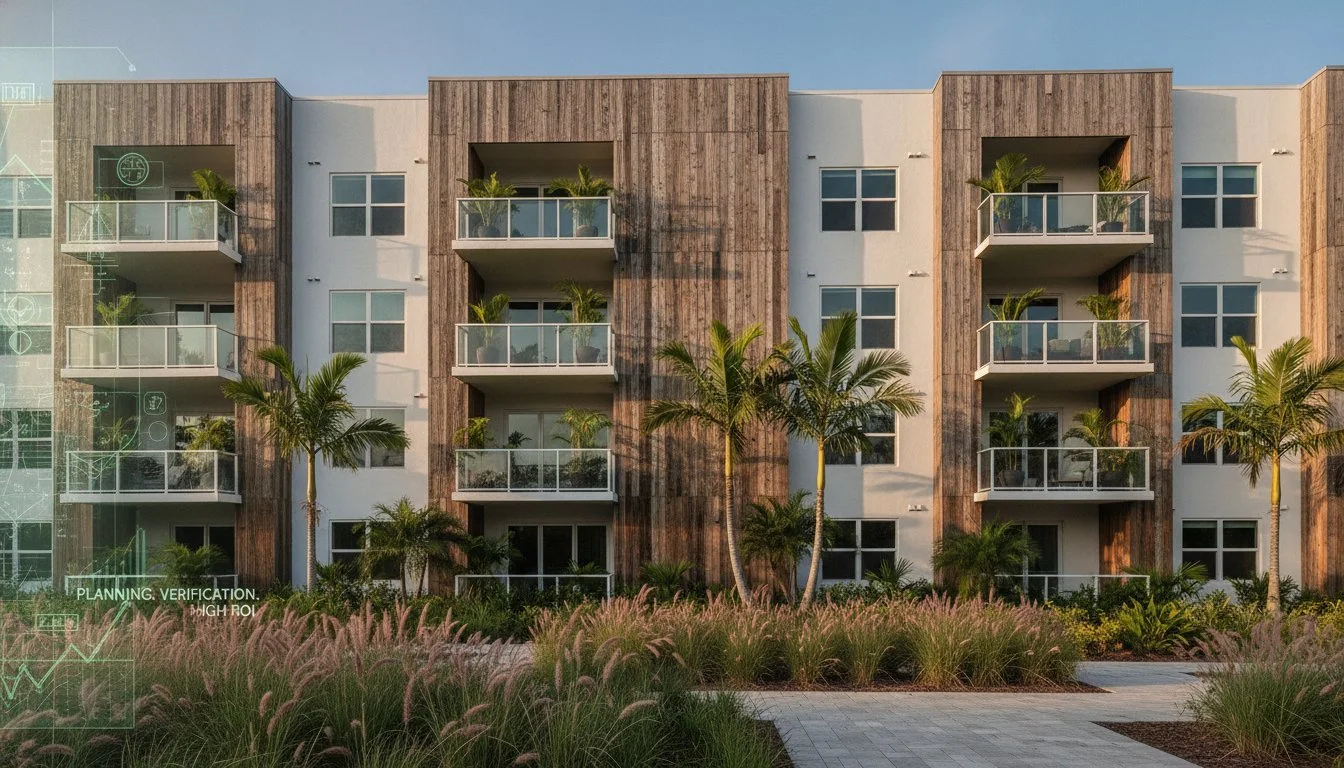
In 2026, rent limits for attainable housing in markets like Miami-Dade have surged by nearly $280 per month, fundamentally changing the financial landscape for new projects. You're likely feeling the pressure of balancing these shifting market values against increasingly complex building codes and the demand for higher performance. It's a constant challenge to manage multiple third-party inspections while keeping construction costs in check. You don't have to sacrifice sustainability for profitability. This guide explains how NGBS for multifamily developments in Florida serves as a pragmatic framework to optimize your building's performance and maximize ROI.
We'll show you how to navigate the 2025 NGBS standards to qualify for significant local incentives, including the latest property tax exemptions under the Live Local Act. While our expertise is rooted in the Southeast across Florida, Georgia, and the Carolinas, Ekocentric provides expert green verification and consulting services for projects across the entire United States and internationally. You'll discover a clear roadmap for reducing operational costs and achieving a recognized certification that resonates with today's investors and residents alike.
Key Takeaways
Understand why the ANSI-approved ICC-700 standard is the premier green rating system specifically designed for residential and multifamily project success.
Learn how implementing NGBS for multifamily developments in Florida helps developers secure local density bonuses and improve building resilience against extreme weather.
Compare NGBS with LEED to determine which certification offers the best balance of cost-efficiency and market recognition for your specific asset.
Navigate the mandatory verification process, including critical design reviews and the two-stage on-site inspection requirements for rough-in and final completion.
Explore how integrating technical compliance with real estate insights can optimize project ROI across Florida, the Southeast, and international markets.
Table of Contents
What is NGBS for Multifamily Developments in Florida?
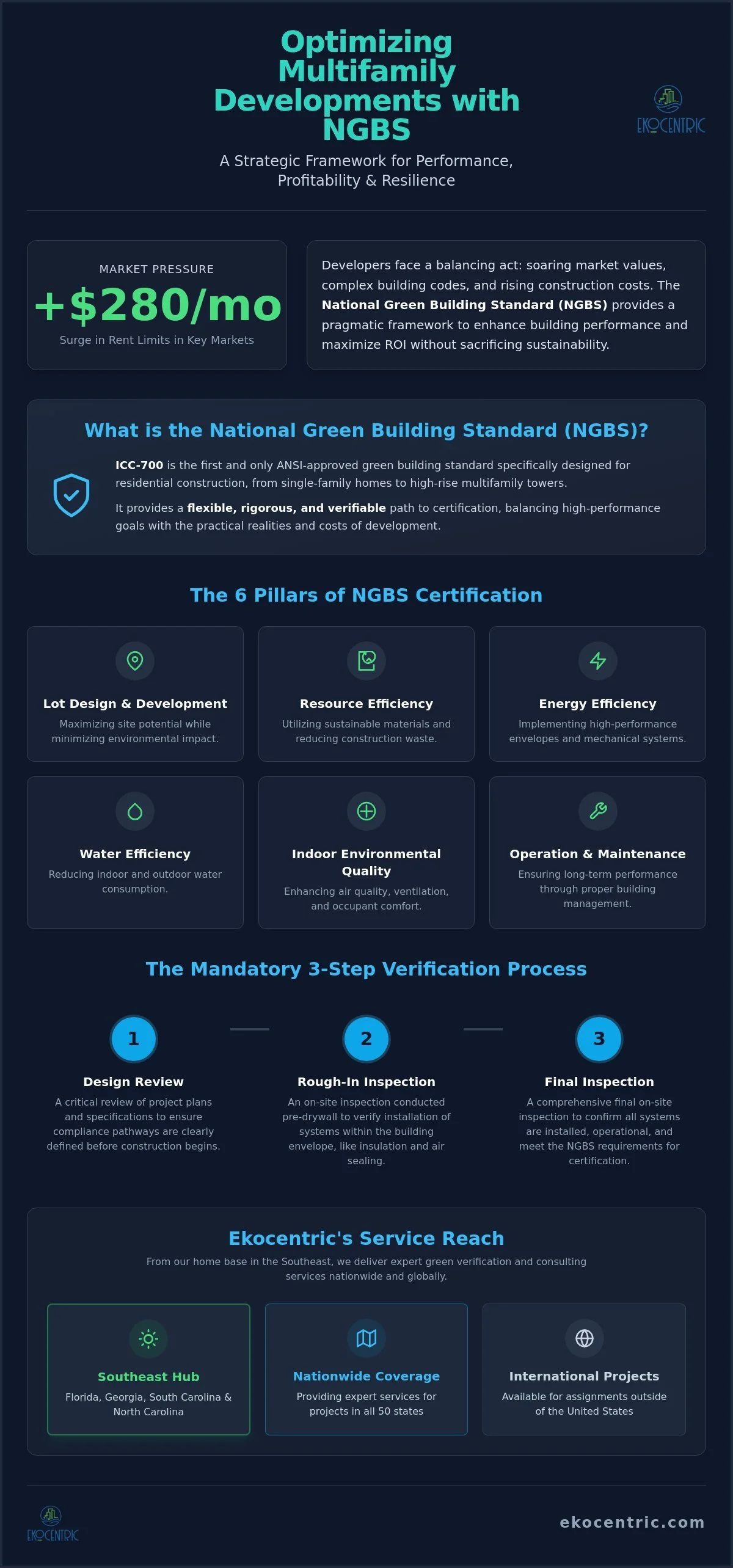
The National Green Building Standard (NGBS), or ICC-700, is the premier green rating system for residential construction. It holds the distinction of being the first such standard to receive approval from the American National Standards Institute (ANSI). Unlike other frameworks that apply a broad lens to all building types, NGBS is purpose-built for the residential sector. It provides a clear, verifiable path for projects ranging from high-rise multifamily towers and mixed-use developments to comprehensive renovations. For developers, NGBS for multifamily developments in Florida offers a unique advantage because it balances high-performance requirements with the practical realities of the state's specific climate and regulatory environment.
Certification is earned through a rigorous, points-based system that focuses on six critical areas of performance:
Lot Design and Development: Maximizing site potential while minimizing environmental impact.
Resource Efficiency: Utilizing sustainable materials and reducing construction waste.
Energy Efficiency: Implementing high-performance envelopes and mechanical systems.
Water Efficiency: Reducing indoor and outdoor water consumption.
Indoor Environmental Quality: Enhancing air quality and occupant comfort.
Operation and Maintenance: Ensuring long-term performance through proper building management.
To better understand how these sustainable practices translate to the real estate market, watch this helpful video:
Change video
The 2025 ICC-700 Standard in a 2026 Context
As of July 2026, the 2025 NGBS has become the new benchmark for excellence in the industry. This latest version introduces a deeper focus on carbon reduction and long-term resilience, which is essential for projects in tropical and subtropical zones. It aligns with the 2021 International Energy Conservation Code (IECC), ensuring that new construction meets modern expectations for efficiency and airtightness. NGBS is a rigorous yet flexible framework for Florida's diverse residential market. It allows developers to choose the most impactful strategies for their specific site without being locked into rigid mandates that can drive up construction costs unnecessarily.
Florida-Specific Environmental Factors
In our humid climate, moisture management isn't just a luxury; it's a necessity for asset protection. NGBS prioritizes mold prevention and advanced building envelopes to combat the relentless Florida heat. High-efficiency HVAC systems are central to this strategy, ensuring indoor air quality remains high while energy bills stay low. Because NGBS credits align so closely with Florida's stringent hurricane and wind-load codes, developers often find they're already meeting many of the standard's core requirements through local compliance. At Ekocentric, we help bridge the gap between these technical requirements and real estate value. While we're based in the Southeast serving Florida, Georgia, and the Carolinas, our team provides specialized NGBS Green Verification for projects across the entire United States and internationally. This synergy makes NGBS one of the most cost-effective ways to achieve a recognized green certification while building a structure that can withstand our state's unique environmental challenges.
Why Florida Developers Prioritize NGBS in 2026
In the high-stakes Florida real estate market, 2026 has brought a new level of urgency to sustainable construction. Developers increasingly turn to NGBS for multifamily developments in Florida as a strategic financial move. As insurance premiums fluctuate and local governments tighten zoning regulations, the ICC 700 National Green Building Standard provides a clear path to project viability. Many cities like Miami-Dade and Pensacola now offer density bonuses or expedited permitting for certified projects. These procedural advantages can shave months off a timeline, directly impacting the bottom line.
Resilience is another major driver for certification. The 2025 NGBS standard introduces specific designations for wind and water resilience, which are critical in a state prone to tropical storms. These features aren't just for show; they create a more durable asset that can lead to lower long-term insurance costs. For developers managing portfolios across the Southeast, including Georgia and the Carolinas, NGBS offers a streamlined compliance model that works across state lines. This consistency helps teams maintain quality standards without relearning entire systems for every new market.
Alignment with the Florida Live Local Act
The 2026 updates to the Live Local Act have intensified the focus on attainable housing. To qualify for major zoning benefits, at least 40% of units must be dedicated to housing at or below 120% of the Area Median Income (AMI). The Florida Housing Finance Corporation frequently requires green certification as a prerequisite for funding programs like the Low-Income Housing Tax Credit (LIHTC). By choosing NGBS, you satisfy these regulatory demands while securing massive property tax exemptions. Projects with 71 or more units can receive up to a 100% tax exemption for units rented below 80% of AMI, making the financial case for green building undeniable.
Operational Cost Reduction and ROI
Efficiency directly translates to asset value. Superior energy and water performance lower utility costs for residents, which supports higher tenant retention and allows for more competitive pricing. Beyond the immediate savings, NGBS for multifamily developments in Florida signals quality to future buyers. It validates that the building uses durable materials that reduce long-term maintenance CAPEX. If you're looking to optimize your project's performance, our team can help you integrate technical compliance with real estate value. Whether your project is in Florida or you're expanding into international markets, our dual expertise as contractors and realtors ensures your sustainability goals align with your financial exit strategy.
NGBS vs. LEED: Selecting the Right Path for Your Project
Choosing between NGBS and LEED is one of the most critical decisions in the pre-construction phase. While LEED is synonymous with global prestige, it often carries a higher administrative burden and cost. In contrast, NGBS for multifamily developments in Florida is designed specifically for the residential sector. This residential-first technical language makes it easier for your construction team to understand and execute without getting bogged down in commercial building requirements that don't apply to apartments. Recent data highlights Florida as one of the top states for NGBS certification, suggesting that local developers find this path more aligned with their operational realities.
NGBS is often more cost-effective because its fee structure is tailored to the scale of multifamily buildings. The point-scoring system also offers more flexibility than other standards. You can achieve Bronze, Silver, Gold, or Emerald levels by choosing credits that make sense for your specific site and budget. This allows you to prioritize high-impact areas like water conservation or indoor air quality without being forced into expensive mandates that don't add value to your asset. You aren't just checking boxes; you're building a more durable and efficient home for your future tenants.
Comparing Complexity and Certification Speed
Certification speed often dictates project financing and delivery. NGBS relies heavily on a local, accredited Verifier who performs on-site inspections at rough-in and final completion. This direct relationship usually leads to faster resolution of field issues because your partner is right there on the ground. LEED generally requires a remote review process through the GBCI, which can introduce delays if documentation isn't perfect. If your goal is a streamlined process with lower overhead, NGBS is the pragmatic choice. However, if your investors demand a globally recognized brand for a flagship luxury tower, LEED might justify the extra investment.
Synergies with ENERGY STAR and HERS Ratings
One of the biggest advantages of NGBS is how it integrates with other performance benchmarks. It shares significant overlap with ENERGY STAR Rater requirements, meaning you won't pay for redundant testing or documentation. The HERS Index also plays a central role in the NGBS Energy Efficiency category. By leveraging a single consulting partner to manage your HERS, ENERGY STAR, and NGBS requirements, you eliminate the friction of managing separate vendors. This holistic approach ensures NGBS for multifamily developments in Florida delivers a cohesive sustainability strategy that maximizes both environmental impact and project ROI.
Navigating the NGBS Verification Process in Florida
Success in NGBS for multifamily developments in Florida depends on early integration. It isn't a "check-the-box" activity at the end of construction. Instead, it's a collaborative process that begins long before the first shovel hits the dirt. By establishing a clear verification plan, you avoid the costly retrofits that often plague projects attempting to add green features too late in the cycle. This proactive approach ensures that every sustainability goal is achievable and documented correctly from day one.
The verification process is overseen by a third party to ensure total transparency. Once the project is registered with Home Innovation Research Labs, the Verifier works alongside your team to track progress through every phase. This rigorous oversight protects the integrity of the certification and provides investors with confidence in the building's long-term performance. Whether your project is a local infill development or a large-scale international build, the verification steps remain a steady roadmap to excellence.
Design and Pre-Construction Planning
The journey starts with a deep dive into your architectural and MEP drawings. We work with your design team to identify which credits are most achievable based on your project's specific goals and budget. Whether you're aiming for Bronze or the prestigious Emerald level, early planning ensures these requirements are baked into the bid documents. Selecting a qualified NGBS Green Verifier during this phase is essential. We help you register the project and set the technical foundation for a smooth construction phase, ensuring all subcontractors understand the high-performance standards required.
Field Inspections and Performance Testing
Once construction is underway, the Verifier conducts two mandatory on-site inspections. The rough-in inspection occurs before the drywall goes up. This is a critical moment to verify insulation installation, air sealing, and the use of low-VOC materials. We ensure that the building envelope is tight and that all specified green features are physically present. The NGBS Verifier acts as a quality control partner, not just a box-checker.
The final verification happens as the project nears completion. This stage includes rigorous performance testing, such as blower door tests to measure air infiltration and duct leakage assessments. These tests provide empirical data that your building performs as designed. After the final inspection, the Verifier submits all documentation to Home Innovation Research Labs for a final review and issuance of the certification. If you are ready to streamline your path to certification and maximize your asset's value, start your NGBS verification with our expert team today.
Ekocentric’s Multi-State NGBS Expertise
At Ekocentric, we don't just verify buildings; we advocate for a sustainable future by bridging the gap between technical compliance and real estate value. Our team brings a unique perspective to NGBS for multifamily developments in Florida, as we are both licensed Florida Certified Building Contractors and Realtors in Florida, North Carolina, and South Carolina. This dual expertise allows us to understand the construction process from the inside out while also recognizing what drives asset appreciation and marketability in the Southeast. We help you navigate the complexities of green building with a focus on pragmatic business results.
Our commitment to environmental stewardship is matched by our practical understanding of developer needs. We offer full-service support for a variety of standards, including LEED, FGBC, NGBS, and ENERGY STAR. While our specialized knowledge is deeply rooted in the Southeast, our centralized B2B model allows us to manage projects across the entire United States and internationally. We act as a dedicated partner for project leads who may lack the internal capacity to manage these specialized requirements, ensuring every building reaches its highest potential for efficiency and durability.
Regional Expertise in the Southeast Market
Developers managing multi-family portfolios across state lines face a patchwork of building codes and climatic challenges. Our deep roots in Florida and the Carolinas give us a distinct advantage in navigating these regional nuances. We help you maintain consistency across your projects in Georgia or South Carolina while ensuring each building meets the specific high-performance requirements of its local environment. This centralized approach reduces administrative friction and ensures your entire portfolio achieves a high standard of resource efficiency and longevity without the need for multiple consulting firms.
Integrated Consulting for Maximum Building Performance
Sustainable development should move beyond simple certification to optimize actual operational performance. We provide a comprehensive suite of services to ensure your project excels in every category, from water conservation to indoor air quality. Our LEED Green Rater services often complement NGBS goals by providing additional layers of verification that international investors recognize and value. By partnering with Ekocentric, you aren't just meeting current regulations; you're future-proofing your assets against rising energy costs and evolving environmental standards. We ensure your NGBS for multifamily developments in Florida results in high-quality living spaces that protect our natural resources for generations to come.
Secure Your Project's Future with Sustainable Excellence
Adopting a green building framework is no longer just an environmental choice; it's a strategic business necessity. By aligning your development with the latest standards, you unlock access to density bonuses and significant tax exemptions that directly improve your bottom line. We've seen how NGBS for multifamily developments in Florida provides a flexible, cost-effective pathway to meet these rigorous requirements while enhancing the long-term durability of your asset. It's about building spaces that thrive in our unique climate while delivering measurable value to your investors.
Success requires a partner who understands both the technical nuances of construction and the financial realities of the real estate market. As a Licensed Florida Certified Building Contractor and a Licensed Realtor in FL, NC, and SC, our team provides the dual perspective needed to bridge the gap between compliance and profitability. Whether your project is in the Southeast or you're managing a national or international portfolio, we're ready to help you manage every stage of the process. Partner with Ekocentric for your next NGBS Multifamily project and let's create high-performance housing that stands the test of time. Your vision for a more resilient future is well within reach.
Frequently Asked Questions
What is the primary difference between NGBS and LEED for multifamily buildings?
NGBS is designed specifically for residential and multifamily projects, while LEED covers a broader range of commercial and institutional building types. This residential focus makes NGBS for multifamily developments in Florida more technically intuitive for contractors and design teams. While LEED offers high global brand recognition, NGBS provides a more flexible, cost-effective framework that focuses on the specific performance needs of residential occupants.
Is NGBS certification mandatory for multifamily projects in Florida?
NGBS certification isn't mandatory by state law for every project, but it's often a prerequisite for specific financial and development pathways. For example, the Florida Housing Finance Corporation (FHFC) requires green building certification for projects seeking Low-Income Housing Tax Credits (LIHTC). Additionally, many Florida municipalities require certification to unlock density bonuses, expedited permitting, or fee reductions.
How much does NGBS Green Verification typically cost for a developer?
Certification fees are paid directly to Home Innovation Research Labs, while the third-party Verifier fee is a separate professional service cost. As of July 2026, the administrative certification fees for multifamily buildings are $300 per building plus $30 per unit. The cost of hiring an accredited Verifier depends on the project's scale and complexity, but it's a strategic investment that typically pays for itself through operational savings and local incentives.
Can NGBS certification help my project qualify for the Florida Live Local Act?
Yes, NGBS certification is a critical tool for developers utilizing the Florida Live Local Act. Many local jurisdictions require a recognized green building standard to grant the zoning pre-emptions and property tax exemptions offered by the 2026 amendments. Using NGBS for multifamily developments in Florida ensures your project meets the sustainability criteria often attached to these attainable housing incentives.
How long does the NGBS certification process take from start to finish?
The NGBS timeline aligns directly with your project's existing construction schedule. The process begins with a design review during the pre-construction phase, followed by a rough-in inspection before drywall installation and a final inspection at project completion. Once the Verifier submits the final documentation to Home Innovation Research Labs, the official certification is typically issued within a few business weeks.
Does NGBS require on-site performance testing like blower door tests?
Yes, NGBS requires rigorous on-site performance testing to verify the building envelope and mechanical systems. This includes blower door testing to measure air infiltration and duct leakage assessments. These tests provide empirical data that the building meets the energy efficiency requirements of the 2025 standard, which aligns with the 2021 International Energy Conservation Code (IECC).
Can I pursue NGBS certification for a multifamily renovation project?
Absolutely, NGBS offers a specific certification path for multifamily remodeling and renovation projects. This allows developers to improve the performance of existing assets while still qualifying for local incentives and green financing. The renovation path focuses on achieving significant improvements in energy and water efficiency compared to the building's pre-renovation baseline performance.
Who is authorized to perform NGBS verification in the state of Florida?
Only an official NGBS Green Verifier accredited by Home Innovation Research Labs is authorized to perform these services. Ekocentric provides expert verification and consulting throughout Florida, Georgia, and the Carolinas, as well as across the entire United States and international markets. Our team's dual background as licensed contractors and realtors ensures your verification process adds tangible value to your real estate asset.