Preparing for a LEED Final Inspection: The Builder’s Guide to a Successful On-Site Verification
On a humid Tuesday morning in July, a Florida developer stands on-site, watching a HERS Rater pull out a clipboard to verify the building envelope. After 18 months of construction, the difference between securing a $2,500-per-unit tax credit and a costly "denied" status comes down to this single walk-through. Preparing for a LEED final inspection shouldn't feel like a gamble against your project's bottom line.
You've likely spent hundreds of hours managing subcontractors and supply chains, leaving little room to bridge the gap between initial design credits and construction-stage reality. We understand that the fear of a last-minute failure is real, especially when millions in green financing are at stake. This guide offers a pragmatic, expert-led strategy to help you master these final hurdles with confidence. We'll examine the critical 72-hour pre-inspection checklist, documentation shortcuts, and site-readiness protocols that ensure your sustainability claims stand up to the most rigorous scrutiny and unlock the incentives you've earned.
Key Takeaways
Understand why the final on-site verification is the critical "make or break" moment for your project’s LEED for Homes or BD+C Residential certification.
Gain insight into the Green Rater’s two-pronged approach of visual verification and diagnostic testing to ensure your site is ready for technical scrutiny.
Learn how to eliminate the most common cause of failure when preparing for a LEED final inspection by aligning your physical building with the digital paper trail.
Utilize a comprehensive 48-hour readiness checklist to prioritize high-impact credits and streamline the verification process before the Rater arrives.
Discover how a pragmatic consulting partner provides the expert bandwidth needed to navigate complex sustainability requirements and secure a successful finish.
Understanding the Stakes of Your LEED Final Inspection in 2026
In 2026, the final on-site visit represents the ultimate validation of a project's sustainability goals. This third-party verification ensures that the "as-built" reality matches the high-performance promises made during the planning phase. For developers and builders, the LEED certification system requires more than just paperwork; it demands physical evidence of efficiency. It's the moment when theoretical designs are tested against the hard reality of construction quality and environmental stewardship.
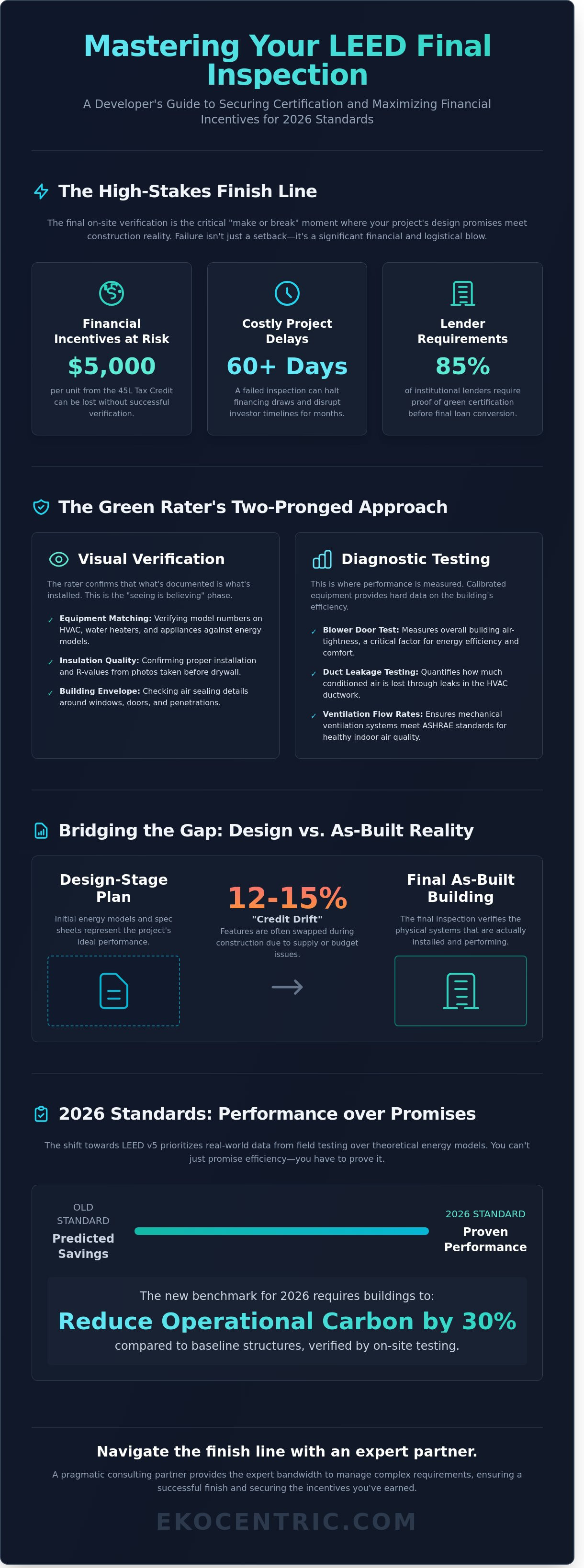
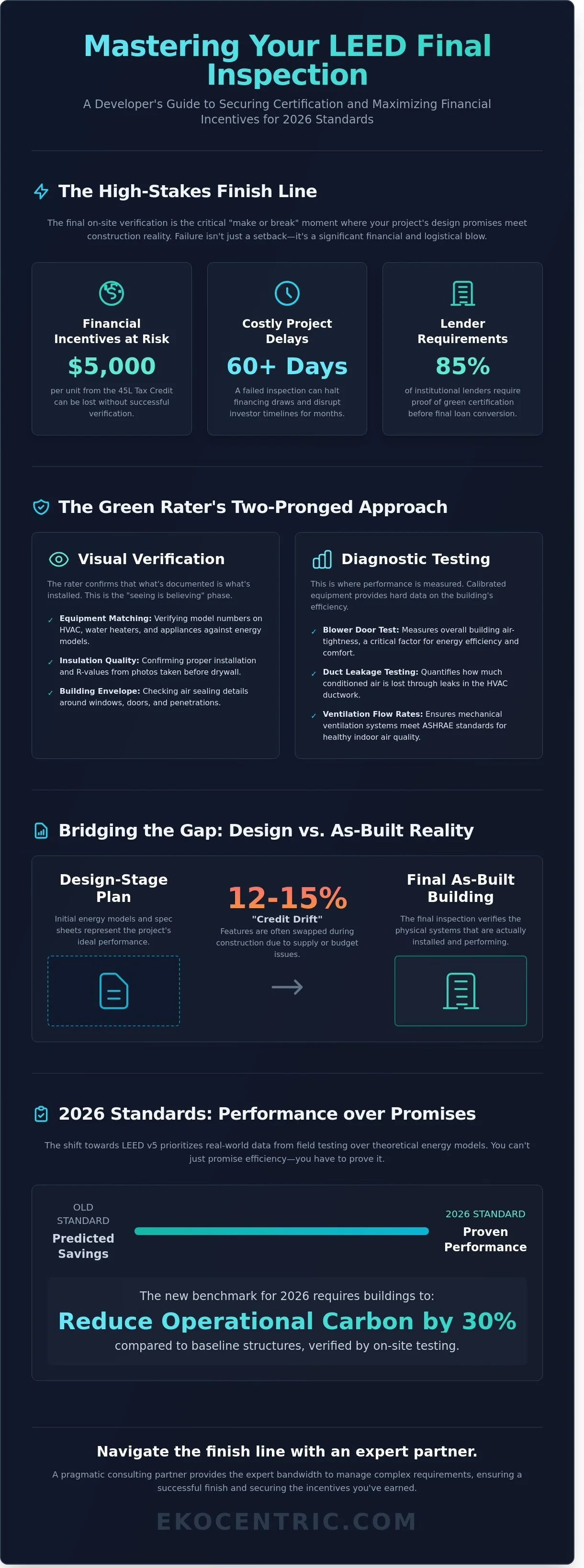
Preparing for a LEED final inspection is a high-pressure milestone because it's the gatekeeper to significant financial incentives. Projects failing to meet thresholds during this visit risk losing out on the 45L tax credit, which provides up to $5,000 per unit for energy-efficient homes. A failed inspection can also trigger a 60-day delay in certification, which stalls financing draws and disrupts investor timelines. In a market where 85% of institutional lenders require green certification proof before final loan conversion, the stakes couldn't be higher.
Success depends on a tight loop between the Green Rater, the LEED AP, and the General Contractor. The Green Rater acts as the independent eyes of the GBCI, while the LEED AP ensures the GC has executed every technical detail. If the GC hasn't managed the bandwidth of sustainable requirements throughout the build, the project will likely stumble at this finish line. It's a collaborative effort where clear communication prevents costly last-minute remediations and ensures the project's unwavering dedication to sustainability is realized.
To better understand what happens on-site, watch this helpful video regarding inspection priorities:
The Difference Between Design Review and Construction Review
Design-stage approvals are merely provisional. They're a roadmap, not a destination. We often see "credit drift," where 12% to 15% of planned features are swapped out during construction due to supply chain issues or budget cuts. The final inspection reconciles these gaps. As-built documentation must prove that the high-performance systems are actually installed. This includes providing photos of cavity insulation taken before the drywall went up and verifying that the specific HERS-rated equipment matches the initial energy model.
Why 2026 Standards Require More Rigorous Field Testing
The shift toward LEED v5 means theoretical models no longer carry the same weight they once did. In 2026, inspectors prioritize real-world performance data over predicted energy savings. This includes mandatory blower door tests and duct leakage testing that must meet strict CFM thresholds. Performance-based certification is the new industry benchmark for 2026. This evolution ensures that buildings don't just look green on paper but actually reduce operational carbon by at least 30% compared to baseline structures. You can't just promise air tightness; you have to prove it through rigorous, calibrated field testing.
When you're preparing for a LEED final inspection, remember that the Green Rater isn't just checking boxes. They're verifying that the building will actually perform for the occupants. This protects the developer's reputation and ensures the long-term resilience of the asset. Missing a single sealant detail around a window might seem small, but in the eyes of a 2026 inspector, it's a failure of the building envelope that compromises the entire certification path. Staying organized and pragmatic is the only way to ensure your project crosses the finish line with the rating it deserves.
The Green Rater’s Perspective: What Happens During On-Site Verification?
The Green Rater acts as the "eyes and ears" of the project, serving as the critical link between your physical construction site and the digital certification portal. Their primary mission is to verify that every sustainability claim made during the design phase actually exists within the finished walls. When preparing for a LEED final inspection, you should view the Rater as a partner in quality control rather than an adversary. They ensure the official LEED rating system standards are met through a rigorous, two-pronged approach: visual verification and diagnostic testing.
During the final visit, the Rater documents every finding with high-resolution photos and detailed field notes. This documentation is mandatory for the final LEED submittal. They focus heavily on the thermal envelope integrity, HVAC commissioning, and the flow rates of water fixtures. If a Rater cannot see a specific component, such as insulation behind a knee wall, they cannot credit it. This is why clear communication and site access are vital for a successful walkthrough.
Diagnostic Testing: Blower Doors and Duct Blasters
Airtightness testing is often the most significant hurdle during the final inspection. The Rater uses a Blower Door test to measure air changes per hour (ACH). For many high-performance projects, hitting a target of 3.0 ACH50 or lower is essential for compliance. To prepare, ensure all windows are locked and weatherstripping is fully seated. Additionally, Duct Blaster testing measures leakage in the HVAC distribution system. Sealing joints with mastic instead of traditional tape can reduce leakage by as much as 15%, ensuring your system doesn't waste energy cooling unoccupied attic spaces.
Florida-Specific Tip: In high-humidity environments like Miami or Orlando, excessive moisture can interfere with sensitive pressure sensors during envelope testing. We recommend running the HVAC system for at least 48 hours prior to the test to stabilize indoor humidity levels. This ensures the air density calculations remain accurate and prevents "false failures" caused by heavy, moist air during the depressurization cycle.
Visual Verification of Materials and Systems
Beyond the numbers, the Rater performs a deep dive into the physical materials installed. They will cross-reference your submittals with the actual products on-site, looking for low-VOC labels on paints and adhesives to ensure indoor air quality. They also verify that any certified wood products carry the correct FSC (Forest Stewardship Council) chain-of-custody markings. If you've claimed points for recycled content, have the invoices ready for review.
Water efficiency is another top priority. Expect the Rater to check for WaterSense labels on every faucet and showerhead. For example, a standard toilet must meet the 1.28 gallons per flush (GPF) threshold to satisfy LEED requirements. Accessibility is the final piece of the puzzle. Raters must have unobstructed access to crawlspaces, attics, and mechanical closets. If a Rater is forced to guess what's behind a sealed panel, the project risks losing points. If your team lacks the internal bandwidth to manage the sustainability side of these complex requirements, bringing in an expert early can prevent these last-minute headaches.
By the end of the day, the Green Rater compiles a comprehensive report that serves as the backbone of your certification. Preparing for a LEED final inspection means having your documentation organized and your systems ready for the spotlight. This proactive approach doesn't just earn a plaque; it ensures the building performs as a high-efficiency machine for decades to come.
DownloadFeedback & RecreateDelete
Bridging the Gap: Documentation vs. Physical Reality
The single most common reason for a LEED project to stall during the final review isn't a lack of sustainable intent. It's the measurable gap between the digital "paper trail" and the physical building. GBCI auditors report that nearly 65% of inspection delays are caused by documentation that fails to reflect the actual site conditions. When preparing for a LEED final inspection, you must treat the building as a living embodiment of your submittals. If the paperwork says one thing and the site shows another, the credit is lost.
Builders often voice a logical objection: "We installed exactly what was specified in the design phase, so why do we need more proof?" The reality is that LEED BD+C certification requires verification of the "as-built" condition, not just the "as-designed" intent. A specification sheet is a promise, but an invoice and a dated site photo are the proof. Without that secondary layer of evidence, the auditor cannot verify that a high-performance building was actually delivered. This disconnect often surfaces in the final 15% of the construction timeline when the pressure to hit a Certificate of Occupancy date is at its peak.
Managing the LEED Documentation Bandwidth
Most developers and general contractors hit a wall during the final 60 days of construction. This period is when "documentation bandwidth" typically evaporates as teams focus on punch lists and site safety. Managing 25 different subcontractors while simultaneously collecting Low-VOC certificates and recycled content percentages is a massive administrative burden. This is precisely where Ekocentric's specialized services provide the necessary management layer to bridge this gap. We implement a centralized document repository that captures subcontractor submittals in real-time, ensuring that by the time the final dumpster leaves the site, 100% of your data is already organized and verified.
Common 'Gotchas' in the Final Construction Phase
Small deviations in the field can lead to significant point losses. Substitution errors are a frequent culprit. For example, if a painter runs out of the specified low-emissions primer and grabs a standard alternative from a local supplier to finish a 200-square-foot room, that single choice can jeopardize the Indoor Environmental Quality credit. Landscaping is another high-risk area. If a nursery substitutes 10% of the specified drought-tolerant shrubs with high-water-use varieties because of availability, your irrigation calculations will no longer align with the physical reality. Finally, waste management logs must be bulletproof. If the final three debris hauls aren't tracked with weight tickets, your 75% diversion rate could plummet to 55% on paper, regardless of your actual recycling efforts.
To ensure the final walkthrough is a success, a mid-project "pre-drywall" check is essential. This audit, typically conducted at the 50% completion mark, allows the team to verify insulation R-values, framing techniques, and rough-in components before they are permanently hidden behind finishes. Fixing a thermal bridging issue is simple when the studs are exposed; it's nearly impossible once the paint is dry. By identifying these gaps early, preparing for a LEED final inspection becomes a process of confirming existing successes rather than a frantic rescue mission. This proactive approach turns the final certification from a stressful uncertainty into a guaranteed celebration of your team's hard work and dedication to a greener future.
Your 2026 LEED Final Inspection Readiness Checklist
The final 48 hours before your HERS Rater or LEED Green Rater arrives determine whether you cross the finish line with ease or face a frustrating list of corrective actions. When preparing for a LEED final inspection, you aren't just tidying the site; you're verifying that every high-impact credit performs as designed. Success requires a transition from construction mode to performance-testing mode. This window is your last chance to identify the small gaps that lead to failed blower door tests or duct leakage results that fall outside your target parameters.
The 48-Hour Prep: Mechanical and Envelope
Your focus must remain on the systems that require physical validation. Performance testing accounts for a significant portion of your final score, and even minor oversights can tank your energy rating. Follow these three steps to secure your mechanical credits:
1. HVAC Filter Swap: Replace all MERV 8 construction-stage filters with final MERV 13 or higher filters. Ensure the filter racks are sealed tight with no bypass air. A dirty filter during a HERS test can skew your static pressure readings by 15% or more.
2. Plumbing Functionality: Every fixture must be fully operational. Check for leaks under every sink and ensure low-flow aerators are installed. Raters will verify flow rates; a single missing 1.5 GPM restrictor can jeopardize your Water Efficiency credits.
3. Envelope Integrity: Walk the perimeter with a flashlight. Verify that all penetration sealing, including plumbing stacks and electrical conduits, is complete. Use high-grade firestopping or spray foam where visible. If a Rater sees daylight through a gap, your air infiltration numbers will suffer.
For projects in Florida, resilience is a non-negotiable component of the 2026 LEED standards. You must verify the installation of impact-rated windows or permanent storm shutters before the Rater steps foot on site. Ensure that the etched permanent markings on the glass, typically referencing ASTM E1886 or E1996, are clean and visible. If your project relies on Florida Green Building Coalition (FGBC) overlap credits, have your Miami-Dade Notice of Acceptance (NOA) paperwork organized and ready for review.
The Day-Of Walkthrough: Site Aesthetics and Materials
Once the mechanical systems are vetted, shift your attention to the evidentiary requirements that prove your commitment to a healthier indoor environment. Preparing for a LEED final inspection involves as much paperwork as it does physical testing. Use this checklist to ensure your documentation matches the physical reality of the build:
1. Material Verification: Keep at least one empty container or the original packaging for all Low-VOC paints, coatings, and adhesives used in the final 30 days. Raters often perform spot-checks to confirm that the products applied match the LEED credit calculator.
2. IAQ Management Execution: Confirm that the Construction Indoor Air Quality (IAQ) Management plan is finished. This includes removing all temporary duct coverings and ensuring that no absorbent materials, like carpet or drywall, were exposed to moisture during the final push.
3. The "War Room" Binder: Have your final as-built drawings and the live LEED credit tracker printed. Providing a physical copy to the Rater can speed up the walkthrough by 25%, as it allows them to cross-reference site conditions against the intended design without toggling through digital files.
Don't let a small technicality delay your certification. We recommend having your mechanical, electrical, and plumbing (MEP) subcontractors on standby during the inspection. Most "fails" are actually 15-minute fixes, such as tightening a loose duct connection or adjusting a door sweep. Having the right hands on-site to make immediate corrections can be the difference between a "Pass" and a costly re-inspection fee.
At Ekocentric, we understand that developers don't always have the bandwidth to manage these granular details. We provide the expert oversight needed to ensure your project meets its sustainability goals without the stress of last-minute surprises. If you want to ensure your project hits its target rating, partner with our LEED experts today for a comprehensive pre-inspection audit.
Navigating the Finish Line with Ekocentric’s LEED Consulting
Reaching the final stage of a multi-year construction project feels like the last mile of a marathon. The finish line is visible, but the pressure to deliver on time while meeting rigorous LEED v4.1 criteria is immense. Many developers simply don't have the internal bandwidth to manage these technical nuances while simultaneously juggling subcontractors and occupancy deadlines. This is where we step in. Ekocentric acts as the pragmatic bridge between your construction team’s daily reality and the Green Building Certification Institute’s (GBCI) strict expectations.
Success isn't found in a last-minute scramble. It's built months in advance through meticulous oversight. Having a LEED Green Rater involved by the time you reach 50% of the framing stage prevents the 11th-hour surprises that often delay occupancy permits or financing draws. Our team provides the specific oversight needed to ensure every low-VOC sealant and MERV 13 filter is documented correctly before the drywall goes up. Our unwavering dedication to sustainability means we don't just check boxes; we ensure your project’s actual performance matches its original design intent.
When you are preparing for a LEED final inspection, the difference between a Gold rating and a missed certification often comes down to the quality of the final "as-built" documentation. We manage this entire loop for you. We transition your project from the final site walk-through to the moment you mount that LEED plaque on your lobby wall. This process involves a deep dive into your final energy modeling and indoor air quality testing results to ensure every credit is defended and secured. It's about turning a complex, bureaucratic hurdle into a streamlined victory for your brand.
Beyond LEED: Integrating NGBS and FGBC Standards
In the Florida market, LEED is often just one piece of the sustainability puzzle. Many projects benefit from dual-certification by integrating Florida Green Building Coalition (FGBC) or National Green Building Standard (NGBS) requirements. Because these programs share roughly 22% of the same data points, we streamline the process to maximize your project's market value without doubling the paperwork. Ekocentric helps builders nurture a greener and more sustainable future without sacrificing project timelines. This integrated approach ensures your building remains resilient against Florida’s unique humidity and storm challenges while qualifying for local tax incentives or density bonuses.
Next Steps: Schedule Your Final Prep Session
The final 10% of a construction project is notoriously the most stressful period for any developer. We reduce that burden by conducting a comprehensive "pre-inspection" audit. This session identifies potential risks, such as missing HERS ratings or incomplete commissioning reports, before the official Rater ever arrives on site. Our goal is to eliminate the friction that leads to failed inspections and costly rework.
Don't leave your certification to chance during the final weeks of construction. Engaging with Ekocentric's consulting team gives you direct access to Florida’s leading green building experts who understand the local landscape. When preparing for a LEED final inspection, having an advocate in your corner ensures that your commitment to the environment translates into a tangible, high-performing asset. Reach out today to schedule your prep session and ensure your project crosses the finish line with confidence and a smooth pass.
Securing Your 2026 LEED Certification with Certainty
Success in 2026 hinges on your ability to bridge the gap between digital documentation and physical site reality. A single oversight during on-site verification can delay your final certification. By utilizing a rigorous readiness checklist, you ensure every system meets the criteria set by the Green Building Certification Institute. Preparing for a LEED final inspection doesn't have to be a source of stress for your team. Many builders don't have the internal bandwidth to manage these complex sustainability requirements while meeting 2026 construction deadlines. Ekocentric provides specialized LEED Green Rater verification and deep expertise in Florida Green Building Coalition (FGBC) standards to keep your project on track. We provide the pragmatic management needed to turn technical requirements into tangible results. Our team understands the pressure of the finish line and the importance of environmental stewardship. Let's work together to ensure your building stands as a testament to sustainable excellence. Schedule your LEED Project Consultation with Ekocentric's experts today and cross the finish line with total confidence.
Frequently Asked Questions
What happens if a project fails a specific credit during the LEED final inspection?
If a project fails a specific credit, the points associated with that item are deducted from the final scorecard, which may lower the certification level from Gold to Silver. If the failure involves a mandatory prerequisite, such as the Minimum Energy Performance standard, the project cannot be certified until the issue is corrected. Teams typically have 30 days to submit an appeal or provide new documentation showing the deficiency has been resolved.
How long does a typical LEED final on-site verification take?
A typical LEED final on-site verification for a 2,500-square-foot single-family home takes about 4 to 6 hours to complete. For a larger 100-unit multi-family development, the process usually spans 3 to 5 full business days depending on the sampling protocol used. Preparing for a LEED final inspection involves ensuring all mechanical systems are fully operational before the rater arrives to avoid unnecessary delays.
Is the LEED Green Rater the same person as the HERS Rater?
The LEED Green Rater and the HERS Rater are distinct roles, though one qualified professional often performs both functions to save the client money. The HERS Rater focuses specifically on energy modeling and blower door testing, while the Green Rater verifies the entire LEED checklist, including water efficiency and material sourcing. In 90% of our residential projects, we combine these roles to provide a more efficient and cost-effective verification experience.
Can I pursue LEED certification if I missed the pre-drywall inspection?
You cannot achieve LEED for Homes certification if the pre-drywall inspection was missed because the rater must visually verify insulation grades and framing techniques behind the walls. This is a strict requirement found in the LEED v4.1 manual that ensures the building envelope meets high-performance standards. If you've already hung drywall, you might consider the FGBC certification, which offers more flexibility for late-stage entries than the USGBC programs do.
What are the most common reasons Florida projects fail their final LEED duct leakage test?
Florida projects most frequently fail duct leakage tests due to poor mastic sealing at the plenum-to-air-handler connection or unsealed gaps between the duct boot and the ceiling drywall. These two areas account for nearly 70% of air leakage in new construction across the Southeast. When preparing for a LEED final inspection, contractors should use a smoke pen to identify these small leaks before the formal testing begins to ensure they meet the 4% leakage limit.
Do I need to be present during the LEED Green Rater's final inspection?
You don't need to be present personally, but we strongly recommend that the site supervisor or lead contractor stays on-site during the walkthrough. If the rater finds a minor issue, like a missing weatherstrip or an incorrectly labeled circuit, the supervisor can often fix it in 15 minutes. This immediate action saves the developer the $400 fee typically charged for a follow-up return visit.
How much does a LEED final inspection cost for a multi-family project?
For a mid-sized 50-unit multi-family project, the LEED final inspection and verification fees generally range from $3,500 to $6,000. This cost varies based on the number of units that require individual performance testing under the silver or gold sampling rates. Investing in this final verification allows developers to unlock significant financial benefits, such as the $5,000 per unit 45L tax credit available for energy-efficient homes.